
Last updated November 4, 2026
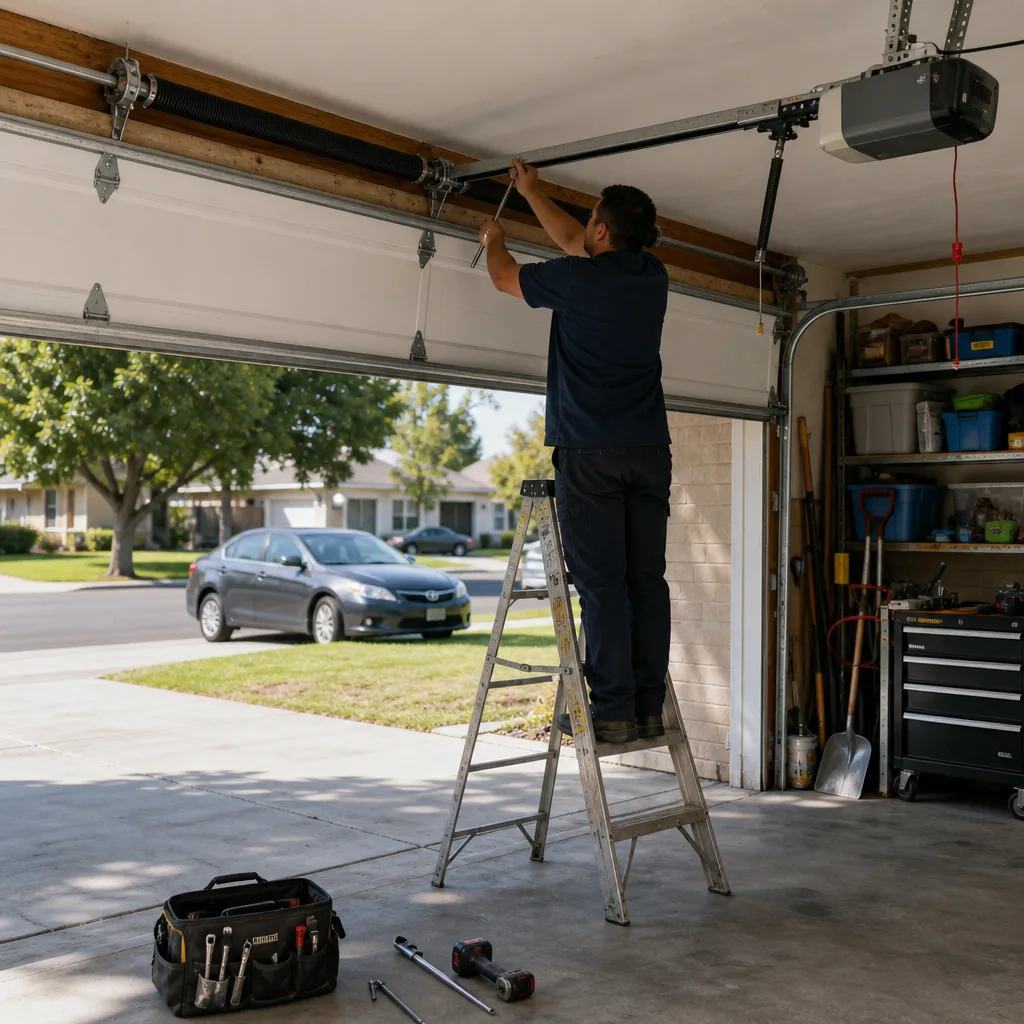
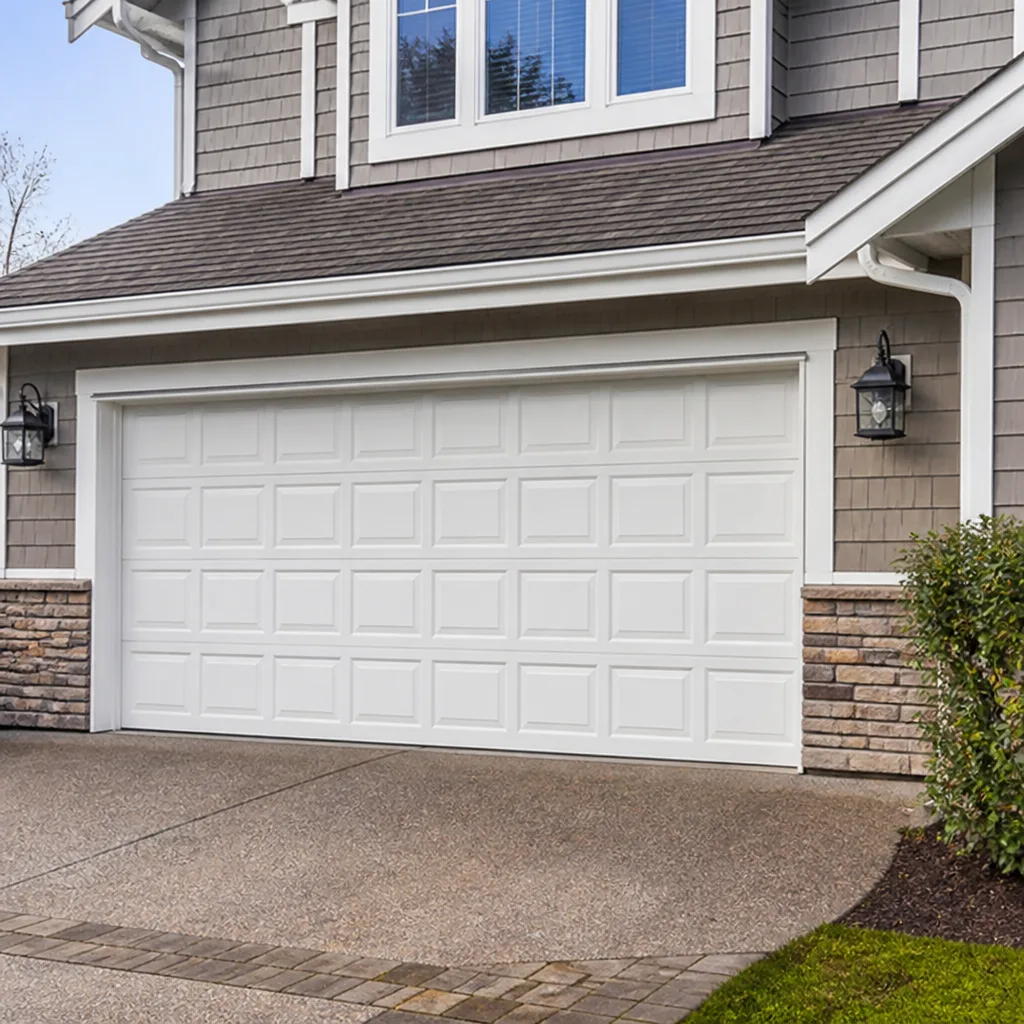 Raised-panel steel
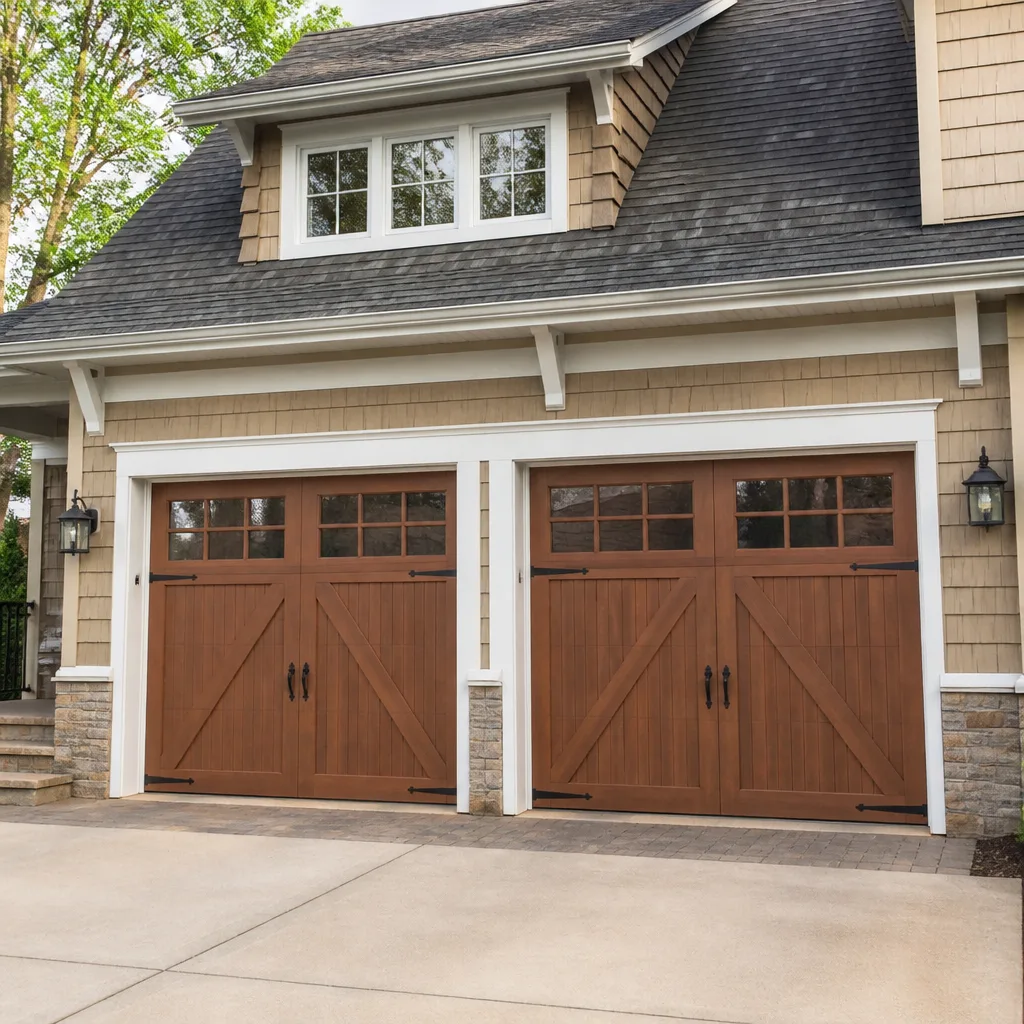 Carriage house
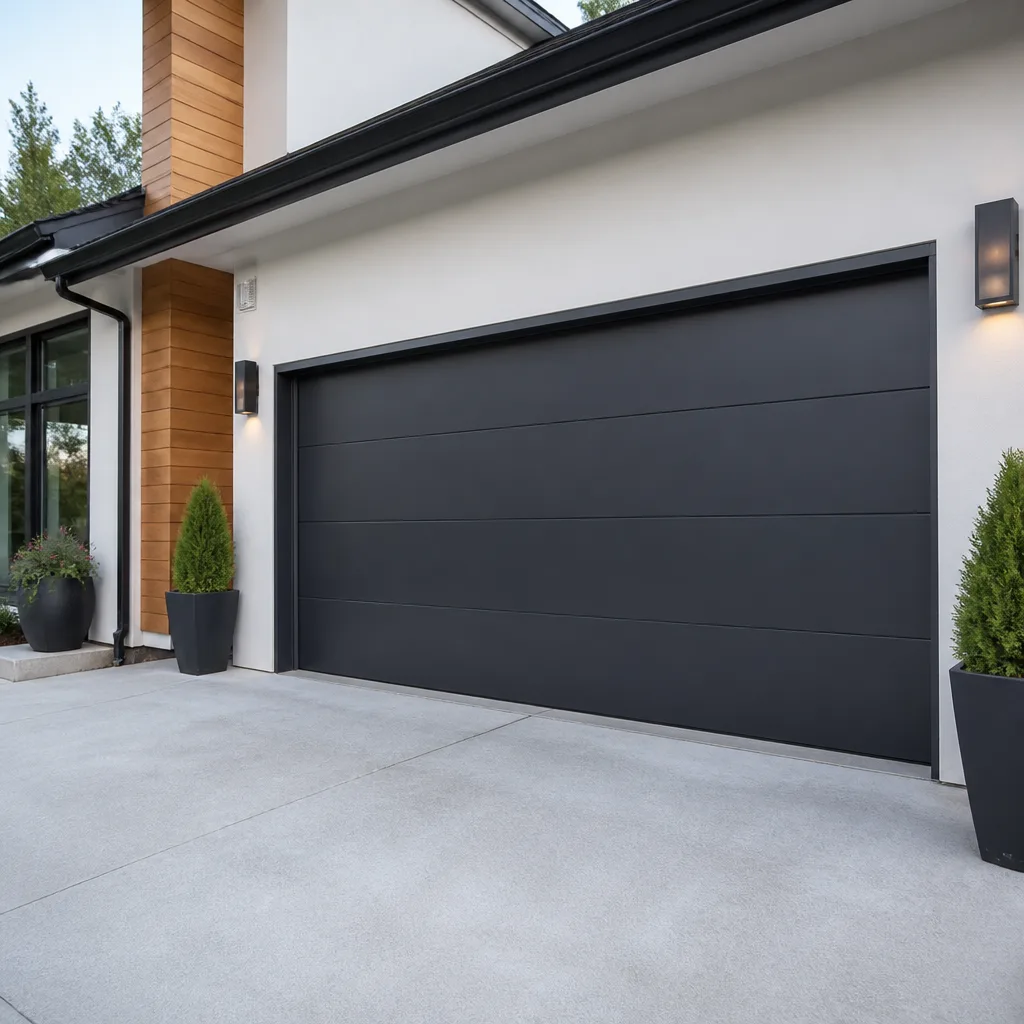 Modern flush
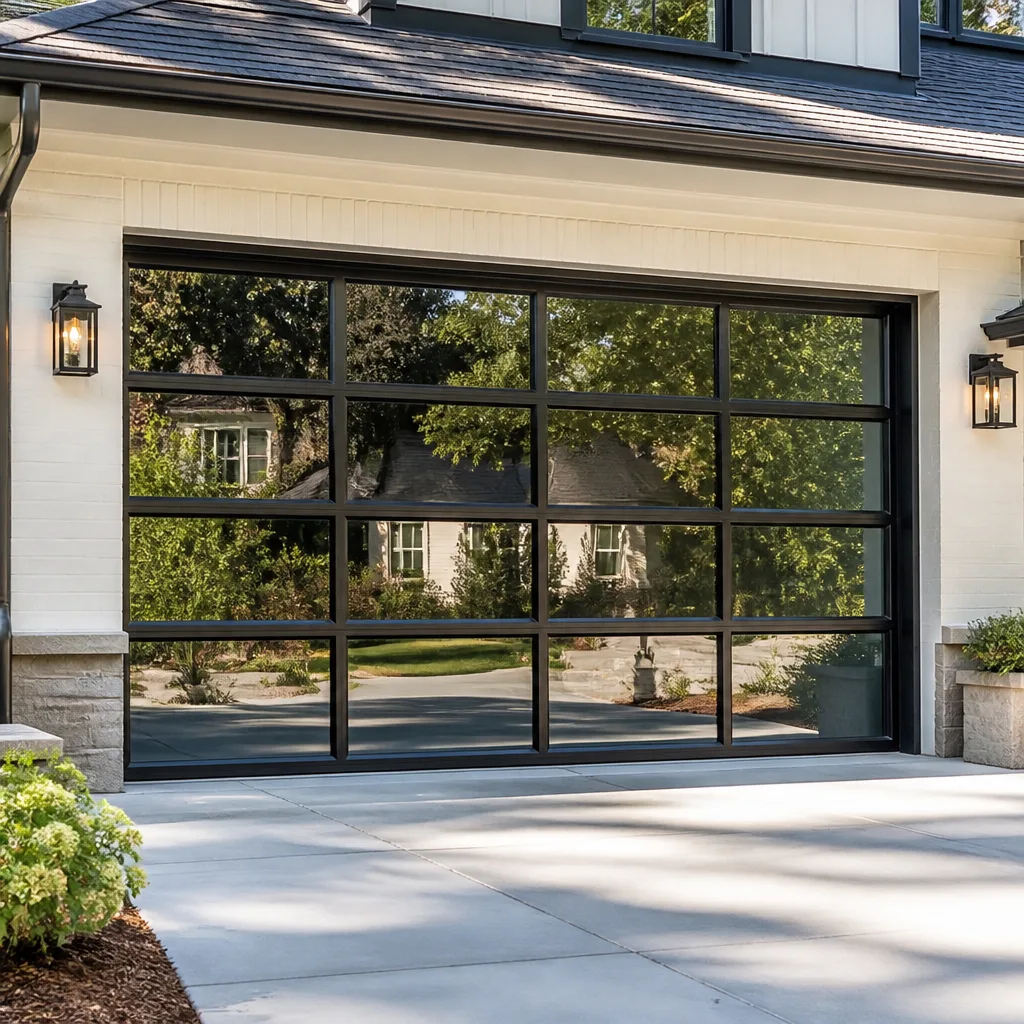 Full-view glass
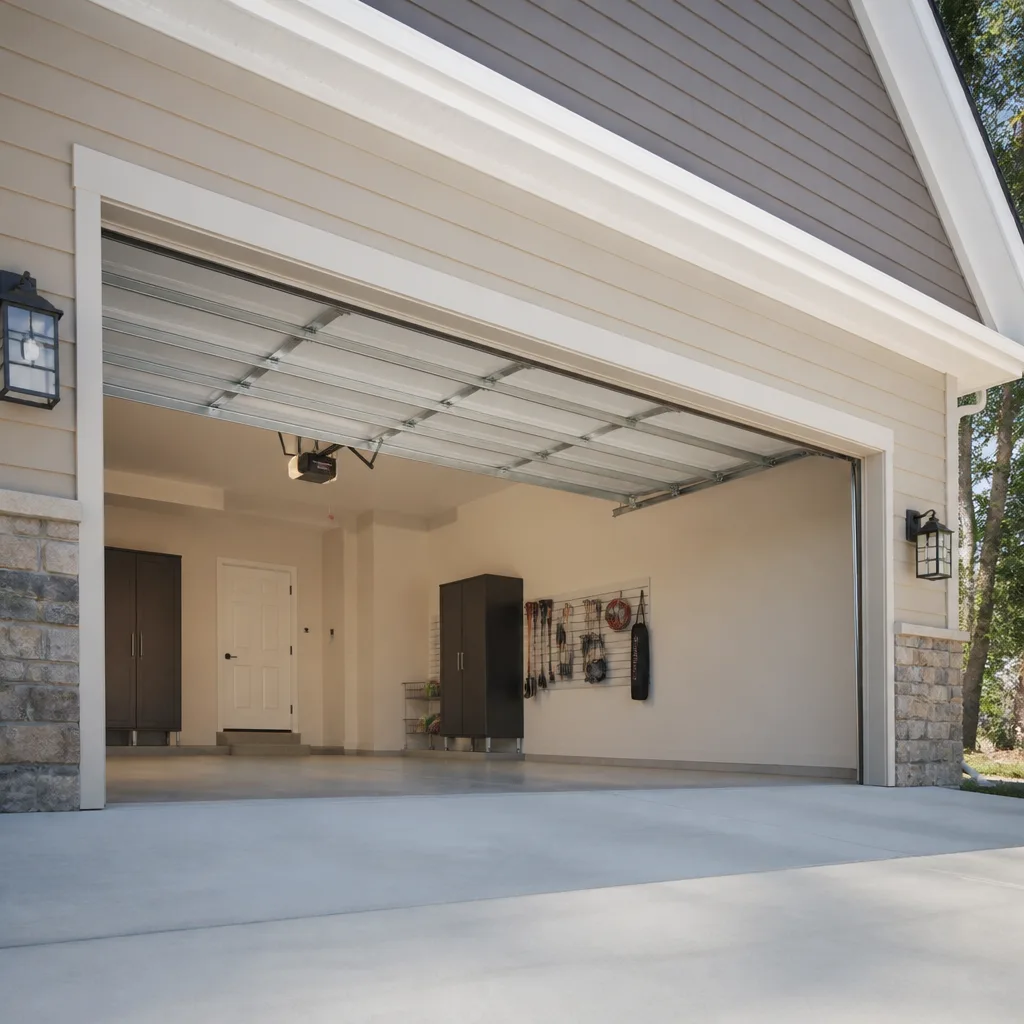 LiftMaster openers
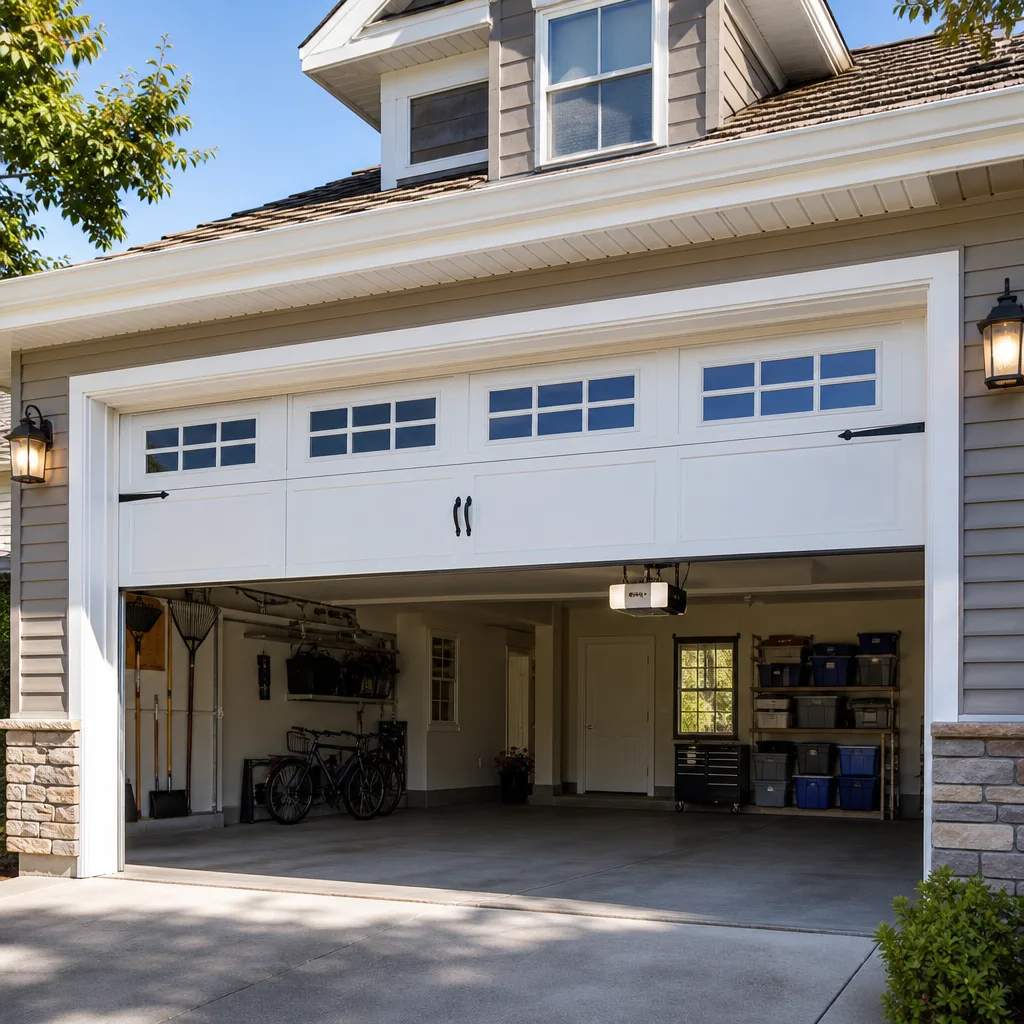 Chamberlain openers
Full 25-point door and opener safety check with every visit - springs, cables, rollers, tracks, and your LiftMaster or Chamberlain opener included
You get a price before we start. It does not change when the pro arrives.
Get your free estimateGarage Door Emergency Preparedness Guide for Garden Grove Homes
Here’s the problem with most garage door advice: it assumes the emergency is the door itself. A snapped spring, a burned-out opener, a bent track. Those are inconvenient, but they’re predictable. The failure mode that catches Garden Grove homeowners off guard is the compound emergency. An earthquake hits, the power goes out, and suddenly the largest moving object in your home is inert. Or you come home to find the door half-open and the opener unresponsive, with no way to close the perimeter of your house. This guide is about sequencing. What you check first, what you never touch, and when a problem moves from a Sunday-morning fix to a call that cannot wait until tomorrow. We’ll keep Garden Grove’s specific housing stock and seismic reality in mind throughout, because a 1980s wood door on a detached garage behaves differently than a modern steel door on a condo’s shared wall.
Quick Answer
Garage door emergency preparedness for Garden Grove homes means knowing three things: how to manually disconnect and operate your door when the power is out or the opener fails, how to assess structural damage before attempting operation after seismic activity, and how to temporarily secure a door that refuses to close. The single most important piece of hardware in your garage is the red emergency release cord, and most homeowners have never pulled it. The second most important thing is knowing which failures are safe to leave overnight and which ones require immediate professional attention to protect the security of your home.
Styles & brands we work with
- Raised-panel steel
- Carriage house
- Modern flush
- Full-view glass
- LiftMaster openers
- Chamberlain openers
Table of Contents
- The Red Cord: Manual Disconnect Operation
- Earthquake Response Protocol for Your Garage Door
- Power Outage Operation and Battery Backup Decisions
- Security Failures: When the Door Won’t Close
- Triage: Same-Hour Call vs. Next-Morning Job
- Preventive Steps That Remove Urgency
- Common Mistakes to Avoid
The Red Cord: Manual Disconnect Operation
Every automatic garage door opener, whether it’s a Genie, Chamberlain, or Craftsman unit, has a manual release mechanism. It’s the red cord hanging from the rail above your car. Pulling it disengages the door from the opener’s drive system, meaning the door can be moved by hand. This matters in two emergencies: when the power is out and you need to leave the house, and when the opener has failed and you need to secure the house. Here’s the sequence that works:
- Close the door first if it’s open. Never pull the red cord while the door is in motion. A door mid-travel has stored tension and its own momentum. Pulling the release at that moment transfers all the force of the door’s weight into the springs and your arms. Wait for the door to settle at either end of its travel.
- Pull the cord straight down. A firm, controlled pull toward the floor. You’ll hear a click as the carriage disengages from the chain or belt.
- Lift the door by hand. A balanced door weighs 8 to 10 pounds of effective lift because the springs carry the genuine weight. If you’re fighting the door, stop. That resistance means a spring has failed or is failing, and the door is now dead weight.
- Lock the door in place. Once you’ve opened or closed it manually, re-engage the opener by pulling the red cord toward the door until the carriage clicks back onto the drive. Or use the slide lock on the track if your door has one.
A critical caveat: if a spring is already broken, the red cord turns your door into a 200- to 300-pound slab of steel, wood, or composite. A balanced door is easy to lift because the torsion or extension springs do the work. A door with a broken spring will drop like a wall when you try to lift it. If you pull the cord and the door feels impossibly heavy, do not attempt to raise it. Lower it back down if you can, carefully, and call for garage door repair before touching anything else. A broken spring under that kind of load is dangerous. This is one of the few genuinely hazardous components in your garage, right up there with electrical panels and high-tension cables. Treat the springs as loaded at all times.
Earthquake Response Protocol for Your Garage Door
Garden Grove sits on ground that moves. When it does, your garage door is one of the first systems to suffer because it’s a large, flat, weighted plane suspended in an opening. After a quake, the protocol isn’t “try the opener and see what happens.” The protocol is inspection first. Here’s the sequence, in order:
- Check the door’s alignment visually. Stand outside and look at the gap between the door and the frame. Is the gap even on both sides? A door that was square before and is not now means the frame or the door has racked. The tracks may have shifted. The sections may have twisted.
- Look at the springs. Torsion springs run on a shaft above the door. Extension springs run along the horizontal tracks. Look for separation, obvious gaps in the coil, or a spring that’s hanging loose. After seismic movement, a spring can pop out of its mounting or develop a crack that fails under the next cycle.
- Check the tracks. Are they still attached to the wall at every bracket? A track pulled away from its mounting by even an inch can derail the rollers and jam the door.
- Test once, briefly. If everything looks intact, press the opener button and watch. Stop immediately at any grinding, off-angle movement, or hesitation. A door that’s been through a quake and is now off-track will destroy the panel edges if you keep cycling it.
What you’re looking for is whether the opening itself is still parallel. A garage in Garden Grove’s older neighborhoods, where homes were built in the 1950s and 1960s, often has wood framing that has settled or shifted over decades. A quake adds new movement on top of that. If the door binds, don’t force it. Forcing a racked door is how you tear a track off the wall and turn a $200 repair into a $1,500 panel replacement. This is also the moment to assess whether the issue is with the door hardware or the opener. If the door moves by hand with the red cord pulled but the opener won’t cycle, the problem is in the drive unit. If the door itself is sticking, the problem is structural. We see both after any significant seismic event in the area.
Power Outage Operation and Battery Backup Decisions
Power outages in Garden Grove come from heat waves, Santa Ana wind events, and the occasional rolling blackout. When the power is out, your garage door opener is a dead box of electronics. The door itself is still operable, but only manually, and only if you know how. That’s covered in the section above. What this section covers is whether a battery backup is worth installing, and which kind actually works.
A battery backup is a small, rechargeable unit wired directly to the opener. When the main power cuts, the backup takes over automatically and provides enough power for a handful of open-and-close cycles. The key word is “a handful.” Most backups are designed to deliver 20 to 50 cycles over 24 to 48 hours. If you live in a Garden Grove neighborhood where outages last longer than that, particularly during summer heat events, you need to either manually operate the door as the primary strategy or accept that the backup is a short-term bridge, not a solution.
The budget backups fail under real load conditions for a predictable reason. A cheap backup battery doesn’t provide enough surge current to lift a heavy door, particularly a solid wood door or an insulated steel door from a manufacturer like Clopay or Amarr. The opener draws a spike of current at start-up, and an under-spec’d battery simply won’t deliver it. The door stutters, the motor strains, and the cycle fails halfway through. If you’re installing a backup, match it to the exact opener brand and model. A Chamberlain backup on a Chamberlain opener works because the voltage and current curves were designed together. A universal backup works less reliably. That’s not a sales pitch. That’s observed behavior.
One more point worth making plainly: a battery backup does not help if a spring breaks during the outage. The opener might power on, but it’s trying to lift a door that’s too heavy for it. The opener doesn’t know the difference. It just burns out its gear trying. If the power is out and your door won’t lift even with the opener running, you have a mechanical failure, not an electrical one. That’s a garage door opener repair situation, or possibly a spring and cable job, not something a fresh battery solves.
Security Failures: When the Door Won’t Close
Here’s the scenario that rattles people most: it’s past dark, the garage door is open, and pressing the close button does nothing. Now you’re not locked out. You’re locked open. Every tool, bike, lawn mower, and box of whatever is visible from the street. Here’s the step-by-step of what to do, in order, without damaging the door or the frame:
- Kill the opener. Unplug the unit or flip the breaker. You don’t want it attempting a cycle while you’re working around it. A door that starts moving unexpectedly is a serious hazard.
- Check for an obstruction. The photo eye sensors at the bottom of the tracks can be knocked out of alignment by anything, including a car bumper or a stray garbage can. Misaligned sensors make the opener believe something is in the way, and it refuses to close. Realign them so the indicator lights are solid. This fails more often than any other issue in Garden Grove garages with teenagers and bikes.
- If the opener still won’t respond, disconnect the door. Pull the red cord. Now you’re operating manually.
- Lower the door by hand. If the springs are intact, the door will lower smoothly. If it falls, release and step back. A falling door isn’t something to catch.
- Secure temporarily. If the door won’t stay down, or if there’s a gap, use a pair of vise grips clamped to the track directly above a roller. This is a mechanical stop, not a permanent door lock, but it prevents the door from being lifted from outside. For a gap, a cut-to-fit piece of lumber wedged into the track does the same job. Do not drill into the door. Do not wrap something around the frame. The goal is temporary, reversible, and non-damaging.
The temporary securing methods matter because a homeowner who panics will do something hasty, like jamming a screwdriver through a track hole or throwing a padlock through a cable loop. Both of those can turn a jammed door into a damaged track, and now the repair is bigger. The vise-grip method is the standard among professionals. It’s not elegant, but it works, and it doesn’t cost you a new door section.
Triage: Same-Hour Call vs. Next-Morning Job
Not every garage door problem is an emergency. Some are urgent enough that every hour the door is open or unsecured is a risk. Others can wait until morning. Knowing the difference is the single most valuable decision you’ll make in a garage door crisis. Here’s the triage framework, in order of urgency:
Same-hour dispatch, no exceptions:
- A door stuck open that cannot be closed manually, because of a broken spring, a derailed track, or a failed opener. An open garage is an invitation.
- A door that has come off its tracks and is hanging. The door can fall. That’s hundreds of pounds.
- A broken torsion spring that snapped while the door was partially up. The door is now unbalanced and dangerous to move in either direction.
- Any situation in which a child or pet has been near the door when it failed, and you’re unsure whether it will move again.
Safe to wait overnight, call by morning:
- A door that closes manually but won’t operate with the opener. Secure it with the vise-grip method, then call. This is inconvenient but not a security hole.
- A noisy door that still cycles fully. Grinding, squealing, or rattling indicates wear, but if the door opens and closes and seals, it’s not an emergency.
- A sensor problem where the door will close if you hold the wall button down. That’s a sensor alignment issue, a component repair that Garden Grove homeowners can schedule in the morning. It’s a repair, not an evacuation.
- Cosmetic damage only, like a dented panel from a car bump. If the door still opens, closes, and seals, the panel itself is a financial decision, not an urgent one.
The question to ask yourself is simple: Is my home’s perimeter secure right now, and is anyone at risk from the door physically? If the answer to the first is no, or the second is yes, call immediately. If the answer to both is no, you’ve earned the right to wait until morning.
Preventive Steps That Remove Urgency
Preparedness isn’t about responding well. It’s about making the response unnecessary. In Garden Grove, the two events most likely to trigger a garage door emergency are a power outage and an earthquake. Neither is fully predictable. What you can control is the condition of the door before either happens. Here’s what a once-a-year check should cover:
- Balance test. Pull the red cord and lift the door halfway. If it stays in place, the springs are carrying their load correctly. If it drops or climbs, the springs are under or over-tensioned. This is a five-minute test that reveals a high-tension component before it fails mid-operation. A spring that fails at 1 a.m. with the door open is an emergency. A spring that’s replaced during a scheduled service is a decision.
- Photo eye alignment. Mark the position of the sensor brackets with a pencil. If they get knocked, you’ll know exactly where to realign them instead of guessing at midnight.
- Track bolt inspection. Tighten any mounting bolts that have worked loose. A track held by three bolts instead of four is a track waiting to twist.
- Opener responsiveness. If the opener hesitates, reverses, or makes a different sound than last year, that’s early warning. Replacing a capacitor or a gear now is a one-hour repair. Replacing a burned-out opener on an emergency call is a worse version of the same problem.
We’re not suggesting that every homeowner should do all of this themselves. Most won’t, and that’s fine. What matters is that the red cord works when you pull it, the door balances, and you know the difference between an opener problem and a spring problem. That last distinction is the one that saves people from dangerous mistakes. A door that’s hard to lift by hand is a spring problem. A door that won’t lift when you press the button is an opener problem. Knowing which one you have tells you who to call and how urgently.
The multi-brand reality of Garden Grove housing stock throws one more variable into preparation. A Chamberlain opener paired with a Clopay door behaves differently than a Genie opener on a Raynor door. They all use the same basic mechanics, but the failure modes differ slightly. A specialist who works across the full range of residential systems, rather than one brand only, sees those patterns. That’s the value of Raven Garage Door Repair in this context: one call covers the combination of door and opener in your particular garage, without a handoff or a second appointment.
Common Mistakes to Avoid
- Pulling the red cord while the door is moving. This is the single most common and most dangerous mistake in garage door operations. The door is under spring tension and its own momentum. Pulling the release mid-travel doesn’t just stop the door; it transfers force unpredictably. Always let the door settle first.
- Forcing a door that’s stuck after an earthquake. Garden Grove’s seismic activity shifts frames and tracks. A door that binds after a quake is telling you something is out of square. Forcing it is how you tear a track off the wall. Inspect first, then operate, and only if the alignment looks clean.
- Assuming a battery backup means the door works during an outage. A backup powers the opener, but it doesn’t fix a broken spring or a jammed door. If the backup is weak or incorrectly matched to the opener brand, the cycle will fail partway.
- Leaving a door half-open overnight on the assumption that the opener will hold. The opener is not a lock. A disconnected door, or one with a failed opener, can be lifted from outside by anyone who knows how. Secure the door mechanically, not electronically.
- Using padlocks, screws, or improvised braces through the track. These “temporary” fixes damage the track, the rollers, or the door panels, turning an inconvenient repair into an expensive replacement. The vise-grip method is the professional standard for a reason.
- Attempting to adjust or replace a torsion spring without training. Torsion springs carry enough stored energy to cause serious injury or death if mishandled. This is not a homeowner repair, regardless of how many YouTube videos you’ve watched.
- Ignoring a door that’s increasingly noisy. Grinding and squealing are the early signs of component wear. A door that’s noisy in September is a door that fails in January. Early repair is always cheaper and less urgent than emergency repair.
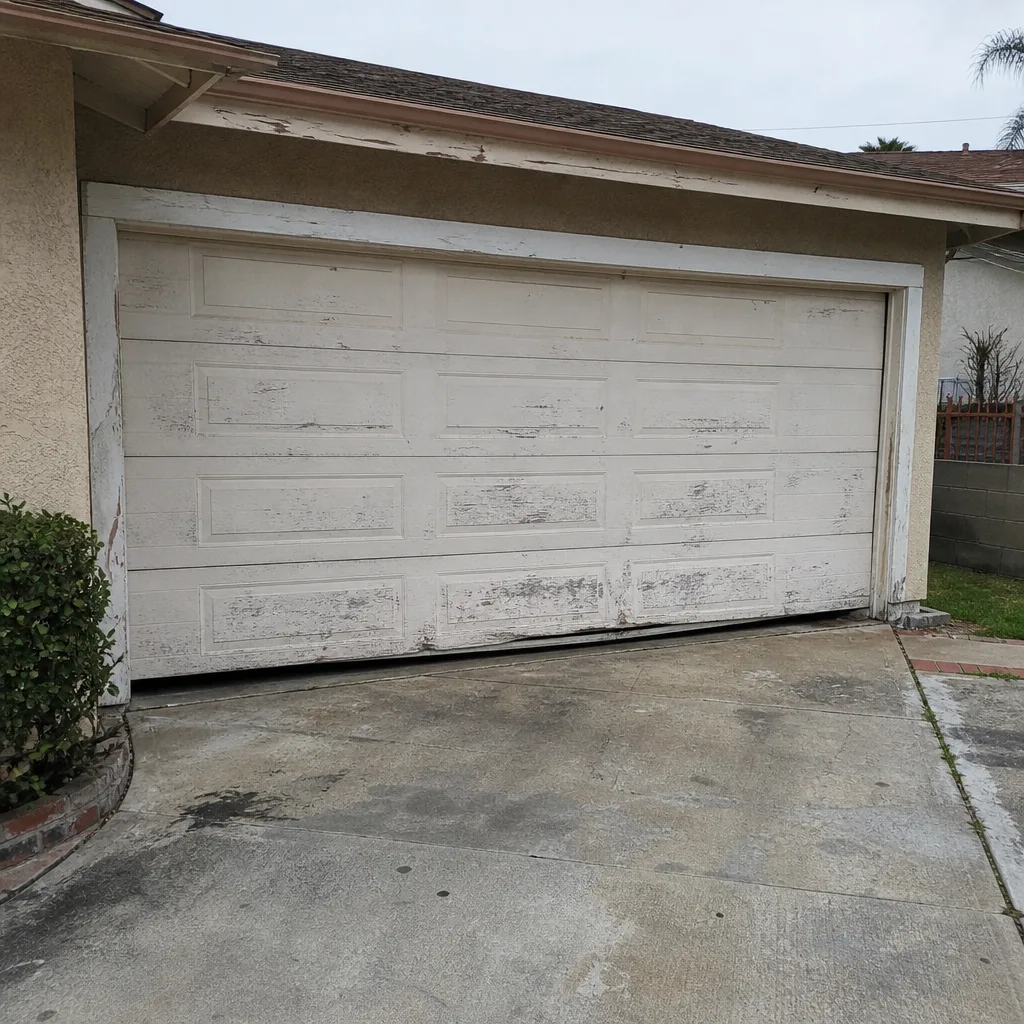
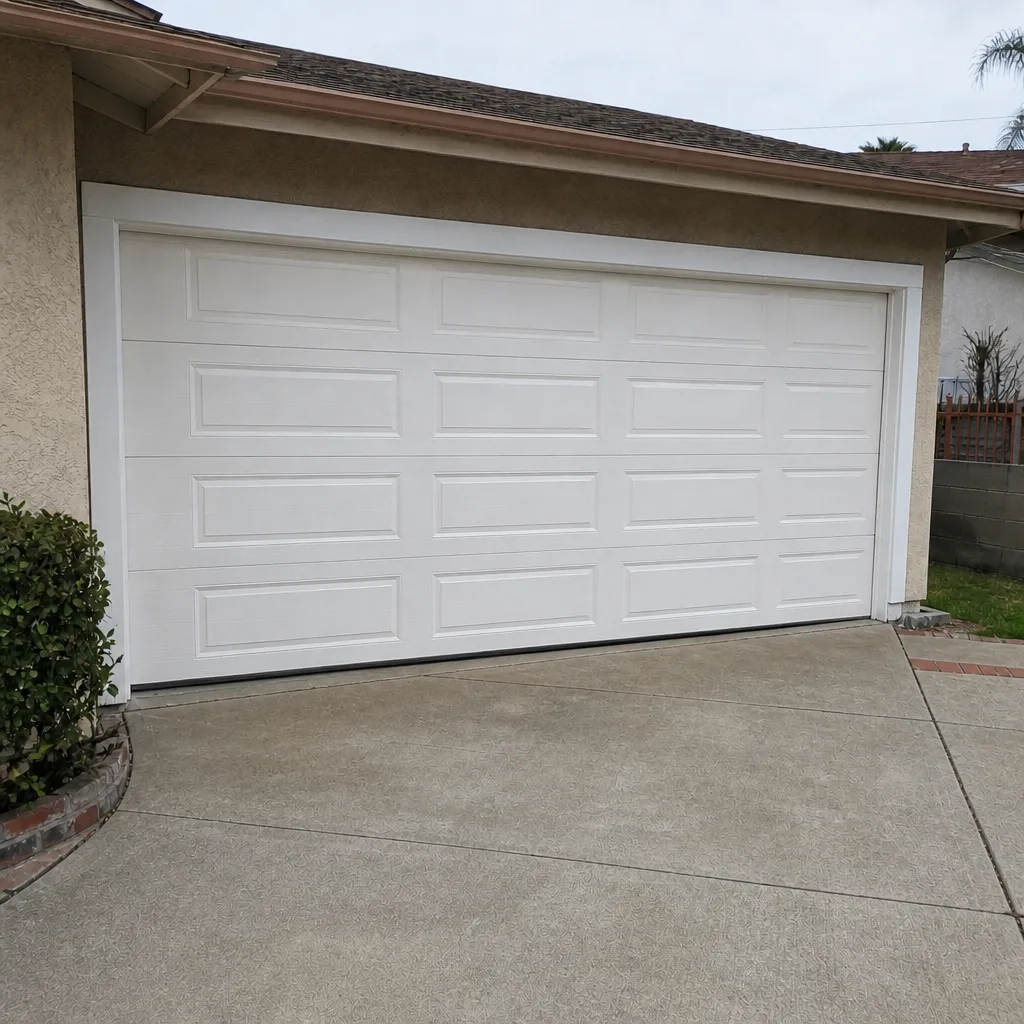
See the difference
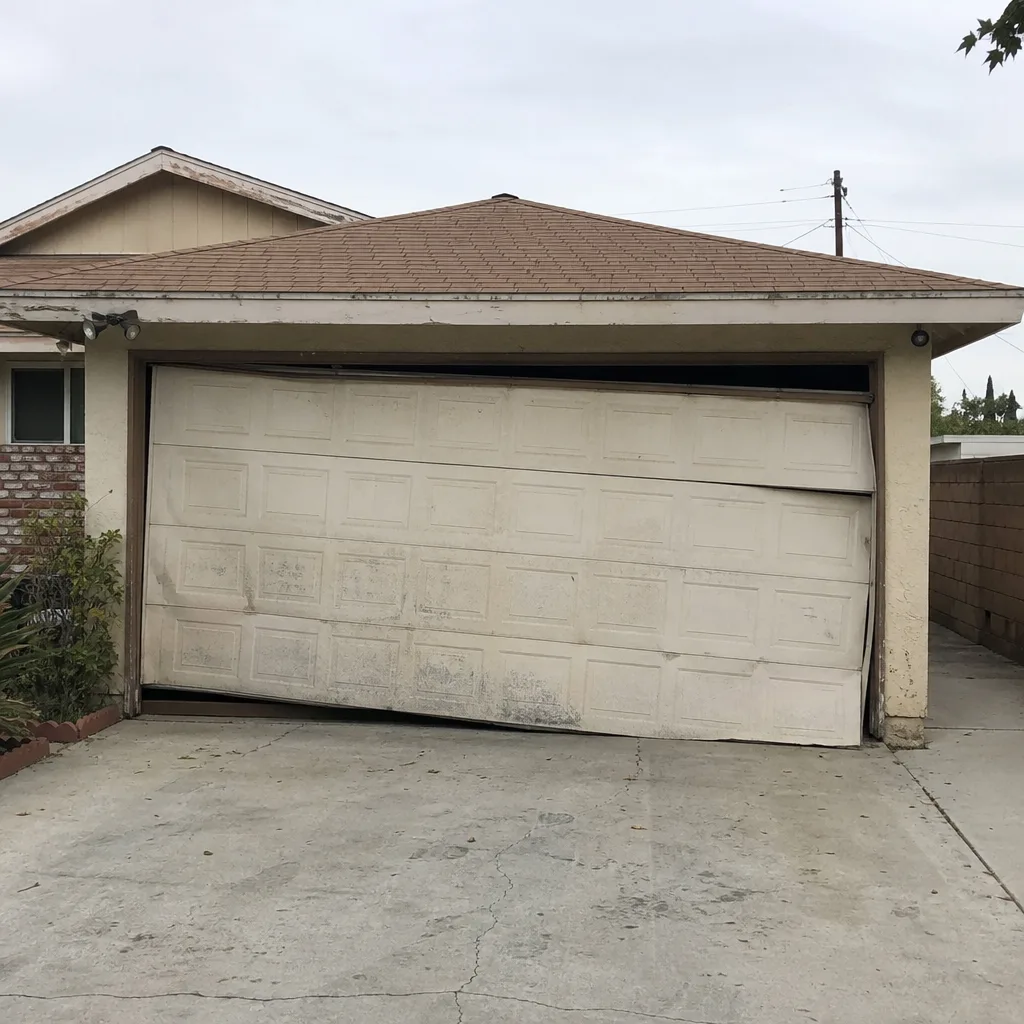 Before
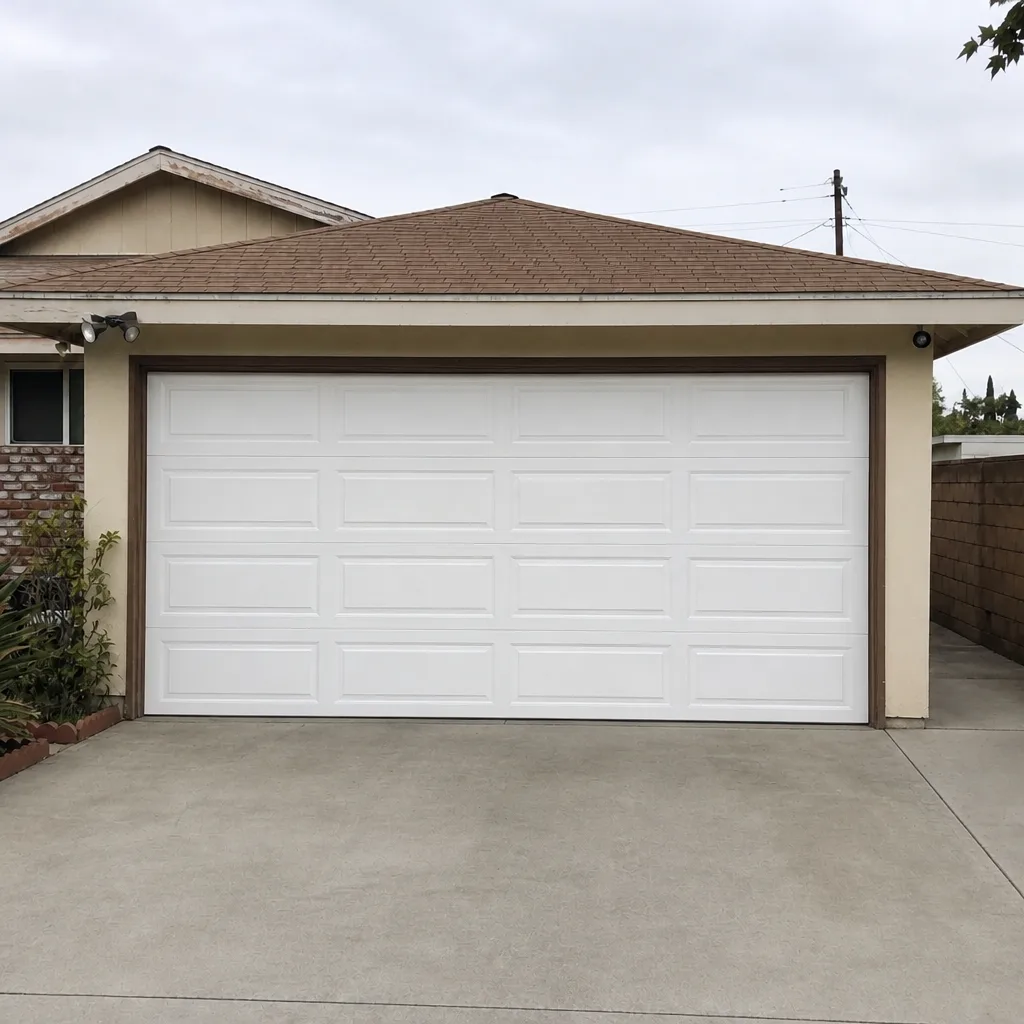 After
 Before
 After
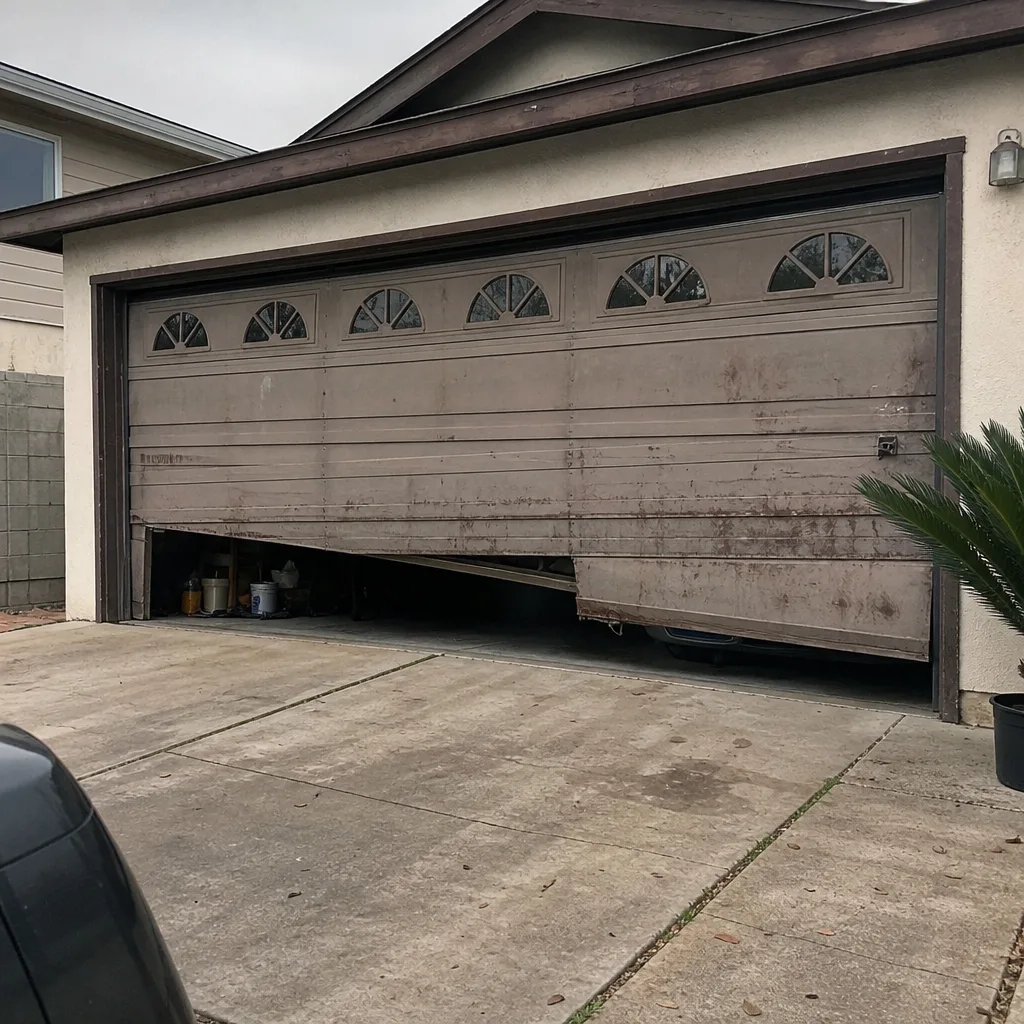 Before
 After
When to Call a Professional
Some garage door problems are safe to assess and tolerate. Others require professional attention. The line is simple: if the problem involves high-tension springs, a derailed door, a door that’s stuck open and unsecurable, or an opener that has completely failed while the door is mid-position, call someone who works on these systems daily. These failures are not DIY-friendly, and the stakes are high, both for your safety and the security of your home. Raven Garage Door Repair offers free estimates in Garden Grove. Call (866) 616-5011. We answer 24/7. Fast dispatch from 7am to 7pm, Sunday through Friday.
Frequently Asked Questions
Check the door’s visual alignment before touching the opener. Look at the gap between the door and frame on both sides, inspect the springs for displacement, and confirm the tracks are still attached to the wall at every bracket. Do not cycle the opener repeatedly. A single test cycle, stopped at the first sign of binding or unusual noise, is the maximum you should attempt before calling for professional inspection.
Yes, but only if the door is balanced and the springs are intact. Pull the red emergency release cord straight down to disengage the opener, then lift or lower the door by hand. A balanced door feels light. If the door is heavy or drops when you release it, stop immediately. That indicates a spring failure, which makes the door dangerously unbalanced. Do not attempt to force it.
Typical emergency garage door repair in Garden Grove ranges from $180 to $340 for a single torsion spring replacement, $150 to $300 for a cable or track alignment issue, and $250 to $550 for a burned-out opener gear or motor. A full opener replacement typically runs $450 to $900 depending on the model and drive type. These are estimates: the final price is always set by a written estimate before work begins. Call (866) 616-5011 for an exact quote. We answer 24/7.
First, check the photo eye sensors and clear any obstruction. If the opener still won’t close the door, pull the red cord to disengage the door, lower it by hand, and secure it with a pair of vise grips clamped to the track above a roller. Then call a professional. Do not leave the door open overnight. An unsecured garage is a perimeter breach, not just an inconvenience.
A battery backup is worthwhile if power outages in your neighborhood are a recurring event, particularly during summer heat or Santa Ana wind events. However, the backup must match the opener brand. A Chamberlain backup on a Chamberlain opener works reliably. A universal backup on a Genie or Clopay-compatible opener often stalls under load. Also understand the limits: a backup provides a limited number of cycles, not indefinite operation, and it cannot compensate for a broken spring.
Ask two questions: Is my home’s perimeter secure, and is anyone at risk from the door itself? If the door is stuck open and cannot be closed manually, or if the door is hanging off its tracks, that’s an emergency requiring same-hour dispatch. If the door closes and secures but is noisy, or the opener needs replacement but the door seals, it can wait until morning. When in doubt, call. We answer 24/7. Fast dispatch from 7am to 7pm.
The Bottom Line
Garage door emergency preparedness in Garden Grove comes down to three specific skills: knowing how to pull the red cord safely, knowing how to inspect for earthquake damage before operating, and knowing how to secure a door that won’t close. Master those three, and you’ll handle 90 percent of garage door emergencies without making them worse. The remaining 10 percent are the cases where the springs, tracks, or opener fail catastrophically, and those are the ones that require a specialist. Keep the red cord clear, test the balance once a year, and keep a phone number on hand for the failures that can’t wait. A garage door is your home’s largest moving part. It deserves the same preparation you give to a smoke detector or a circuit breaker, because when it fails, it fails like no other system in the house.
Written by the team at Raven Garage Door Repair, serving Garden Grove.