
Last updated November 4, 2026
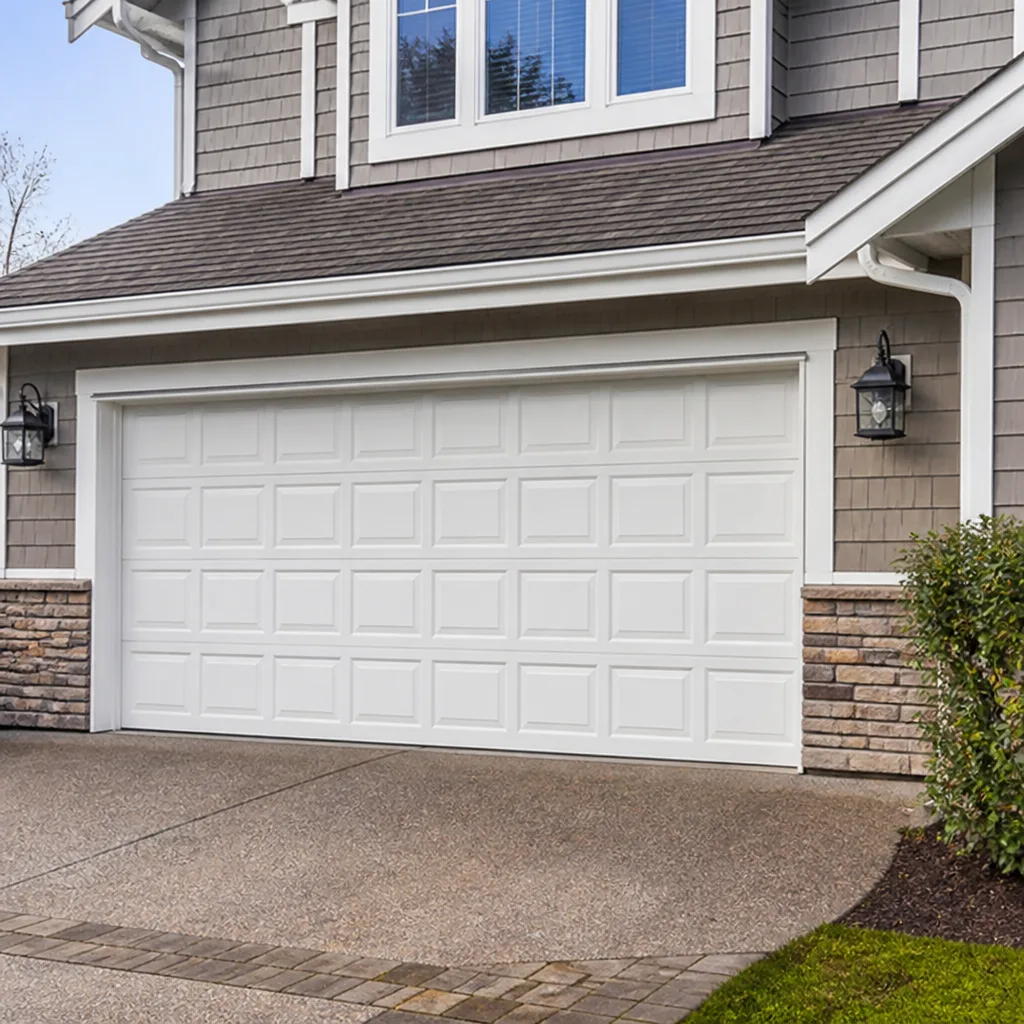 Raised-panel steel
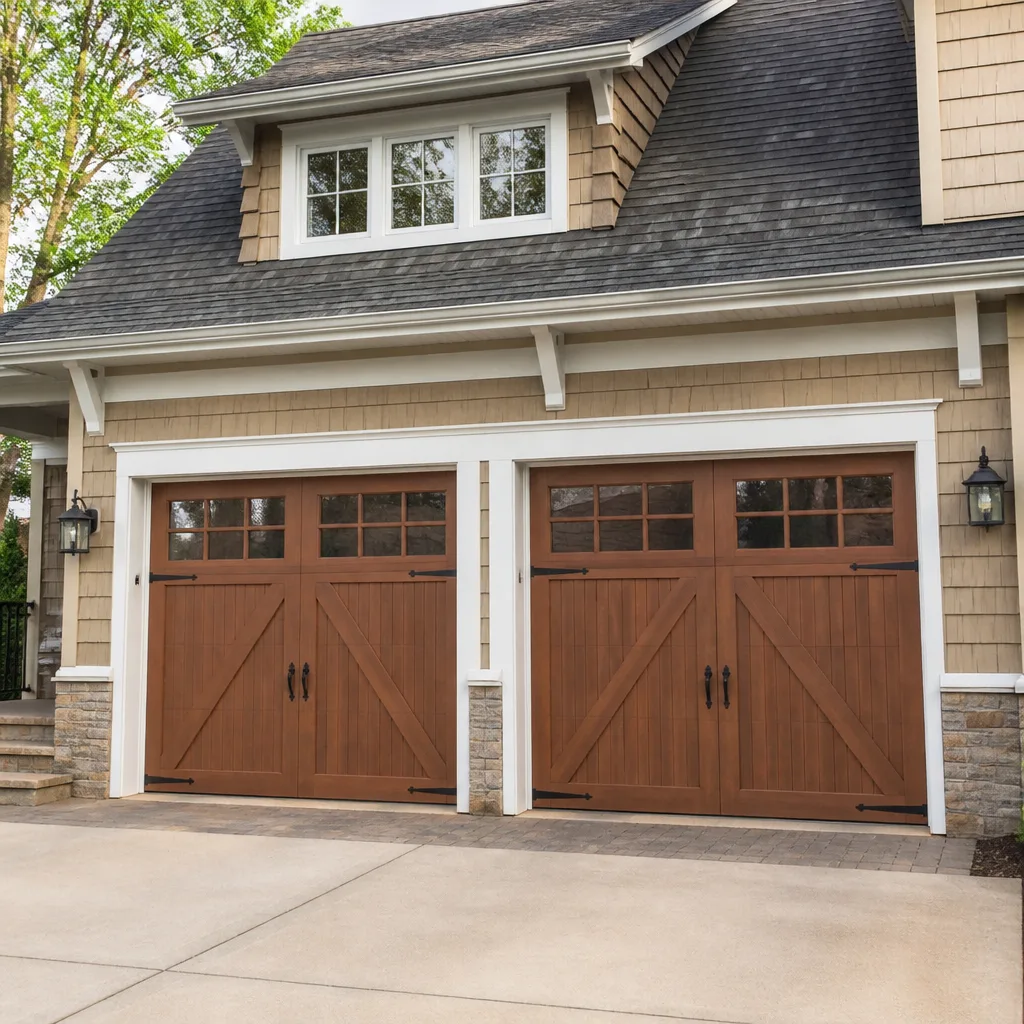 Carriage house
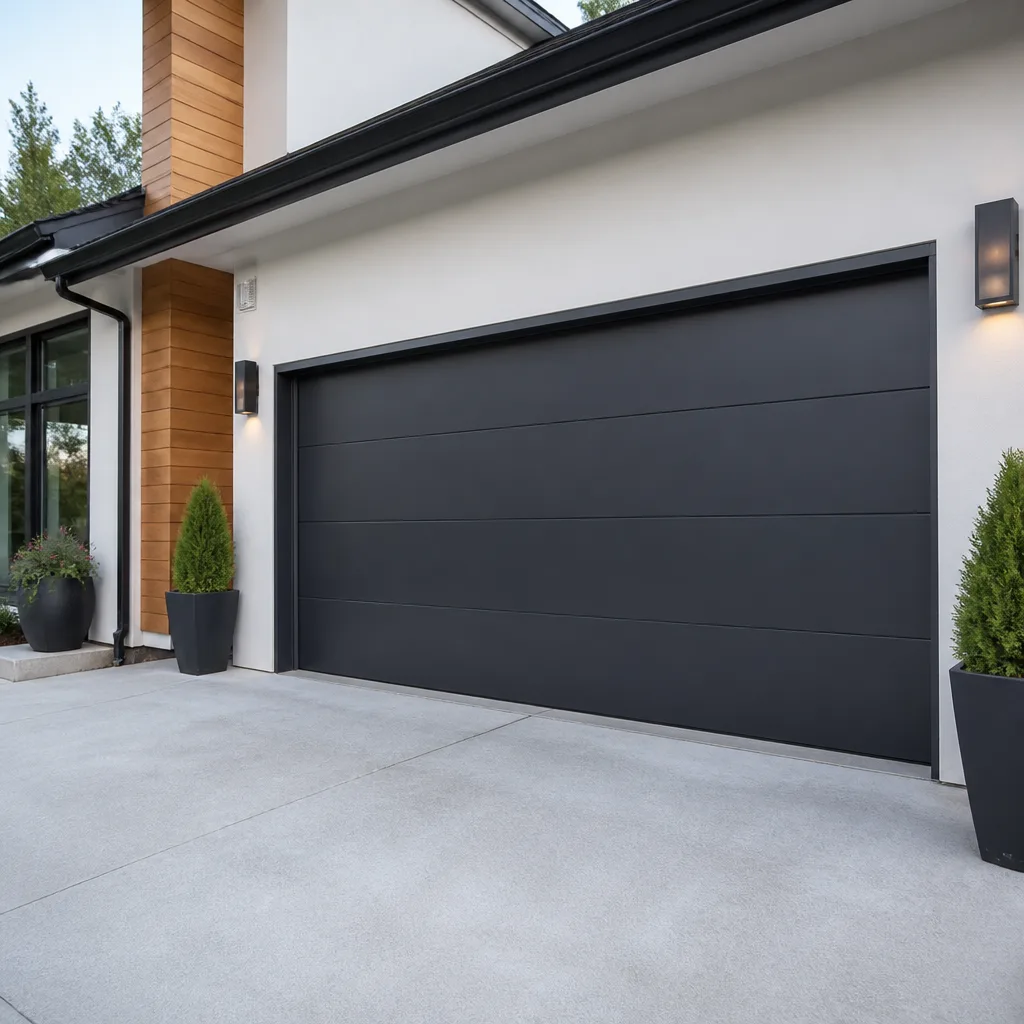 Modern flush
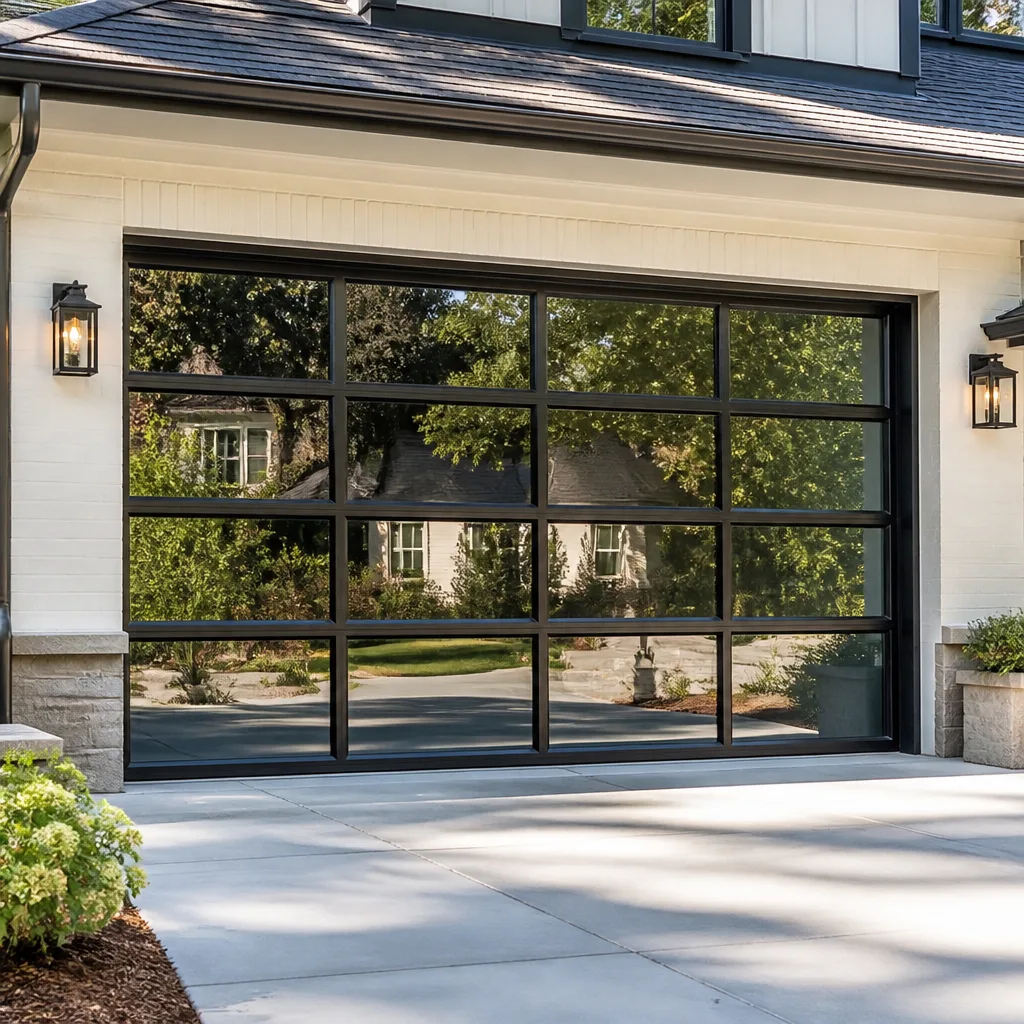 Full-view glass
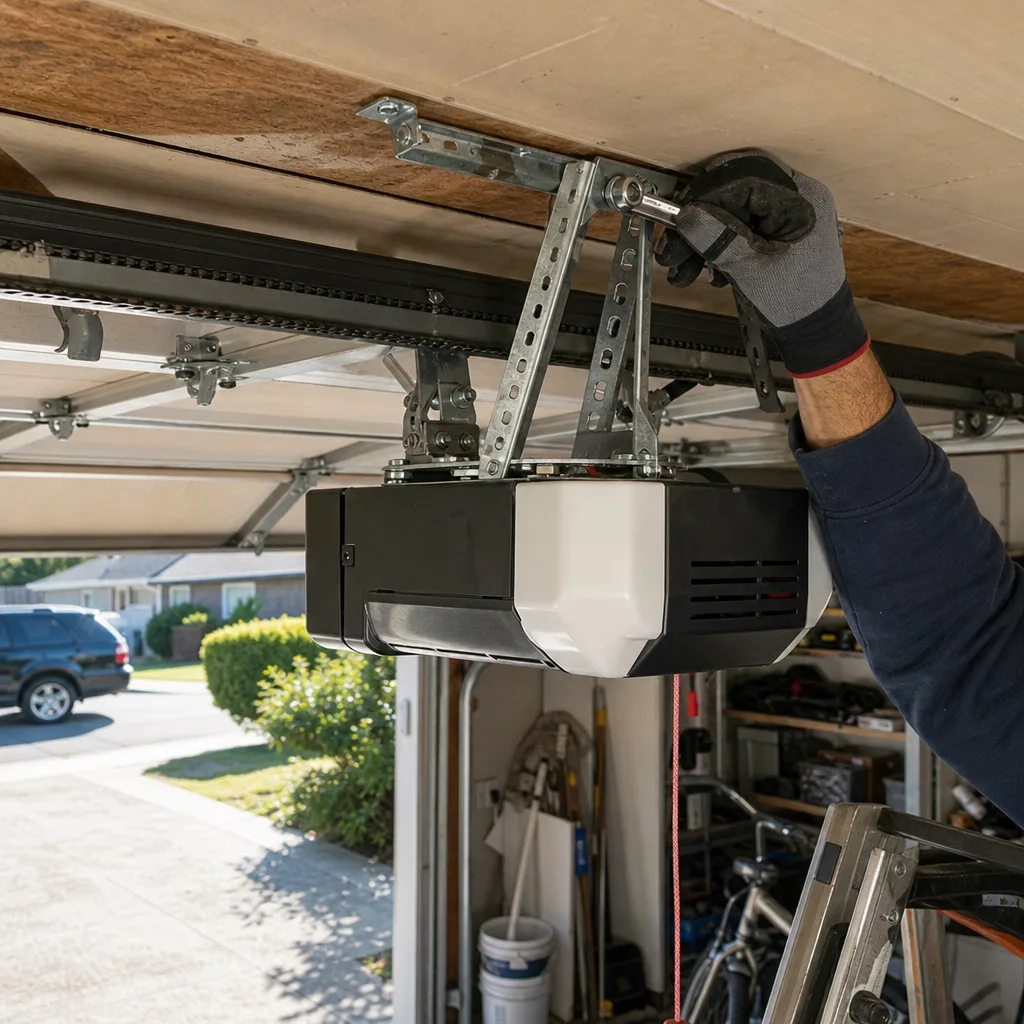
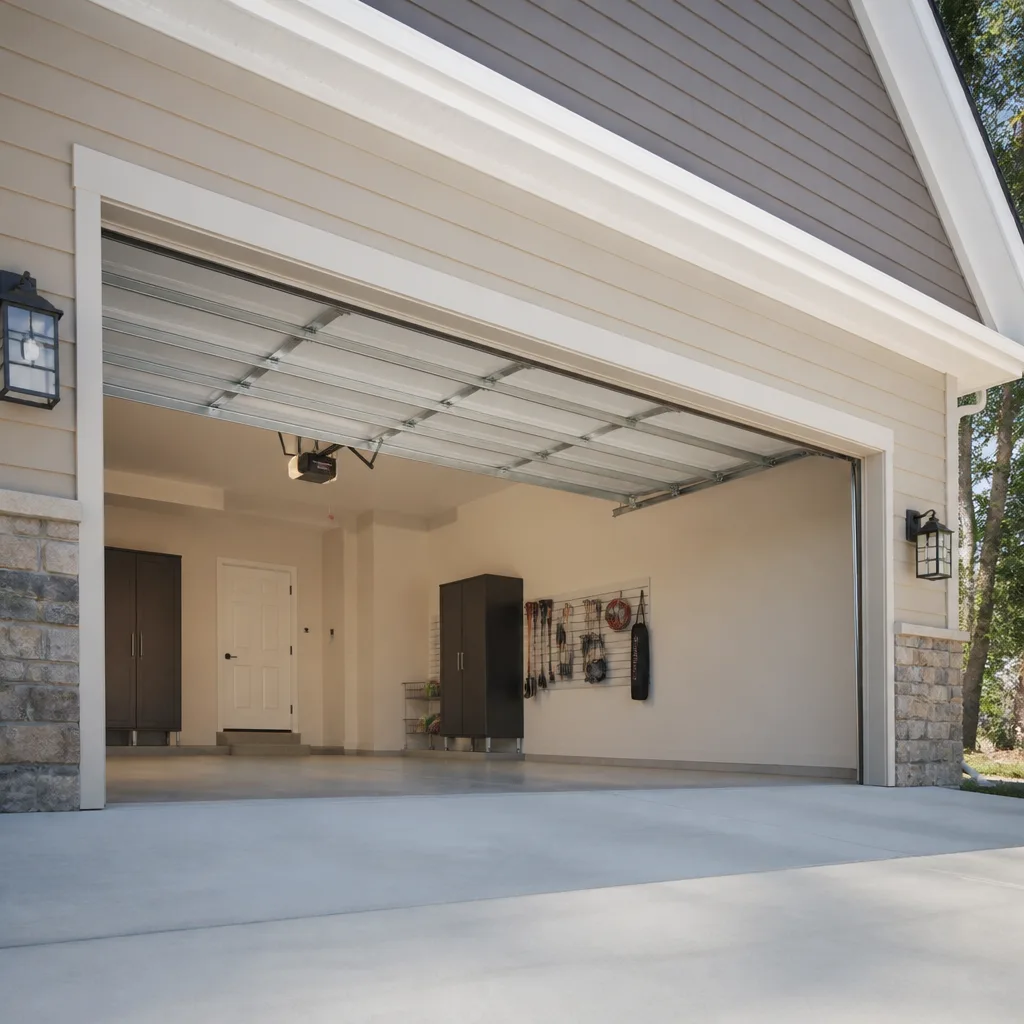 LiftMaster openers
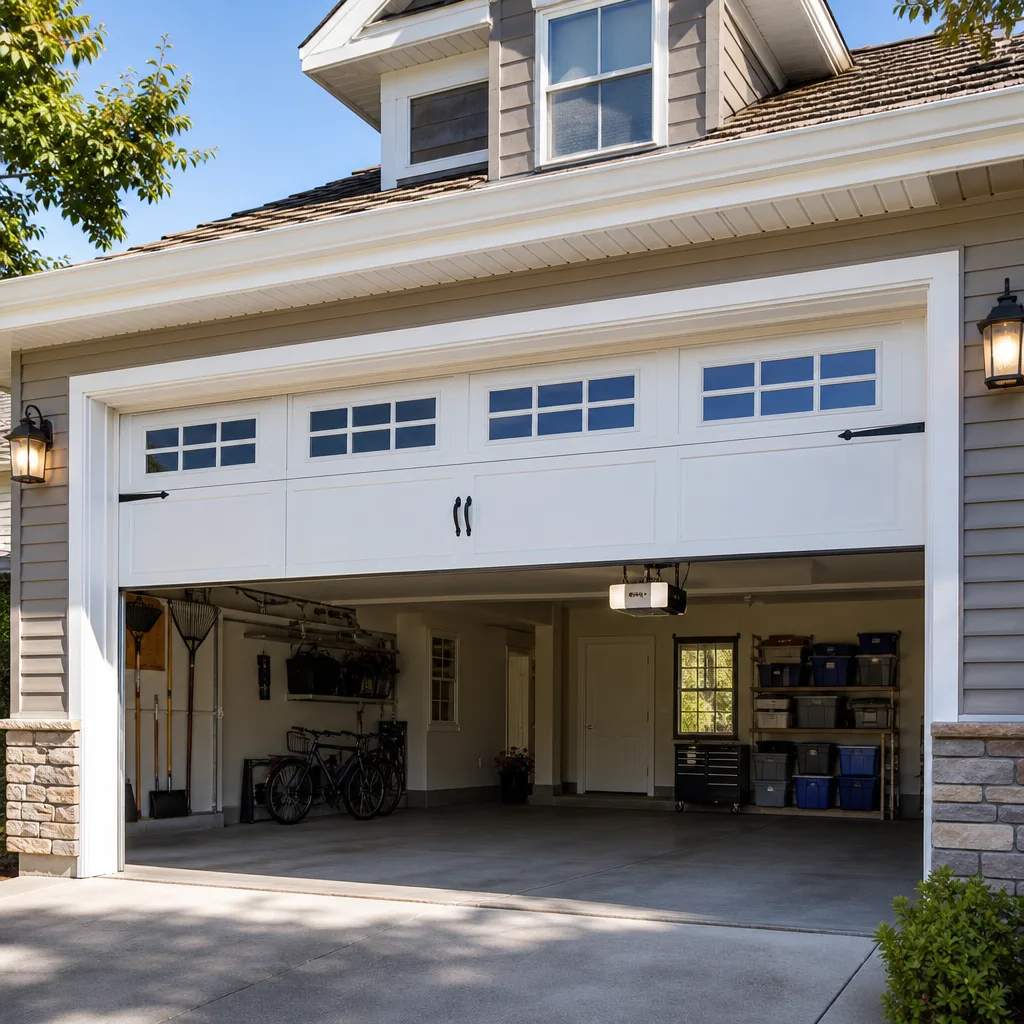 Chamberlain openers
Full 25-point door and opener safety check with every visit - springs, cables, rollers, tracks, and your LiftMaster or Chamberlain opener included
You get a price before we start. It does not change when the pro arrives.
Get your free estimateDIY vs Professional Garage Door: The Garden Grove Homeowner’s Decision Guide
Most homeowners don’t realize that the garage door is usually the single heaviest moving object in their entire house. When it fails, the immediate question isn’t “can I fix this?” but “should I?” The honest answer depends on one thing most guides skip: what happens when you get it wrong. In Garden Grove, where homes mix 1960s ranch styles with newer track developments, the age and brand of your system changes that risk calculation significantly. This guide walks through every major repair task, sorts the genuinely safe DIY work from the dangerous stuff, and explains how California’s specific legal and insurance landscape affects your choices.
Quick Answer
For most Garden Grove homeowners, the smart split is this: handle weatherstripping, sensor cleaning, lubrication, and basic opener programming yourself, but call a professional for springs, cables, panel replacement, and any job involving tension. The dividing line isn’t skill, it’s failure mode. A botched weatherstrip leaks air; a botched spring can break bones. If you’re unsure where your task falls, call (866) 616-5011 and describe the symptom. We answer 24/7.
Styles & brands we work with
- Raised-panel steel
- Carriage house
- Modern flush
- Full-view glass
- LiftMaster openers
- Chamberlain openers
Table of Contents
- The Task-by-Task Risk Matrix: What’s Actually Safe to Touch
- Springs and Cables: Where the Danger Actually Lives
- California Liability: What Unpermitted DIY Work Means for Your Insurance
- Parts and Tool Access in Garden Grove: What You Can’t Buy Locally
- The Competence Trap: Jobs That Look Simple but Compound Into Damage
- The Hybrid Approach: Splitting the Job With a Tech
- Opener Repair vs. Door Repair: Different Risk Profiles
- What Garden Grove’s Housing Stock Means for Your Repair Decisions
The Task-by-Task Risk Matrix: What’s Actually Safe to Touch
Every garage door job falls into one of three buckets, and once you place a task in its bucket, the decision makes itself. We use this same framework when a homeowner calls us about a problem they’ve been ignoring: is this a maintenance task, a tension task, or a structural task?
Bucket One: Low-Risk Homeowner Tasks
These jobs have failure modes that cost you a trip to the hardware store, not the emergency room. In our experience across Garden Grove, homeowners handle these well when they have the right basic tools.
- Weatherstripping replacement. The rubber seal along the bottom of the door gets brittle in Garden Grove’s dry heat and cracks within a few years. Replacement means pulling out the old strip and sliding in a new T-channel run. No tension, no springs, no height work. Worst case, you waste $20 and try again.
- Photo-eye sensor cleaning and realignment. The small sensors on either side of the track get dusty, bumped, or blocked by stored bikes and boxes. When the door reverses or won’t close, this is the first check. A soft cloth and a level solve most cases. This is genuinely safe because the sensors are low-voltage components.
- Lubrication. A shot of white lithium grease on the rollers, hinges, and the opener rail reduces noise and extends hardware life. The key is using the right product. WD-40 is not a garage door lubricant: it’s a solvent that strips the grease you need. Use a silicone spray or white lithium grease specifically for garage doors.
- Battery replacement and opener reprogramming. If your remote isn’t responding and you’ve ruled out the photo eye, a dying battery is often the culprit. Reprogramming a remote or keypad typically involves pressing a learn button on the motor head and following the brand’s sequence. LiftMaster and Craftsman units have slightly different button locations, but the process is documented in the owner’s manual and low-stakes to attempt.
Bucket Two: Tension Tasks – Stop Here
These are the jobs where the tool is fighting back against hundreds of pounds of stored force. The failure mode is a projectile, a caught hand, or a suddenly free-falling door. Nothing about these tasks forgives a mistake.
- Spring replacement (both torsion and extension). More detail below, but in short: never.
- Cable replacement or adjustment. Cables carry the same tension as the springs. If a cable is frayed, the system is already failing. Replacing it requires unwinding tension safely, which is the exact procedure that injures people.
- Track repair or replacement. The tracks guide the door under tension. A hammered-together track or one that isn’t perfectly aligned will bind the door and can fail under load.
Bucket Three: Structural Tasks – Assess Before Acting
These jobs have a wide range. Some homeowners handle a single panel replacement cleanly. Others discover hidden alignment issues that make the job snowball. Here’s the honest breakdown.
- Single panel replacement. If a vehicle bumped into the bottom section and creased it, replacing that section is possible as a DIY job if you can source the exact panel from the same manufacturer (a Clopay door needs a Clopay panel). But the tricky part is matching the color after years of Garden Grove sun fade. Many homeowners end up with a visible mismatch and then want the whole door refinished.
- Roller replacement. Steel rollers wear out and get loud. Swapping a roller means lifting the door off the track one section at a time. The bottom rollers are under cable tension, so this is a mixed-risk job. Top and middle rollers are accessible; bottom rollers are best left to a pro.
- Opener replacement. A full opener swap is very doable for a capable homeowner, but the new unit needs force calibration, limit setting, and safety reversal testing to be safe and code-compliant in Garden Grove. More on that below.
Springs and Cables: Where the Danger Actually Lives
A garage door spring isn’t dangerous because it’s complicated. It’s dangerous because it’s simple but hides enormous stored energy. A torsion spring wound to balance a 160-pound door holds enough force to snap a wrist, fracture a forearm, or send a winding bar through a face if it slips. Extension springs stretch along the track and can turn into a missile when one breaks. In our experience, this is the one repair where every professional has seen the aftermath of an attempted DIY job that ended badly.
How a torsion spring works: it’s a coiled steel bar mounted above the closed door. When the door goes down, the spring winds tighter and stores energy. When the door goes up, that stored energy helps lift the panels. The cables you see on either side connect the spring system to the bottom of the door, carrying that lifting force. When a spring breaks, you’ll usually hear it. It sounds like a gunshot inside the garage. The door then becomes dead weight, and if you try to open it manually without correcting the tension, the opener will strain, the cables will wear wrong, and the door can drop or bind unpredictably.
The tools for a spring swap are specialized: winding bars of the precise diameter for your spring (not screwdrivers, not rebar), a full set of wrenches, and the training to know how many quarter-turns your specific spring needs. You also need to replace both springs at once, because the surviving spring is the same age and has the same cycle count. A misjudged spring on a Wayne Dalton or Raynor door will create a process that is not worth the hospital copay. If a spring has snapped or you see a gap in the coil, call (866) 616-5011. We answer 24/7. Fast dispatch from 7am to 7pm, Sunday through Friday.
California Liability: What Unpermitted DIY Work Means for Your Insurance
California treats garage doors differently than interior fixtures. In most cities within Orange County, including Garden Grove, a garage door replacement or structural modification can trigger a building permit requirement. The specific threshold varies by city, so you should ask Garden Grove’s building department directly before starting anything beyond basic maintenance. What’s consistent across the state is this: if unpermitted work causes damage or injury, your homeowner’s insurance may deny the claim.
That’s not a scare tactic. It’s how the standard California homeowners policy works. Insurance covers sudden and accidental damage, but it typically excludes damage arising from work done without a required permit if that work was a contributing factor. If you replace a garage door yourself without the required permit, and that door later fails and injures someone or damages a car, your insurer will ask who installed it and whether a permit was pulled. If the answer is “I did, without a permit,” the claim can be denied, and you’re personally responsible.
The practical takeaway: for maintenance tasks like lubrication, weatherstripping, and sensor alignment, no permit is needed. For full door replacement, speak to the Garden Grove building department. For structural repairs like replacing a section or a track, ask. A qualified garage door repair company will know which jobs require permits in Garden Grove and can handle the paperwork as part of the quote. That’s the quiet advantage of using a professional for the bigger jobs. The permit is part of the service, not a surprise you discover after the job is done.
Parts and Tool Access in Garden Grove: What You Can’t Buy Locally
Southern California has no shortage of hardware stores, but garage door parts have a distribution problem that surprises most homeowners. The parts on shelves at big-box stores are generic and built to a price. The parts a professional installs come from commercial supply lines that don’t sell to the public. In Garden Grove, this creates a specific decision point.
What you can find locally: generic weatherstripping, basic remote batteries, universal remotes, white lithium grease, and some generic rollers. That’s fine for Bucket One tasks.
What you cannot easily buy as a homeowner: brand-specific panels from Amarr, Wayne Dalton, or Raynor. Proprietary spring sets matched to your door weight and height. Professional-grade cables with the right end fittings. High-cycle springs rated for more opening cycles than the entry-level ones at retail. Commercial-grade opener parts from garage door opener repair stock like logic boards and gear assemblies for a LiftMaster or Genie unit.
The gap matters because a job that uses the wrong part rarely fails immediately. It fails after months of accelerated wear. A spring with the wrong wire diameter will lift the door, but the motor will strain, cable wear will increase, and you’ll be back inside the problem sooner than you should be. In Garden Grove, where many homes sit under direct sun for most of the day, hardware that isn’t matched to the door’s actual weight and cycle count deteriorates fast. A professional’s access to exact-spec parts is not a markup trick. It’s why the repair holds.
The Competence Trap: Jobs That Look Simple but Compound Into Damage
Some of the most expensive repairs we see in Garden Grove started as a confident DIY project. The issue isn’t that the homeowner lacked the intelligence. The issue is that certain garage door jobs hide their complexity inside apparent simplicity. You won’t know you’re in over your head until the system tells you, loudly, several weeks later.
The classic example is panel alignment. You replace a bottom panel after a bumper tap, and everything looks straight. But the door now binds slightly on one side during travel. The opener compensates by working harder. The motor heats up more. The gear wears faster. The tracks get torqued. Six months later, the opener fails, and the homeowner assumes it’s an opener problem, not realizing the root cause was the panel job done weeks earlier. A professional checks alignment with a level and a micrometer eye, because a door that’s off by a quarter inch at the bottom is off by a full inch at the top after the panels articulate.
The second trap is opener force calibration. Modern openers have force settings that control how much resistance the motor will push against before reversing. Set it too high, and the door will try to crush anything in its path before the safety reversal kicks in. Set it too low, and the door refuses to close on warm days when the metal expands. In Garden Grove, where summer temperatures regularly hit the 90s, a door that closes fine in the morning might stop mid-travel at 3 pm. Homeowners chase this for weeks. A technician with experience on eight major brands, including LiftMaster, Chamberlain, Genie, Clopay, Amarr, Wayne Dalton, Craftsman, and Raynor, knows the calibration curve for each one. Diagnosed and fixed, not guessed and replaced.
The third trap is the spring you didn’t know was going. You replace a broken spring with a matching one from a local shop, but you don’t realize the other spring was one bad cycle away from breaking. When it goes two weeks later, the door behaves worse than before, and you’ve now spent twice what a proper dual-spring replacement would have cost. Springs wear in pairs. They should be replaced in pairs. That’s not an upsell. That’s the correct way to balance the door.
The Hybrid Approach: Splitting the Job With a Tech
The smartest Garden Grove homeowners rarely choose “all DIY” or “all professional.” They choose a split, and there’s no shame in it. Plenty of our customers handle the cleanup, the prep, and the cosmetic work themselves, then bring us in for the parts that actually matter. This isn’t a compromise. It’s the most efficient use of your time and money.
Here’s how to negotiate a hybrid job with a contractor:
- Tell the company upfront what you want to handle. Say it plainly: “I’ll strip the old weatherstripping and clean the tracks. You do the spring replacement and cable check.” A good tech will respect that and quote only the professional portion. A bad one will try to make you feel silly for not paying them to do everything. Walk away from the bad one.
- Ask what parts they’ll bring and what they’ll leave for you. If you want to install a new bottom seal yourself after we replace the panels, we’ll leave the new seal cut to length with the fasteners. You handle the final step on your schedule.
- Clarify the warranty boundary. If a professional installs springs and you later install a new opener yourself, the spring warranty still applies. But if you adjust the springs yourself and something fails, the warranty dies. Be honest about what you’re touching, and the professional can advise you on what’s safe to do alongside their work.
- Avoid the trap of asking a pro to “do it cheaper if I help.” That usually means the professional’s insurance covers your help, which most won’t agree to. The hybrid works when the labor is split into distinct tasks, not shared on the same task. You do your piece. They do theirs. Clear boundaries, clear quote.
This approach keeps the high-risk work where it belongs and lets you have the satisfaction of handling the parts that are truly yours. One call, full fix. That’s how we work in Garden Grove.
Opener Repair vs. Door Repair: Different Risk Profiles
One of the most common confusions in this trade is treating “garage door repair” and “opener repair” as the same thing. They are entirely different systems with entirely different risk profiles, and Garden Grove homeowners save themselves a lot of grief by understanding the line.
The door itself is the mechanical system: panels, springs, cables, tracks, hinges, rollers. This is the heavy, tension-loaded part. It stores energy, and when it fails, it does so suddenly and violently.
The opener is the electronic system: motor head, logic board, remote receivers, photo-eye sensors, limit switches, safety reversal. This is the smart-home integration point. A LiftMaster opener paired with a Clopay door is a common combination in Garden Grove, and the opener is what tells the door when to move and how hard to push on it.
The risk difference: opener repair rarely involves dangerous stored energy. Opening a motor head to replace a gear or a logic board is a small-electronics job. The highest voltage you’ll find is the 120V input line, which you disconnect at the wall first. The parts are lighter, the failure modes are less violent, and a thoughtful homeowner can handle many opener tasks successfully, especially programming, sensor alignment, and remote pairing.
Door repair is where the physical danger lives. Springs, cables, and tracks all operate under load. A door that’s disconnected from its opener and moving freely is a 150 to 400 pound object. Never put any part of your body under a door that isn’t supported by a locking bar or a clamped mechanism, and even then, treat it as if it can drop. The opener is the brain; the door is the muscle. Brain problems are annoying. Muscle problems are dangerous. In our experience, homeowners who respect that line make better decisions than the ones who try to fix everything with a wrench and a YouTube video.
For opener-specific problems, garage door opener repair covers the electronic side of the system, from force calibration to board replacement. For anything on the door side, garage door repair is the place to start. Knowing which one you need before you call saves everyone time, and it helps you understand the quote when you get it.
What Garden Grove’s Housing Stock Means for Your Repair Decisions
Garden Grove isn’t one kind of housing market. The city runs from mid-century ranch homes in the western neighborhoods to newer track developments in the east and a dense mix of condos and multi-family units near the center. Each type of home presents a different garage door profile, and that changes which tasks you should attempt.
In the older ranch homes, you’ll often find original wooden doors or early steel doors from brands like Raynor and Wayne Dalton, which had long production runs in the 1970s and 1980s. These doors are heavy. Wood doors especially weigh significantly more than modern steel, and a spring rated for a light steel door is not what you need. If you live in one of these homes and your door sits heavy or the opener labors, the spring may have been mis-sized at some point in the last 40 years. A professional who works on Raynor and Wayne Dalton doors can check the spring calibration against the actual door weight, not the manufacturer’s spec sheet from when the door was new.
In the newer developments, you’ll see more LiftMaster and Craftsman openers paired with steel doors of a more standard size. These homes are more uniform, which makes parts easier to source and DIY work more predictable. The main issue in these homes is heat build-up in the motor head during summer, which shortens the life of the logic board. If your opener is over ten years old and acting unreliably, it’s probably not a board you can easily replace yourself without sourcing the exact part for your model.
Condo and multi-family situations add a layer of complexity: the garage door is often a shared or common-element feature, and your association’s rules may restrict what you can do to it. If you’re in an HOA-managed property in Garden Grove, check your CC&Rs before replacing or modifying a garage door. The permitted work may require board approval or may be the HOA’s responsibility entirely. Several Garden Grove HOAs include garage doors in the building envelope, meaning a professional repair is authorized and paid for through the association. That’s a phone call worth making before you spend your own money.
Garden Grove’s climate also plays a role the way most homeowners don’t expect. The dry heat and strong sun break down weatherstripping and plastic components faster than coastal air would. It’s not unusual to see rubber bottom seals cracked after just two or three seasons here. The sun also fades painted steel doors unevenly, which matters if you’re replacing a single panel. A professional can’t stop the fading, but they can order a panel from the right manufacturer and often blend the color better than a big-box store match. And while frost and ice are not concerns in Garden Grove, the heat cycle matters: metal expands and contracts daily, which loosens bolts and hastens wear on hinges and rollers. A yearly once-over with a wrench and some lubricant will catch many of these before they become failures.
More broadly, Garden Grove homeowners deal with a specific mix of housing ages, association rules, and climate pressures that make a one-size-fits-all answer wrong. The right answer always starts with what kind of home you’re in and what system is currently installed.
Tools You Need for the DIY-Tolerable Tasks
If you’re going to handle the Bucket One tasks yourself, gather the right tools before you start. This isn’t a shopping list for spring replacement. Those tools are professional-only, and if you’ve bought them already, you’ve answered the DIY question with the wrong answer. These are the tools for the safe jobs.
- A 6-foot level. For checking track alignment and photo-eye height. A door that’s out of level by even a small amount will wear rollers unevenly.
- A socket set with metric and SAE sizes. Garage doors mix both, especially on older homes where hardware has been replaced over the decades.
- White lithium grease and silicone spray. Grease for metal-on-metal contact points, silicone for weatherstripping and nylon parts. Never use WD-40 on rollers or hinges.
- A step ladder rated for your weight plus the task. Most garage door owners use a 6-foot ladder for working overhead.
- Leather work gloves. The edges of steel panels and tracks are sharp. This is the easiest injury to prevent and the most common one we see.
- A headlamp or work light. Garages are dark, and you need to see what you’re doing on the tracks and springs.
If a job requires a tool on this list that you don’t own, the cost savings of doing it yourself start to erode. A one-time weatherstrip replacement that needs a $60 level you’ll never use again makes less sense than a $20 service call add-on. Factor your actual tool cost into the DIY equation.
See the difference
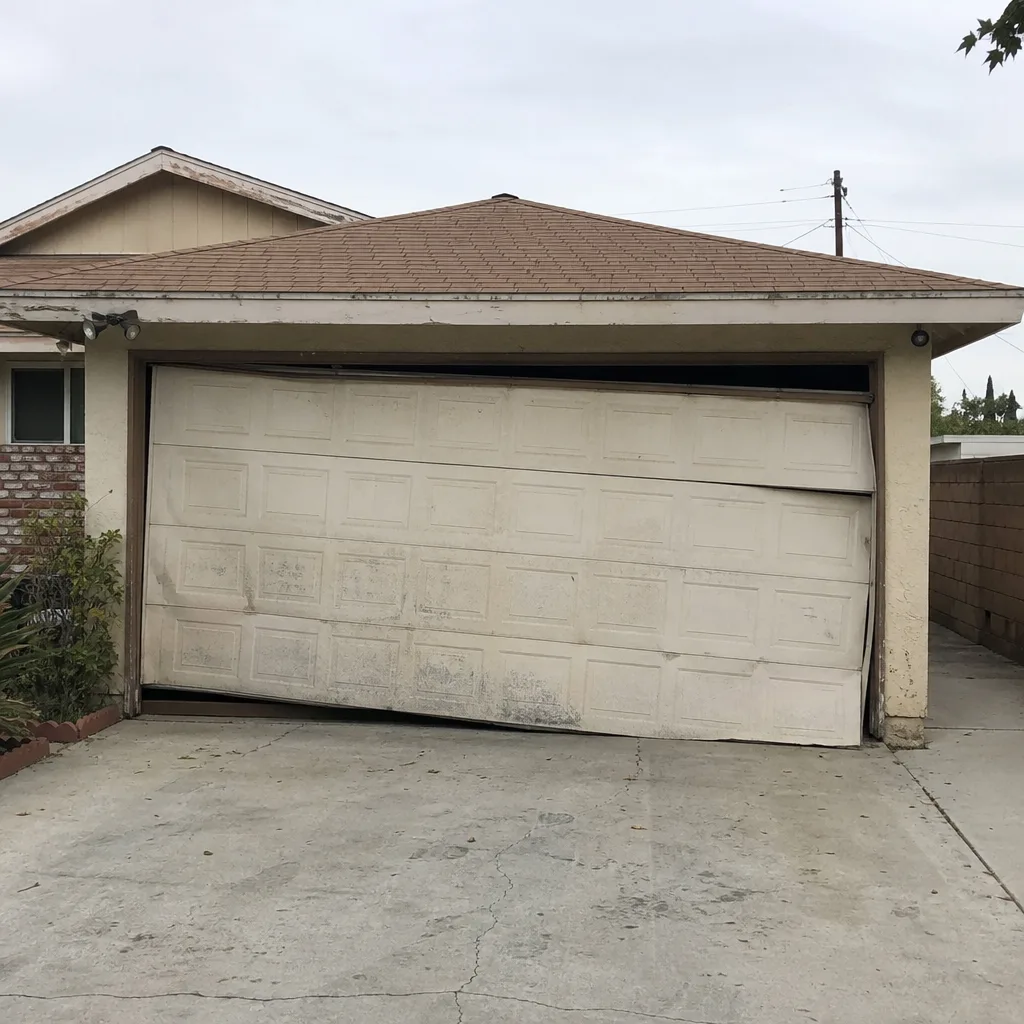 Before
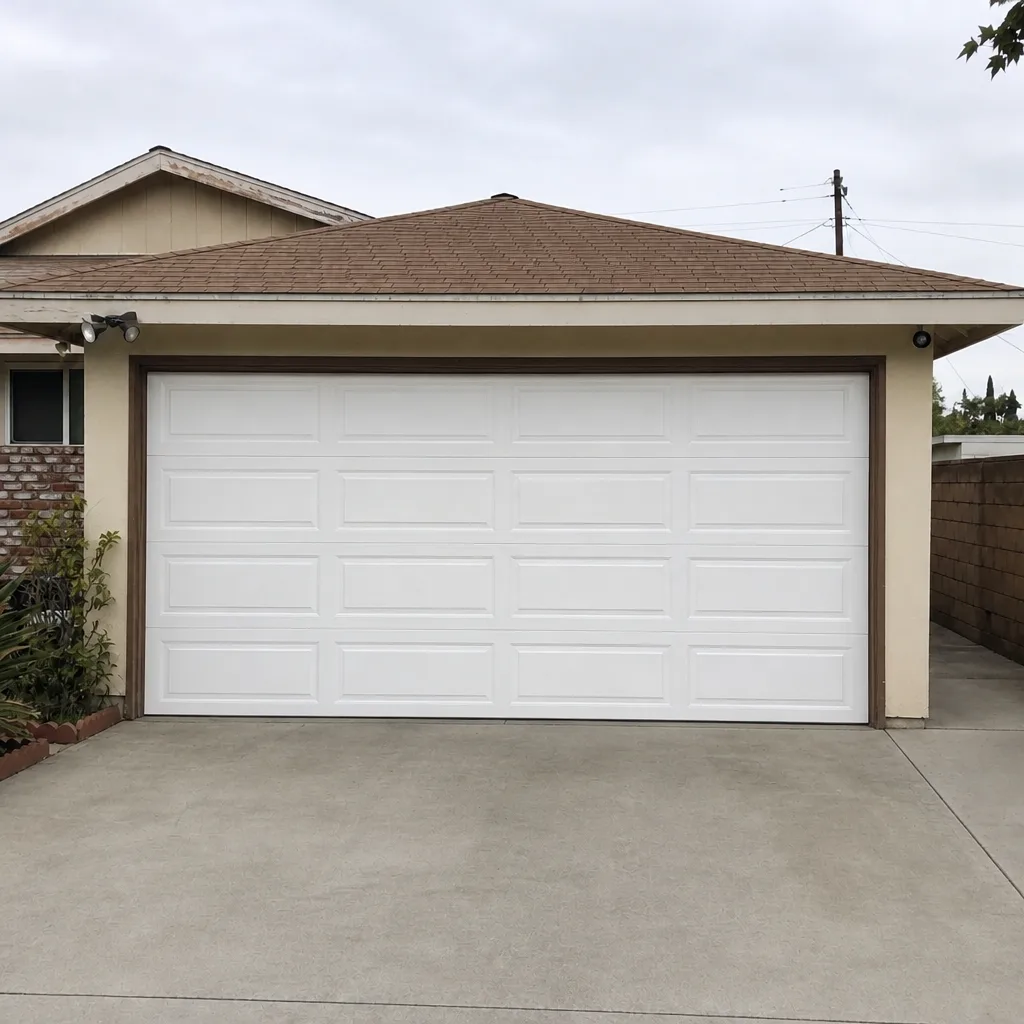 After
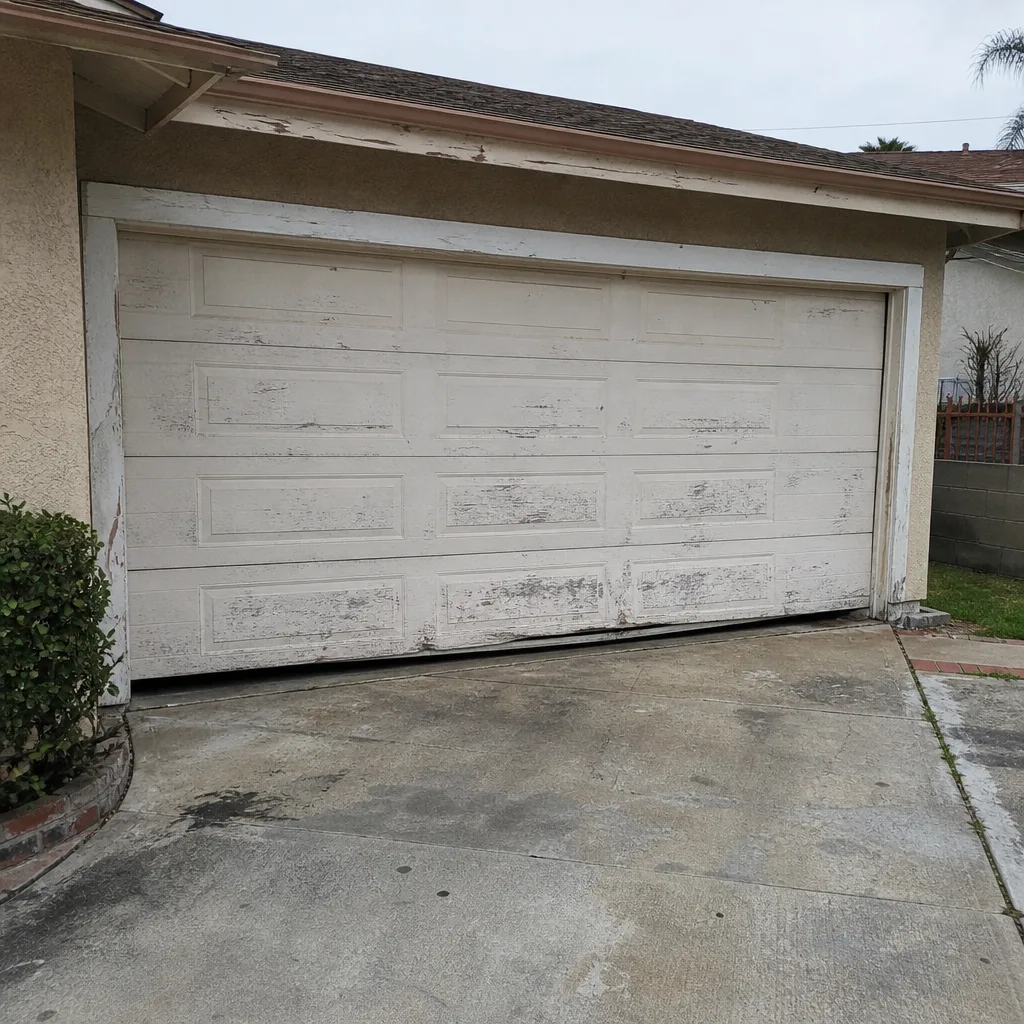 Before
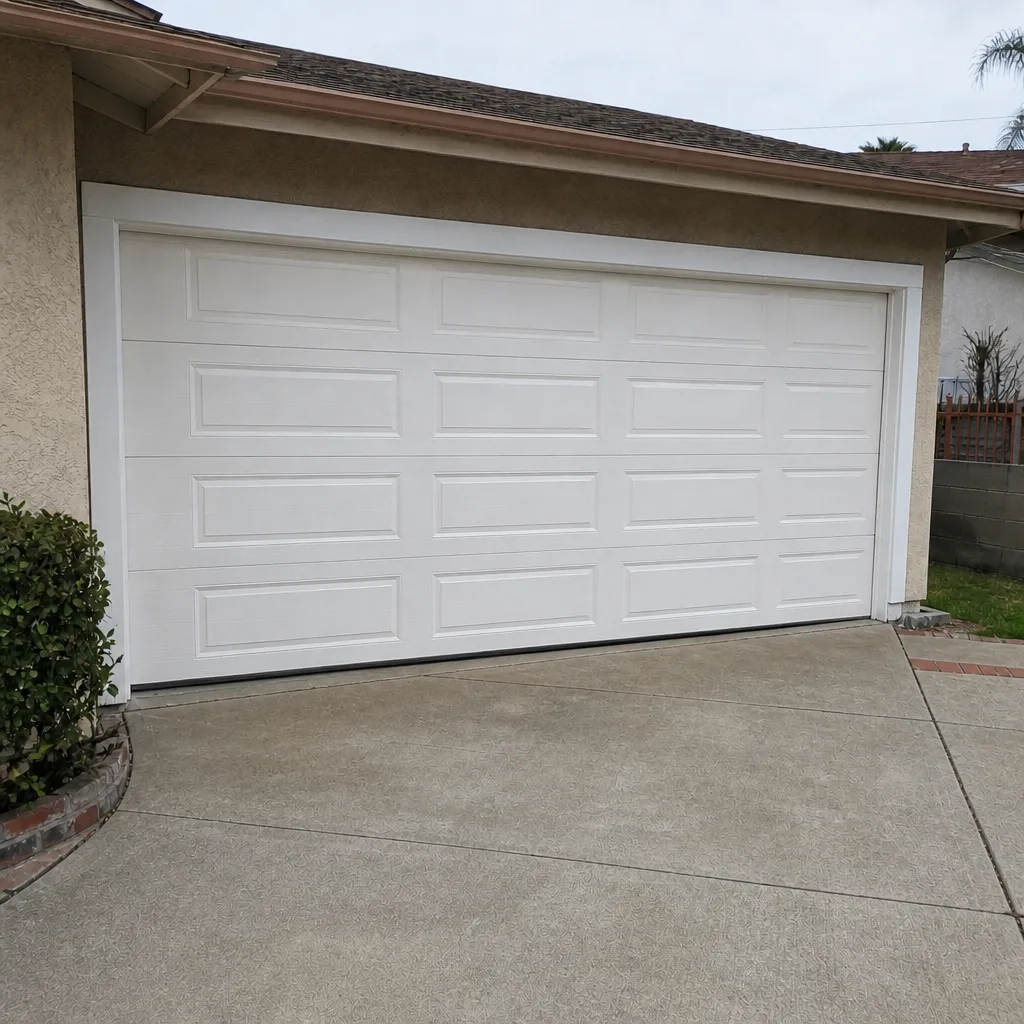 After
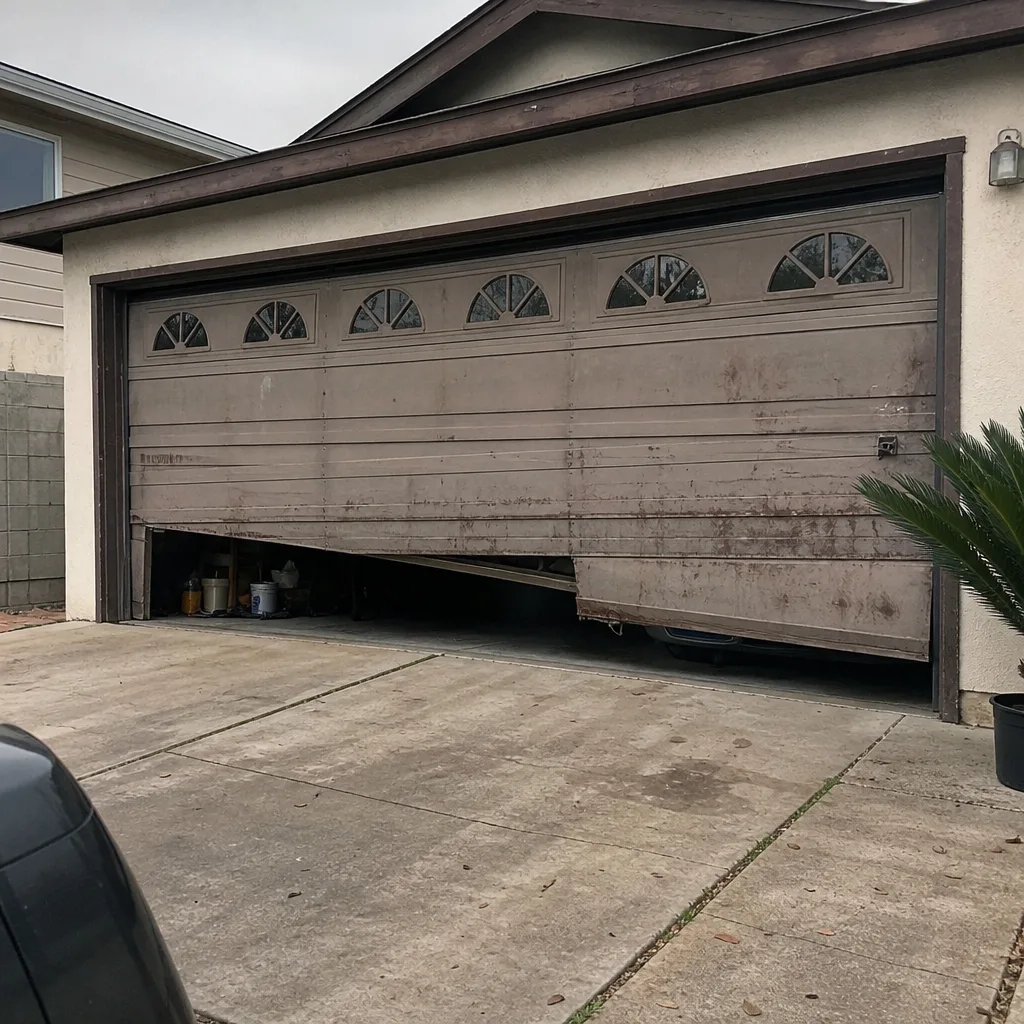 Before
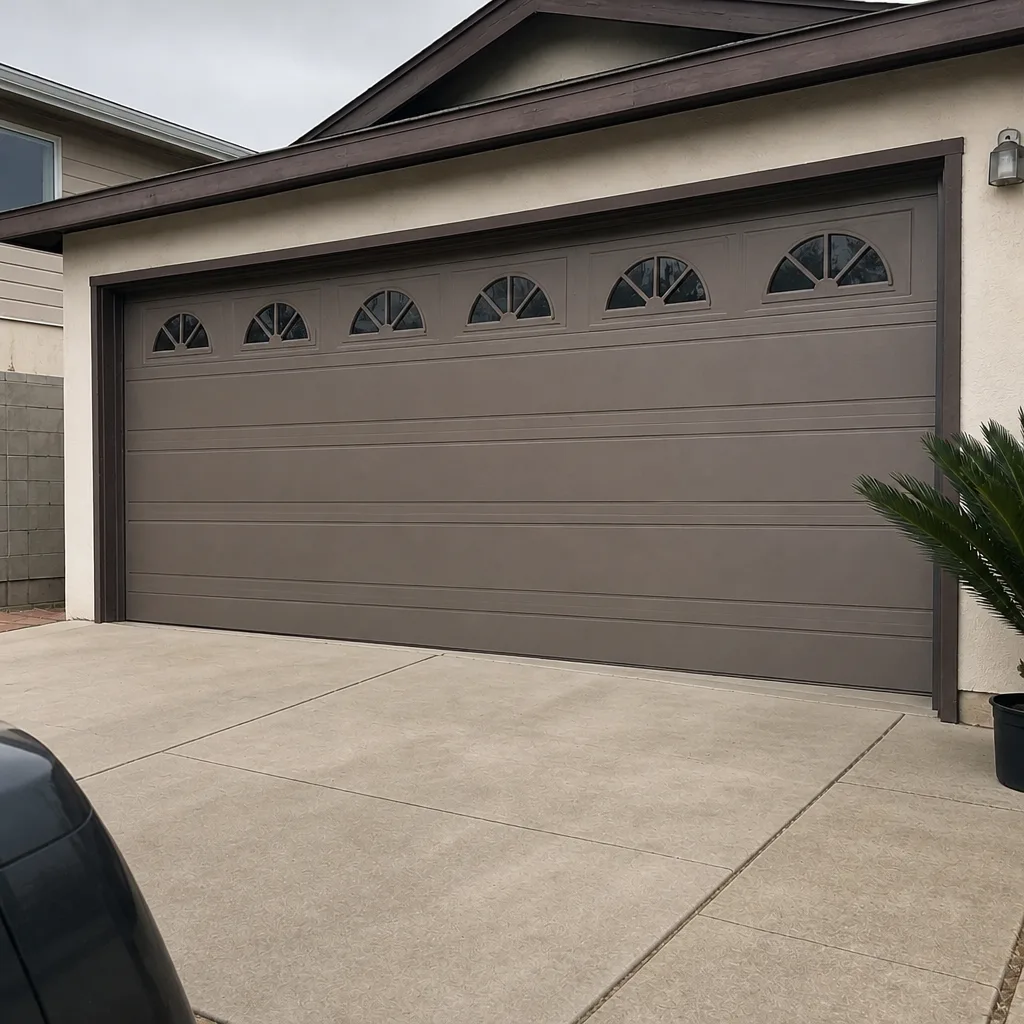 After
Common Mistakes to Avoid
- Using WD-40 on the springs or rollers. WD-40 is a solvent, not a lubricant. It will strip existing grease and accelerate wear. Use white lithium grease on springs and silicone on rollers.
- Replacing only one spring. Springs are a matched pair with the same cycle count. If one broke, the other is next. Replacing one just means you’ll be back in the garage doing the same job again soon.
- Ignoring a frayed cable. A cable with one broken strand is already failing. The full break is not a “maybe later” problem. It’s a countdown, and when it lets go, the door can drop hard.
- Adjusting the opener’s force setting to “fix” a door that’s binding. The binding is the problem. Cranking the force setting masks it and creates a door that can crush whatever is in its path. Fix the alignment, then recalibrate safely.
- Skipping the safety reversal test after any opener work. Place a 2×4 flat under the door’s path and close it. The door should reverse within two seconds of contact. If it doesn’t, the force setting is wrong. This test is code-required and personal-safety-required.
- Assuming an old door’s spring matches the current weight. If a previous owner replaced a wooden door with a lighter steel door, the spring may be over-tensioned or under-tensioned for the new panel weight. Let a professional weigh the door and verify the spring.
- Buying parts by brand name alone. A “Raynor spring” isn’t one product. It’s a family of springs with different wire diameters, lengths, and cycle ratings. The exact part number matters, and the exact part number requires the door’s weight and width to calculate.
When to Call a Professional
Call when the door won’t open or close smoothly and you’ve ruled out the simple stuff: photo-eye obstruction, dead batteries, and a pulled disconnect cord. Call when you see a gap in a spring coil, a frayed cable, or a panel out of alignment. Call when the door reverses partway down for no reason, when it slams shut, or when it shudders on the way up. Call when you’ve tried a few things and the problem is still there. Sharp eyes, right parts, done right. That’s the standard we work to. Raven Garage Door Repair offers free estimates in Garden Grove. Call (866) 616-5011. We answer 24/7. Fast dispatch from 7am to 7pm, Sunday through Friday.
Frequently Asked Questions
For maintenance tasks like lubrication, weatherstripping, and sensor cleaning, yes. Those jobs are low-risk and the cost savings are real. For springs, cables, tracks, and panel alignment, the risk of injury and the downstream damage from a mistake make DIY repair a poor trade in Garden Grove, where replacement parts for older Raynor and Wayne Dalton doors often require commercial supplier access.
No. Torsion springs store enough force to break bones or cause serious injury if a winding bar slips. Extension springs can become projectiles when the pulley fails. This is the one job where the danger is not overstated, and every professional has seen the aftermath of an attempted DIY fix. Call (866) 616-5011 for a free estimate. We answer 24/7.
A typical spring replacement in Garden Grove falls into a wide range depending on the door’s weight, spring type, and cycle rating, but expect to pay for a matched pair, not just one. The written estimate will set the exact price before any work starts. Call (866) 616-5011 and describe your door for a specific quote.
It may not, especially if the work was done without a required permit and that work contributed to the damage. California insurers typically exclude damage arising from unpermitted improvements. Before any structural garage door work, ask Garden Grove’s building department whether a permit is required, and keep records of any professional work you hire.
We service equipment from LiftMaster, Chamberlain, Genie, Clopay, Amarr, Wayne Dalton, Craftsman, and Raynor. That covers most of the residential systems installed in Garden Grove, including the common combination of a LiftMaster opener paired with a Clopay door. We work on your brand, not around it.
Yes, and it’s a sensible split. Opener programming, battery replacement, and sensor cleaning are low-risk DIY jobs. If the opener starts misbehaving after your work, or if the motor works but the door labors, the issue is probably on the door side, and that’s where garage door repair comes in. Tell us what you’ve already tried when you call, and we’ll diagnose from there.
The Bottom Line
The DIY vs. professional decision for a Garden Grove garage door isn’t about pride or capability. It’s about matching the task to the failure mode. Low-risk tasks with forgiving outcomes belong in your hands. High-tension tasks with bone-breaking outcomes belong in the hands of a professional who works on your brand, carries the right parts, and knows which Garden Grove jobs need a permit. The hybrid approach, where you handle the maintenance and a pro handles the structural work, is the most cost-efficient path for most homeowners. If you’re not sure which bucket a job falls into, call (866) 616-5011 and describe the symptom. We answer 24/7. Fast dispatch from 7am to 7pm, Sunday through Friday. Your garage door is your home’s largest moving part. Treat it with respect, and it will serve quietly for years.
Written by the team at Raven Garage Door Repair, serving Garden Grove.