
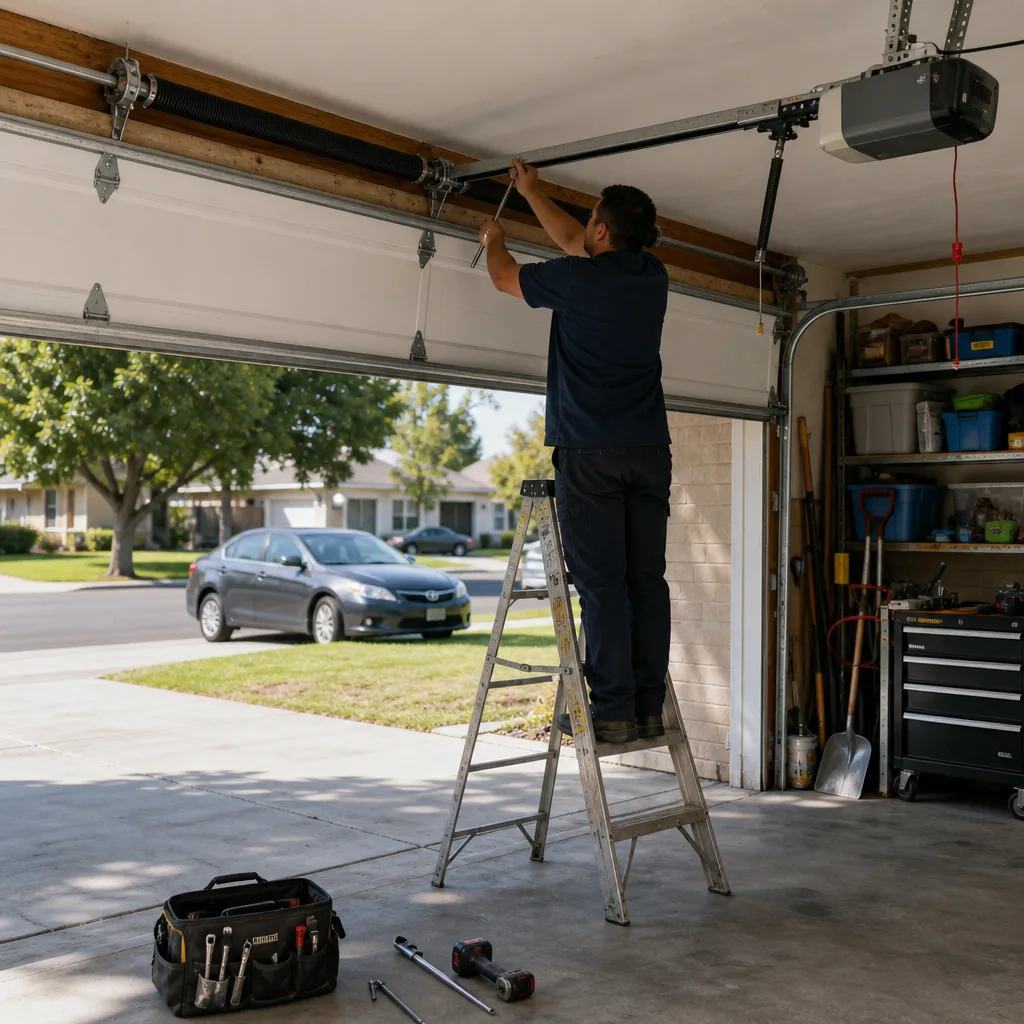
Last updated November 4, 2026
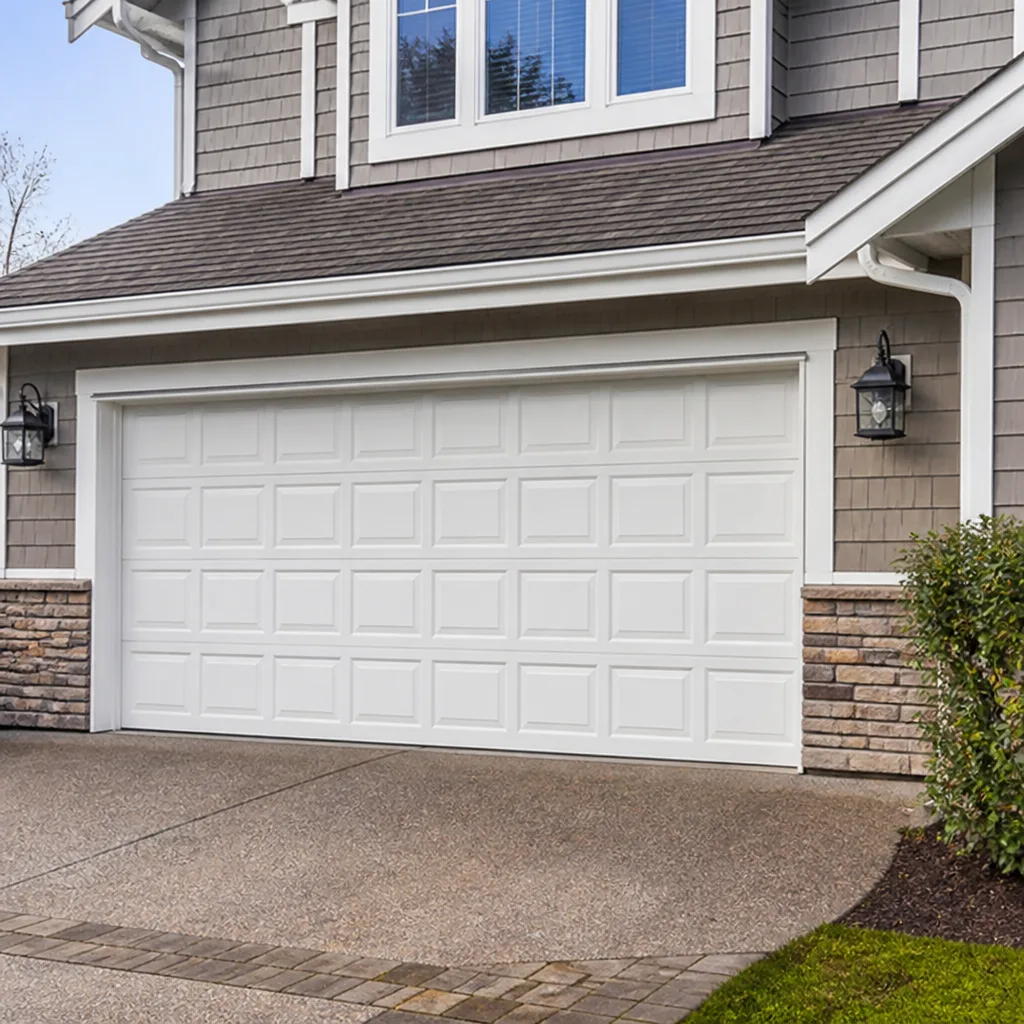 Raised-panel steel
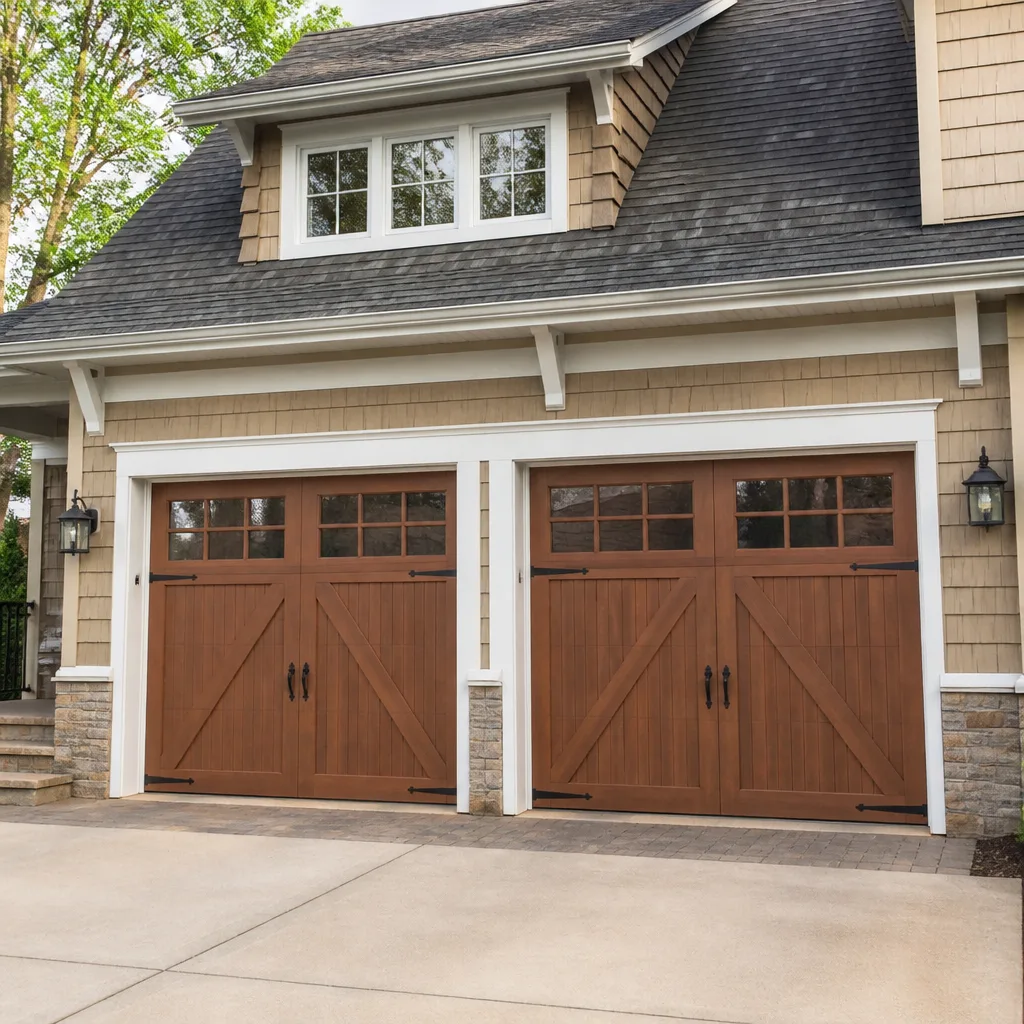 Carriage house
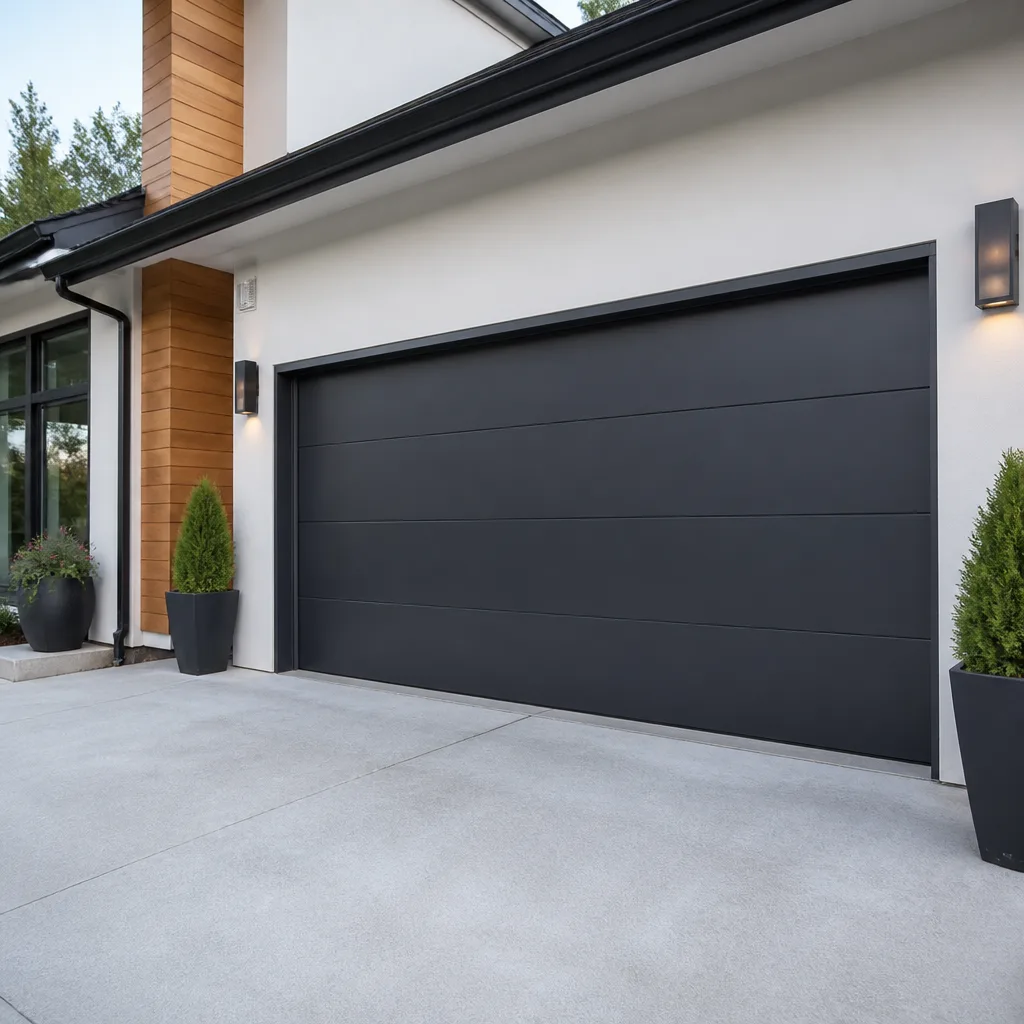 Modern flush
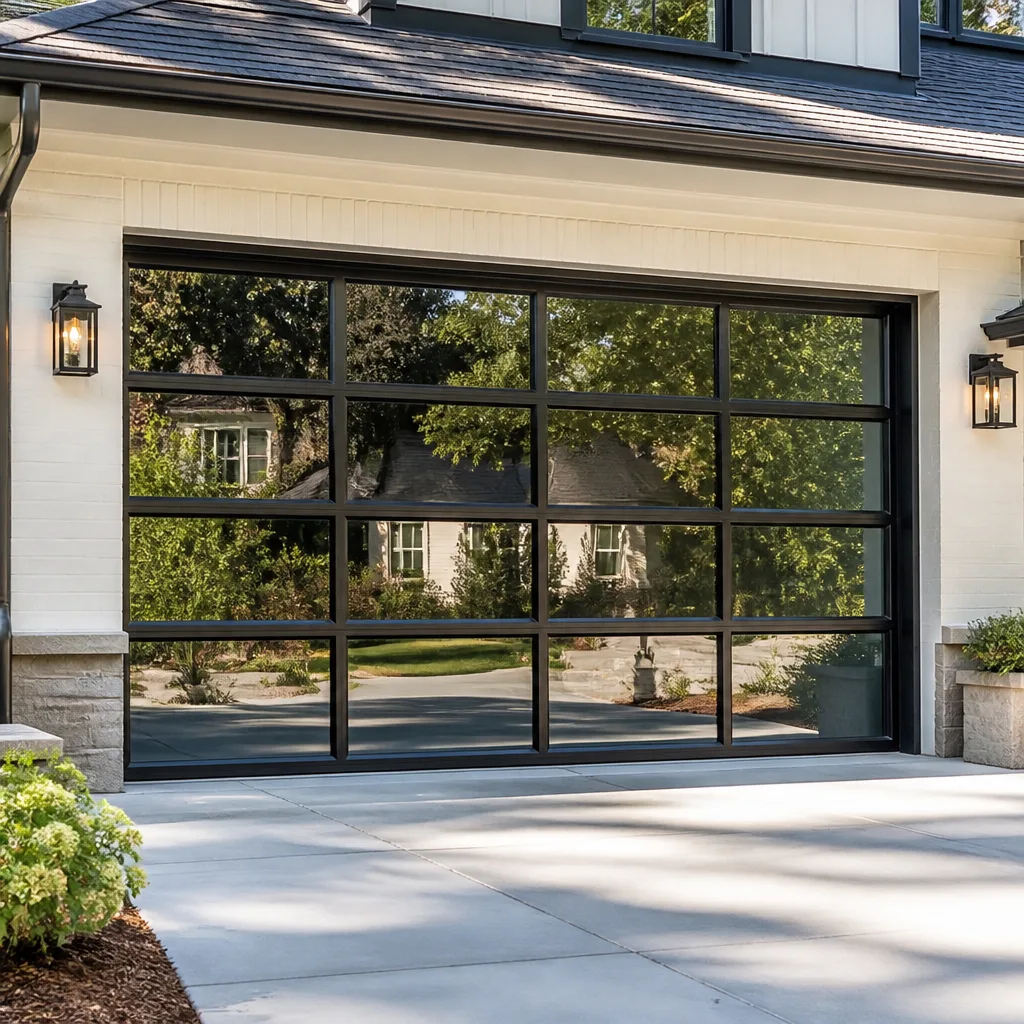 Full-view glass
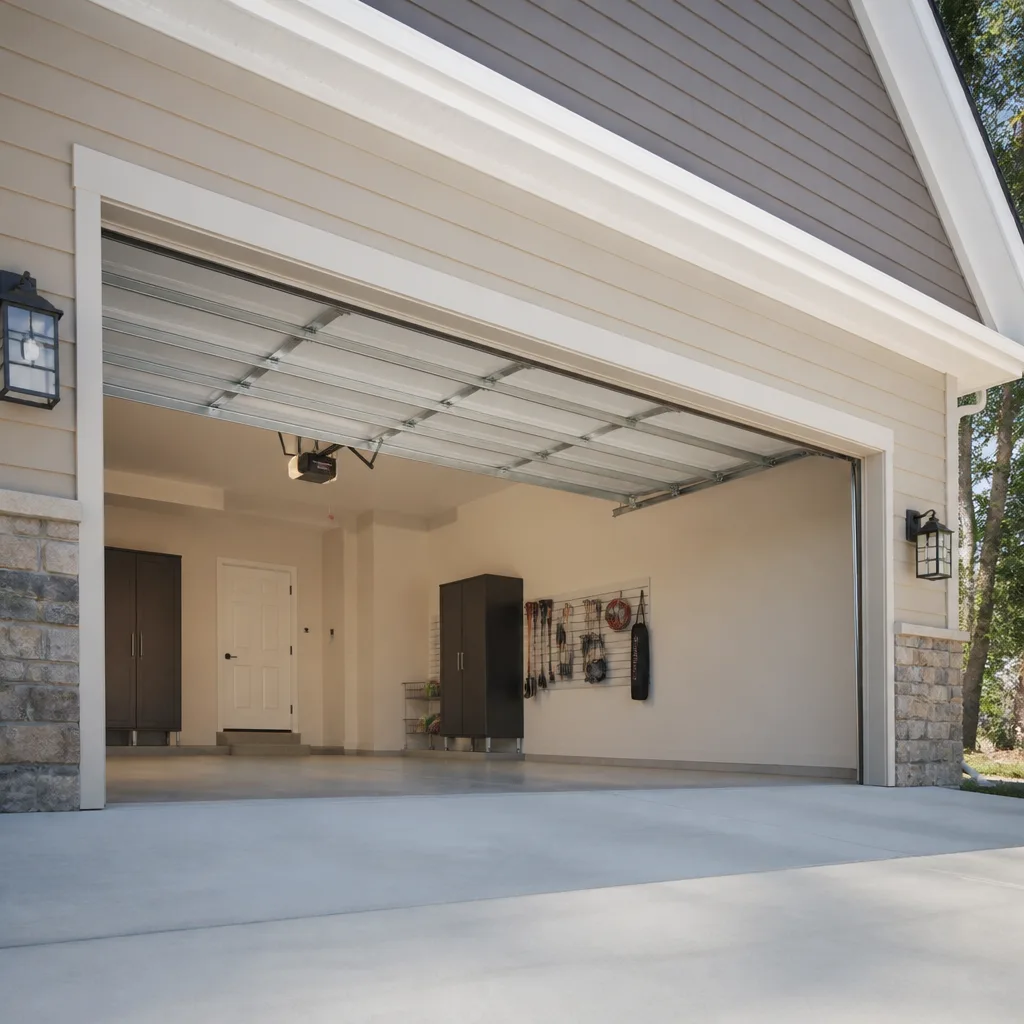 LiftMaster openers
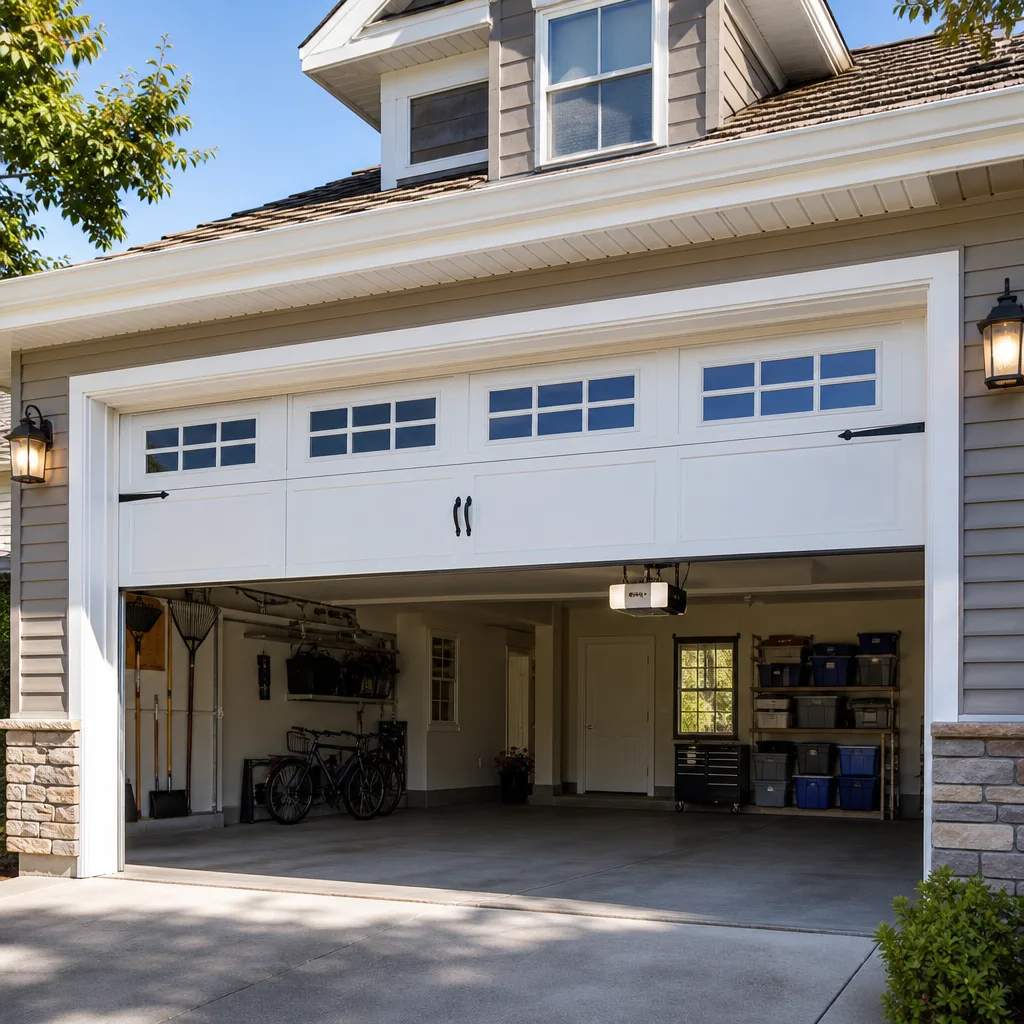 Chamberlain openers
Full 25-point door and opener safety check with every visit - springs, cables, rollers, tracks, and your LiftMaster or Chamberlain opener included
You get a price before we start. It does not change when the pro arrives.
Get your free estimateGarage Door Permits, Codes & Inspections in Garden Grove, CA: What You Need to Know
Swapping out a damaged panel sounds like maintenance. Under California residential code, it can legally constitute an alteration requiring inspection, and the homeowner, not the contractor, bears liability for skipping it. Garden Grove enforces these requirements through its building division, and the rules shift based on what you’re replacing, how much of the door changes, and whether the opener’s horsepower crosses a threshold. This guide covers the exact triggers, what inspectors look for, how UL 325 and Title 24 apply in Garden Grove, and what to do if you discover prior work was never permitted.
Quick Answer
Most residential garage door repairs in Garden Grove, including spring replacement and panel patching, do not require a permit. A permit is generally triggered when the scope becomes an alteration: replacing the entire door assembly, structural modifications to the opening, or installing an opener with a motor rating that crosses the threshold the city treats as an electrical alteration. The homeowner is the responsible party for permit compliance under California law, not the contractor, and unpermitted prior work can complicate a future insurance claim.
Styles & brands we work with
- Raised-panel steel
- Carriage house
- Modern flush
- Full-view glass
- LiftMaster openers
- Chamberlain openers
Table of Contents
- Repair vs. Alteration: Where Garden Grove Draws the Line
- When a Garden Grove Building Permit Is Required
- Title 24 Energy Code and Attached Garages
- UL 325 Compliance: What It Actually Means
- The Inspection Process in Garden Grove, Step by Step
- Unpermitted Prior Work: How to Check and What It Means
- Common Mistakes to Avoid
- When to Call a Professional
Repair vs. Alteration: Where Garden Grove Draws the Line
The distinction between a repair and an alteration drives nearly every permit decision in Garden Grove. A repair restores the door to its original condition using equivalent parts. An alteration changes the door’s configuration, structural attachment, or operating characteristics. The line matters because repairs are typically exempt from permit requirements under the California Residential Code, while alterations push the work into reviewable territory.
Replacing a broken torsion spring is a repair. The door’s weight, balance, and opening dimensions stay identical. Replacing a single damaged panel with a factory-matched section is also a repair in most Garden Grove inspections, though the city’s building department may ask questions if more than two panels are involved. The reasoning is straightforward: at some point, panel replacement becomes a door replacement in everything but name.
In our experience, the gray zone is exactly where homeowners get into trouble. A contractor quotes a “panel replacement” that involves three or four sections, new track, and a different spring rating. The customer thinks they got a maintenance job. The city sees a reconfigured door assembly. When Garden Grove’s inspectors flag it later, usually during a home sale or a separate remodel, the cost to retroactively permit and correct the work exceeds the original job.
What counts as structural modification? Any change to the rough opening, header, jambs, or foundation anchorage. Installing a taller door by cutting into the header is an alteration requiring a permit and likely an engineered detail. Widening the opening from a single door to a double door is the same. Even adding a second track system or converting from a standard-lift to a high-lift configuration qualifies, because it changes the door’s load path.
Garden Grove’s climate means we don’t deal with freeze-thaw heaving or snow load concerns that complicate openings in other states. But the city does deal with older housing stock, particularly in neighborhoods like West Garden Grove where homes from the 1960s and 1970s have original door openings that predate current header and anchorage requirements. Any structural work on those openings may require bringing the whole assembly up to current code, not just the part being changed.
When a Garden Grove Building Permit Is Required
The straightforward answer: a full door replacement where the new assembly differs in size, weight, or structural attachment from the original typically requires a permit from the City of Garden Grove. A like-for-like swap where the new door matches the old door’s dimensions, weight class, and attachment points sits in a murkier spot, and the city’s building division is the only authority that can give you a definitive answer for your specific situation.
Here are the specific triggers most Garden Grove contractors agree on:
- Panel count: Replacing three or more panels usually constitutes a door replacement, not a repair. One panel is maintenance. Two panels can go either way. Three panels changes the door’s structural behavior enough that Garden Grove treats it as an alteration.
- Structural changes: Any modification to the header, jambs, rough opening, or anchor points. This is unambiguous: you need a permit.
- Opener horsepower thresholds: Installing a new garage door opener that exceeds a half horsepower in a residential setting can trigger electrical permit requirements in Garden Grove, particularly if the circuit doesn’t have a dedicated outlet or the opener requires a new branch circuit. Most modern LiftMaster and Genie openers run on standard 120V circuits, but the permitting question is about the circuit, not the motor.
- Track system changes: Converting from standard-lift to high-lift track, adding a low-headroom kit, or reconfiguring the track geometry all require review.
- Door material changes: Swapping a lightweight aluminum door for a solid wood or heavy-gauge steel door changes the spring rating, the opener load, and sometimes the header loading. This can be an alteration even if the dimensions are identical.
Here’s what surprises most Garden Grove homeowners: a contractor who tells you “we never pull permits for door replacements” is giving you advice that protects their schedule, not your liability. The California Building Code places the responsibility for obtaining required permits on the property owner. If the city determines a permit was required and none was pulled, you’re the one facing the correction notice.
For a like-for-like replacement, the path is simple. Call the Garden Grove Building Division, describe the scope, and ask whether they want a permit. Some inspectors will tell you a direct swap is exempt. Others want the paperwork. Either way, you have a documented conversation, and that’s worth more than a contractor’s assumption.
Title 24 Energy Code and Attached Garages
California’s Title 24 energy code applies to garage door replacements in specific circumstances, and Garden Grove enforces it on attached garages. The core requirement: an attached garage shares a wall with conditioned living space, so the door becomes part of the home’s thermal envelope in the state’s eyes. When you replace that door, the new assembly has to meet the energy standards in effect at the time of installation.
This does not mean every garage door needs an R-value rating. The Title 24 standards for garage doors differ from the standards for windows or exterior doors. What matters is that the replacement door, if it connects an attached garage to the rest of the dwelling, meets the specified minimum thermal performance for that climate zone. Garden Grove falls in a mild climate zone, so the requirements are less aggressive than what you’d find in the High Desert or the mountains, but they’re not zero.
Where Title 24 bites is the documentation. The installer is supposed to provide a certificate of compliance or documentation that the installed door meets the energy standard for the climate zone. If that paper trail is missing, the final inspection can fail, and the re-inspection fee comes out of your pocket.
For detached garages, Title 24 generally does not apply to the door itself, because the garage doesn’t share a conditioned boundary. For attached garages in Garden Grove, the standard practice is to confirm the door’s thermal performance with the manufacturer’s specs before ordering. Doors from Raynor, Chamberlain, and Clopay lines all publish these numbers, and a contractor who knows Title 24 will pull the right specification sheet before installing.
UL 325 Compliance: What It Actually Means
UL 325 is the safety standard for automatic garage door openers, and it’s the one requirement most Garden Grove homeowners have never heard of until an inspector mentions it. Every residential automatic door system in the United States must comply with UL 325, which sets the requirements for entrapment protection, force sensitivity, and obstruction sensors.
Here’s what “compliant” actually means in a residential setting:
- Non-contact entrapment protection: A photoelectric sensor or equivalent that detects an object in the door’s path and prevents the door from closing. This is the black and white sensor unit you see mounted a few inches off the floor on either side of the opening.
- Contact entrapment protection: A system that reverses the door when it contacts an object. This is typically a force-sensitivity mechanism in the opener that measures motor resistance.
- Constant contact control: The wall-mounted button inside the garage must require continuous pressure to close the door if the entrapment protection is not functioning. If you have to hold the button the entire time the door closes, that’s a sign the sensor system is disabled or malfunctioning.
Garden Grove inspectors check UL 325 compliance on any permitted installation. The test is straightforward: the inspector blocks the photo eye’s beam with a tool or scrap of cardboard and confirms the door refuses to close. They check that the door reverses when it meets resistance. If your door was installed by a homeowner or a handyman who bypassed the sensors, that’s a failed inspection and a safety hazard.
Modern openers from Chamberlain, LiftMaster, and Genie ship with UL 325-compliant entrapment protection as standard equipment. The compliance failure is almost never the opener itself. It’s the installation: sensors mounted too high, sensors wired incorrectly, or sensors deliberately jumped out because the original homeowner found them annoying. Before accepting any opener install in Garden Grove, ask the tech to demonstrate the sensor test in front of you. If the door closes when the beam is blocked, the install is not compliant, full stop.
The Inspection Process in Garden Grove, Step by Step
If you do need a permit for a garage door replacement or alteration in Garden Grove, here’s how the inspection process actually goes. The timeline depends on the city’s current building division volume, but the sequence is consistent.
- Submit the permit application. You or your contractor files a permit application with the Garden Grove Building Division, including the door specifications, installation details, and any structural calculations if the opening is being modified. For structural changes, Garden Grove may require an engineer’s detail showing the header, anchorage, and load path.
- Schedule the rough or pre-cover inspection. If structural work is involved, the inspector visits before the framing is closed up. They check the header size, the jamb construction, and the anchor points against the submitted plans. If this doesn’t pass, you fix it and schedule a re-inspection.
- Complete the installation. Once the rough inspection passes, the door, track, springs, and opener go in.
- Schedule the final inspection. The inspector returns to check the completed installation. They verify the door’s balance, the track alignment, the UL 325 entrapment protection, the opener’s electrical connection, and the Title 24 documentation if applicable.
- Receive the sign-off. A passed final inspection means the permit is closed and the work is on record. That record matters when you sell the house or file an insurance claim.
What inspectors actually check on a garage door final in Garden Grove:
- Door balance: the door should hold position at mid-travel when released manually.
- Track alignment and roller condition: worn rollers or misaligned track are the most common findings.
- Entrapment protection: the photo eye test described above.
- Opener’s electrical circuit: no extension cords, no exposed wiring, no tapped circuits that aren’t on a dedicated branch where required.
- Spring containment: torsion springs must have containment cables in most residential installations to prevent injury if a spring fails.
The fastest way to fail a re-inspection is to rush the job before the inspector arrives. We’ve seen homeowners install a door in a weekend, call for inspection, and get red-tagged because the photo eyes were wired backwards or the spring containment cables were missing. Both fixes are cheap, but the re-inspection fee and the wasted week aren’t. Our garage door repair work in Garden Grove includes a pre-inspection walkthrough on permitted jobs specifically to catch those items before the city does.
Unpermitted Prior Work: How to Check and What It Means
If you’re not the first owner of your Garden Grove home, there’s a real chance the existing garage door was replaced without a permit. This is especially common in neighborhoods like West Garden Grove and the areas around the 22 Freeway, where homes have traded hands multiple times and maintenance decisions were made quickly.
Here’s how to identify unpermitted prior work:
- Pull the permit history. The City of Garden Grove Building Division can provide the permit history for your address. If a door replacement happened in 2005 and there’s no permit on file for that year, the work was either exempt or unpermitted.
- Check the door’s condition against the home’s age. A 1972 house with a perfectly modern steel door and opener is evidence of a replacement. The question is whether it was permitted. If the seller’s disclosure didn’t mention it and the permit history is empty, it was probably done without paperwork.
- Look for code compliance gaps. Missing photo eyes, absent spring containment cables, or an opener wired through an extension cord are all signs that the installation was never inspected. A permitted install would have failed on those items.
What unpermitted prior work means for your homeowner’s insurance is a question for your carrier, not a contractor. Some policies exclude coverage for damage caused by unpermitted work. Others don’t inquire unless a claim is filed and an adjuster investigates. What’s consistent is this: if you’re aware of unpermitted work and you sell the house without disclosing it, you’ve created liability for yourself. The fix is either retroactive permitting, which involves an inspection and possibly corrections, or a documented disclosure at the time of sale.
For Garden Grove specifically, the practical reality is that most homeowners discover unpermitted door work during a sale. The buyer’s inspector flags a door that doesn’t match the age of the house. The buyer asks whether permits were pulled. The seller checks and finds nothing. At that point, the seller either pays for retroactive permitting or negotiates a credit. Knowing this before you list is cheaper than learning it during escrow.
Common Mistakes to Avoid
- Assuming the contractor pulls the permit. The property owner is the responsible party under California law. Ask who is filing the permit application before work starts, and get it in writing. A contractor who says “we’ll handle it” and doesn’t is still leaving you with the liability.
- Replacing three panels and calling it maintenance. Three or more panels constitute a door replacement in most Garden Grove interpretations. If your contractor frames it as a repair, ask how they’d describe it to the building division.
- Ignoring the photo eye test. UL 325 compliance is the single most common inspection failure on garage door work. If you can close the door while blocking the sensor beam, the system is not compliant. This is also a genuine safety hazard, not a technicality.
- Accepting a handyman’s opener install without checking the circuit. Garage door openers need a properly grounded 120V circuit, typically dedicated. A handyman who taps power off the garage lighting circuit has created a code violation that an electrical inspection would catch.
- Skipping Title 24 documentation on an attached garage. The energy compliance certificate is the document that proves you met the standard. Without it, a final inspection can fail even if the door itself is perfectly installed.
- Buying a house without checking the garage door permit history. Unpermitted prior work becomes your problem at closing. Pull the permit history during due diligence, not after you own it.
- Using an opener that isn’t listed for residential use. Commercial operators have different UL 325 requirements and are generally not appropriate for a single-family home in Garden Grove. A garage door opener built for a commercial loading dock won’t meet residential entrapment protection standards.
When to Call a Professional
Spring replacement on a torsion system is genuinely dangerous work. The springs are under tension, and a failure during winding can cause serious injury. Most Garden Grove homeowners should not attempt spring work, regardless of how clear the YouTube video looks. The same applies to any work involving the opener’s electrical circuit, the track geometry, or the structural attachment points at the header and jambs.
If you’re planning a door replacement that touches the opening dimensions, involves three or more panels, or crosses into opener electrical work, call a professional who has handled permitted work in Garden Grove before. The paperwork sequence is not intuitive, and a missed step means a failed inspection and a re-inspection fee. Raven Garage Door Repair offers free estimates in Garden Grove. Call (866) 616-5011. We answer 24/7. Fast dispatch from 7am to 7pm, Sunday through Friday.
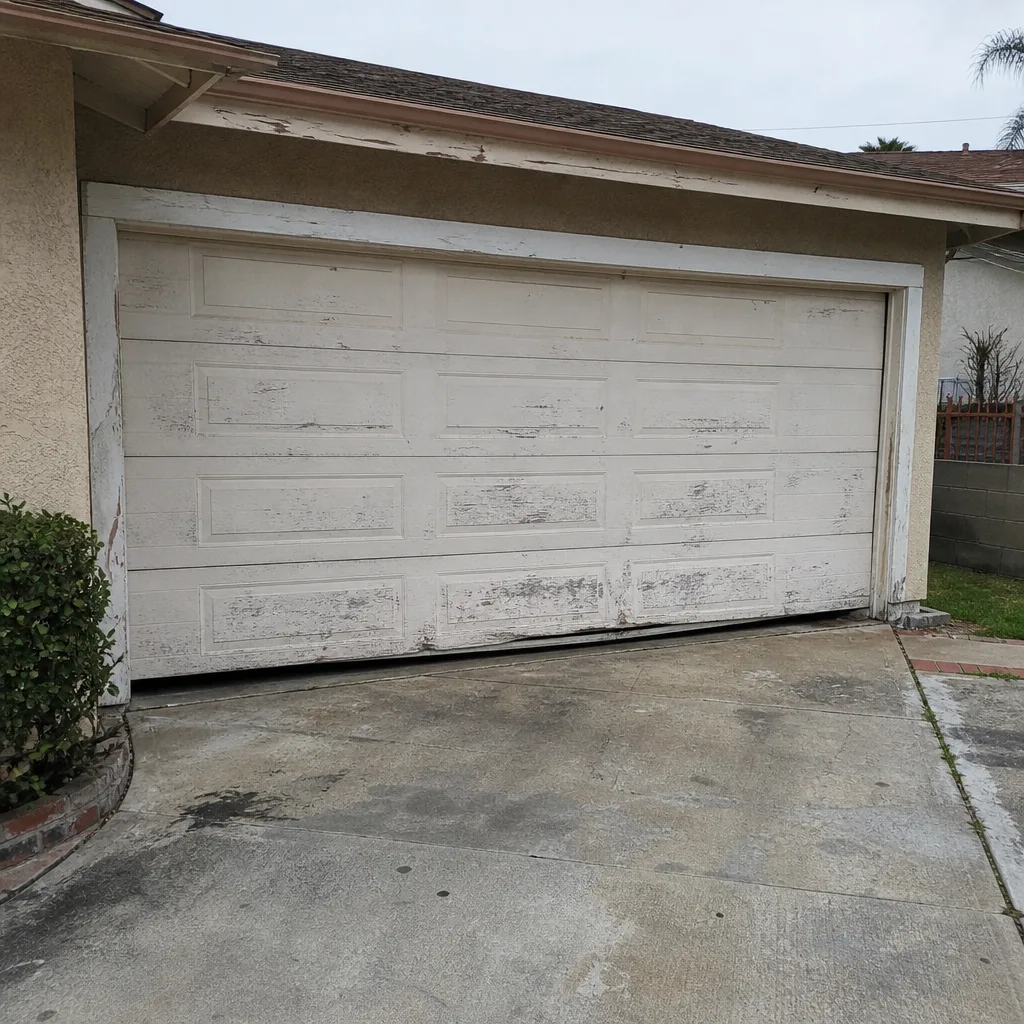
See the difference
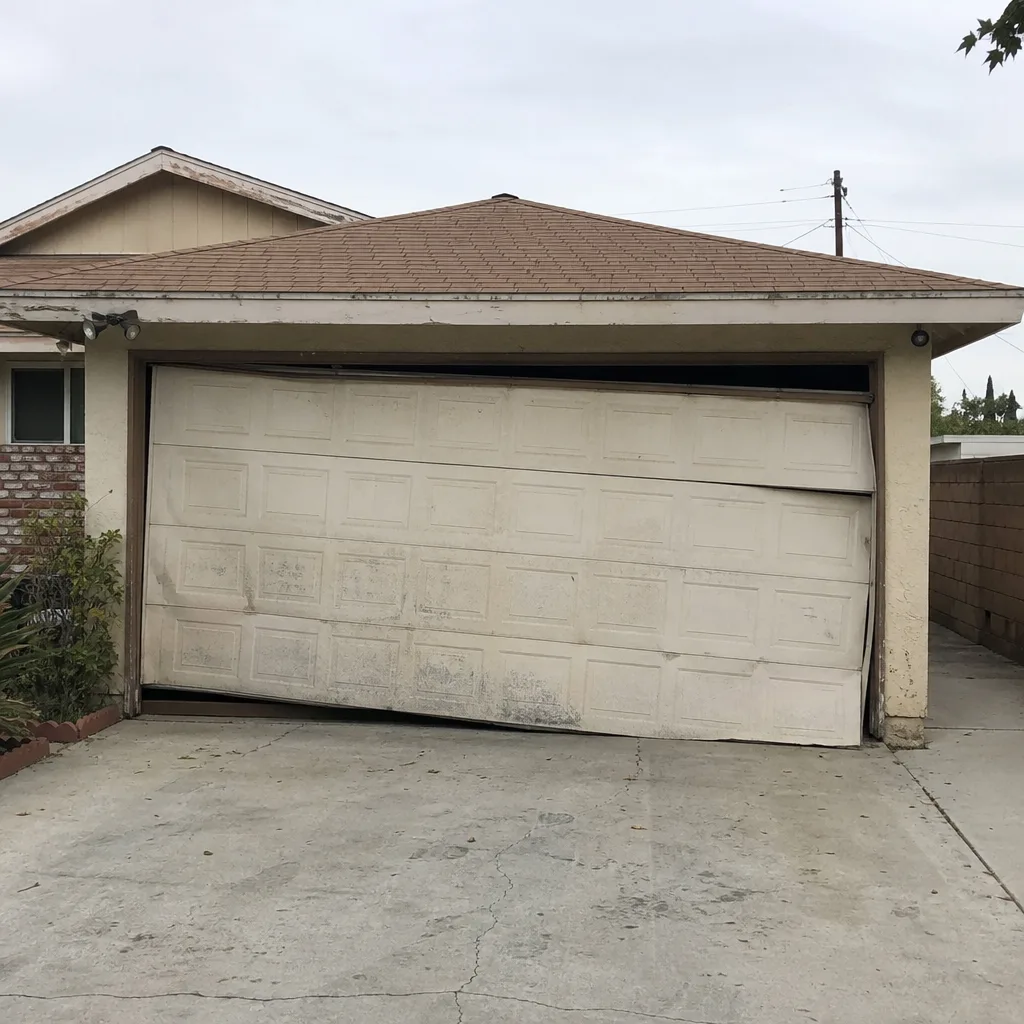 Before
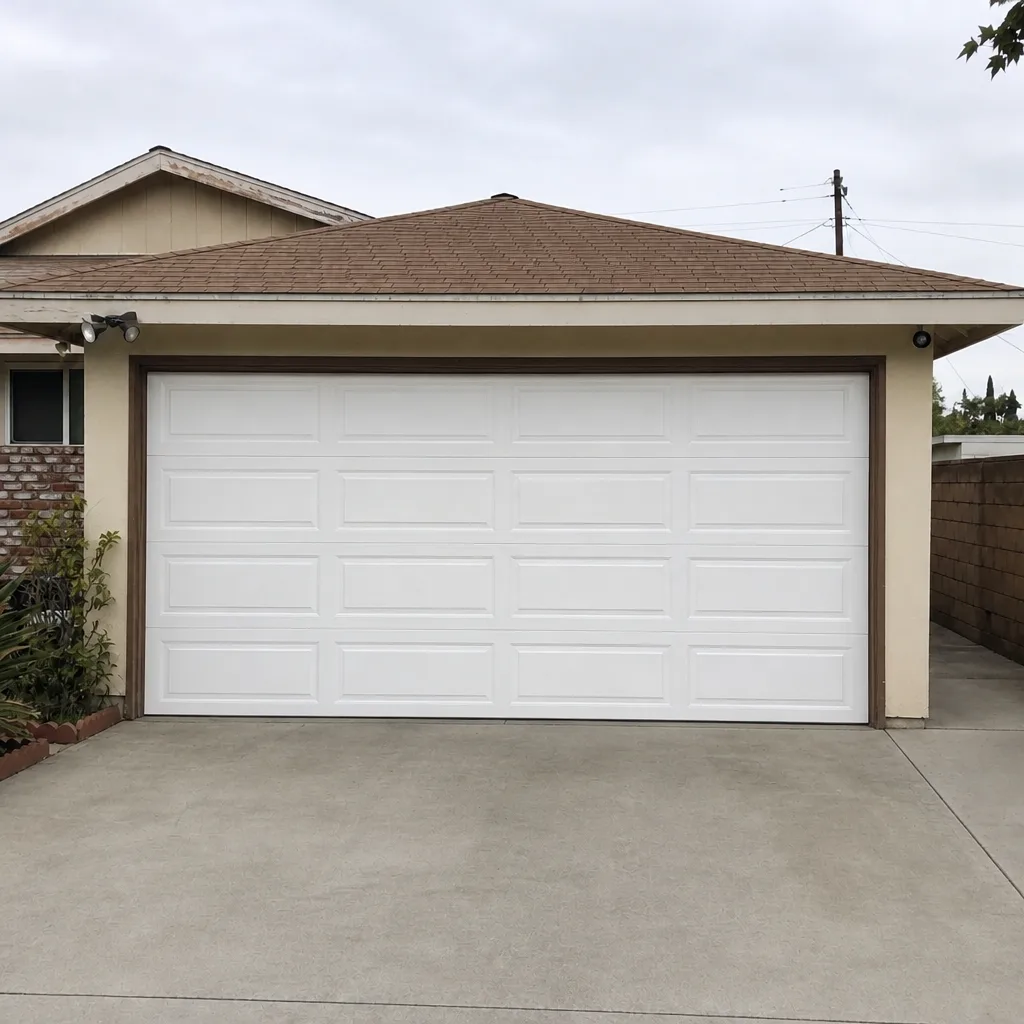 After
 Before
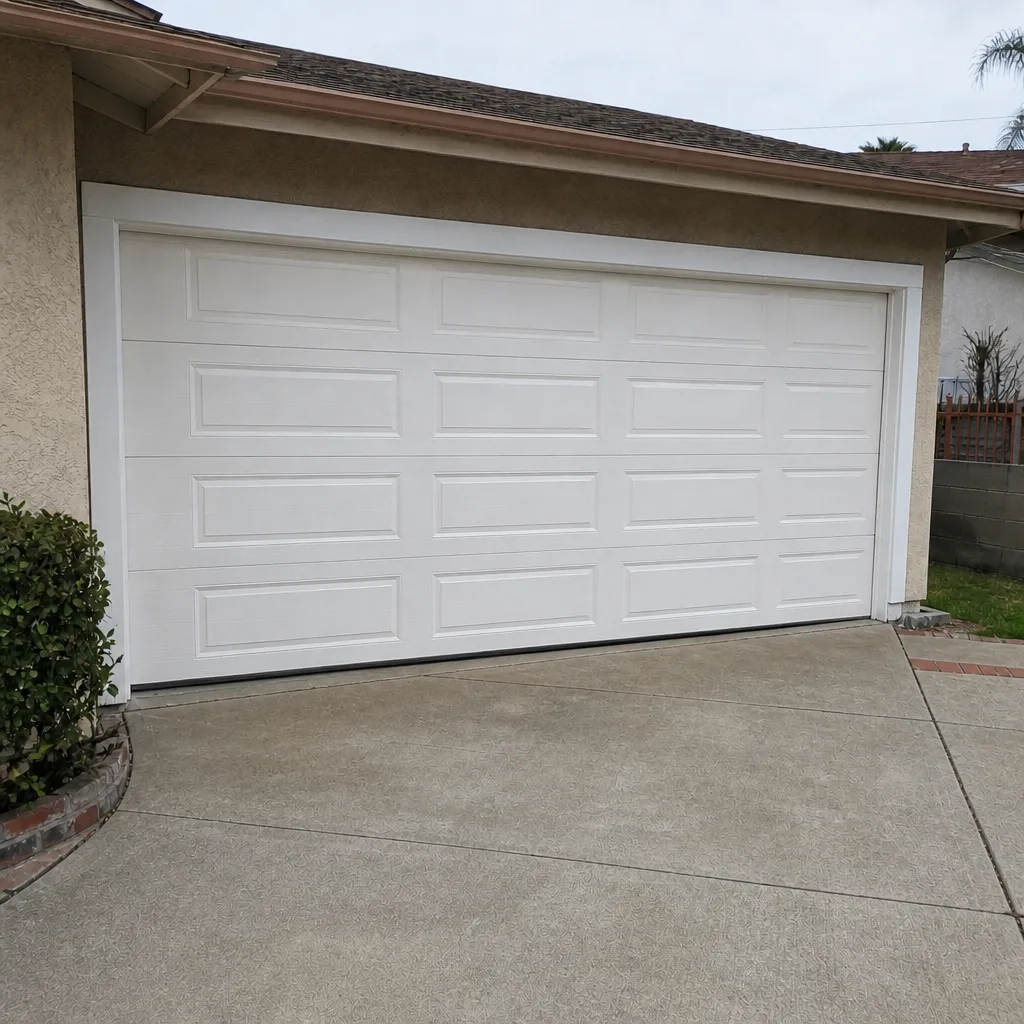 After
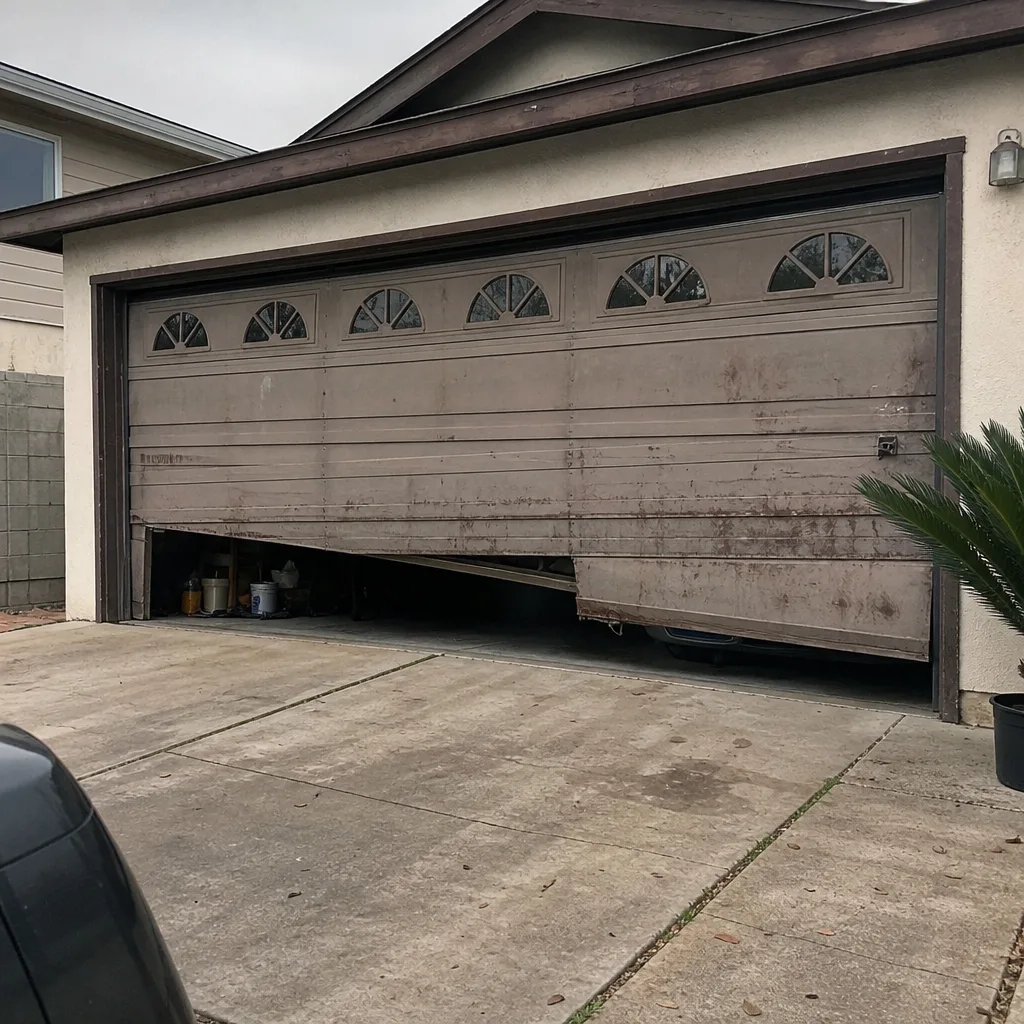 Before
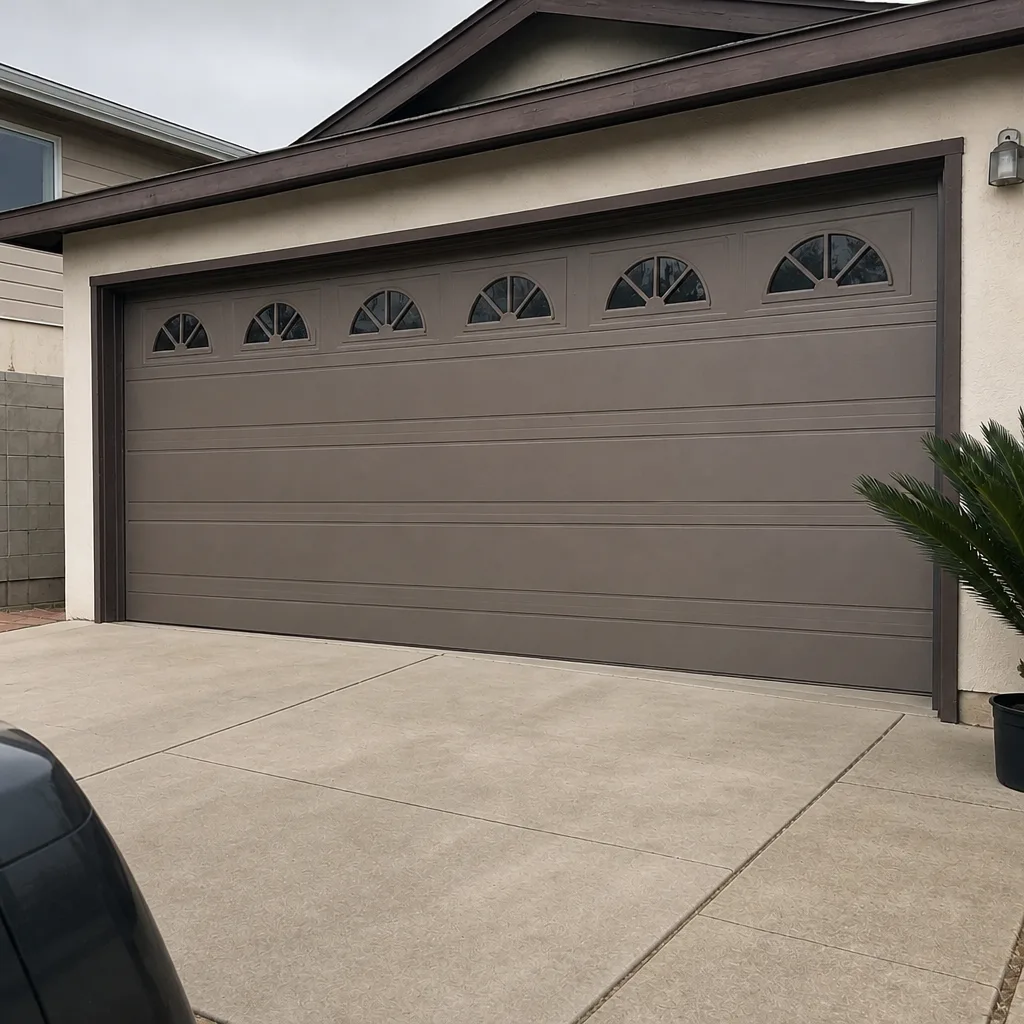 After
Frequently Asked Questions
A full door replacement typically requires a permit in Garden Grove, especially if the new door differs in size, weight, or attachment method from the original. Like-for-like replacements sit in a gray zone, and the city’s building division is the authority to ask. The homeowner carries the liability for skipping a required permit, not the contractor.
Permit fees in Garden Grove depend on the job’s valuation and the type of review required. Structural changes that need an engineered detail cost more than a simple replacement. Call the Garden Grove Building Division for the current fee schedule, and expect the price to be quoted and agreed before any work starts. For a free estimate on the installation itself, call (866) 616-5011.
In many Garden Grove interpretations, yes. Installing a new opener that requires a dedicated circuit or exceeding a half horsepower in a residential setting can trigger electrical permit requirements. A like-for-like opener swap on an existing compliant circuit usually does not. Ask your contractor whether the circuit is up to code before the opener goes in.
UL 325 is the safety standard that requires automatic garage door openers to reverse when they encounter an obstruction and to refuse to close when the photo eye beam is blocked. Garden Grove inspectors test this on every permitted installation. A door that closes through a blocked beam is a failed inspection and a safety hazard.
You can, but you must disclose it. Unpermitted work is a material fact in a real estate transaction. Failing to disclose creates liability for you as the seller. The better path is to pull the permit history before listing, and if the door was unpermitted, either retroactively permit it or negotiate the disclosure with the buyer’s agent.
Yes, when the door is on an attached garage that shares a wall with conditioned space. Title 24 treats that door as part of the home’s thermal envelope. Garden Grove enforces the documentation requirement on permitted replacements, so keep the energy compliance certificate from the manufacturer or installer. Call (866) 616-5011 for a free estimate on a compliant replacement.
The Bottom Line
Garden Grove’s garage door permit rules are stricter than most homeowners assume, and the triggers are specific: panel count, structural modification, opener horsepower, and Title 24 documentation on attached garages. Repairs are generally exempt. Alterations are not. The liability for a skipped permit lands on the homeowner, and unpermitted prior work becomes a problem at sale time. Knowing where the line sits, verifying UL 325 compliance on every opener, and pulling the permit history before you buy are the cheapest insurance you’ll ever get. A professional who has handled permitted work in Garden Grove makes the process dramatically simpler, and garage door opener repair or replacement with documentation is a straightforward job for a shop that deals with the city’s process regularly.
Written by the team at Raven Garage Door Repair, serving Garden Grove