
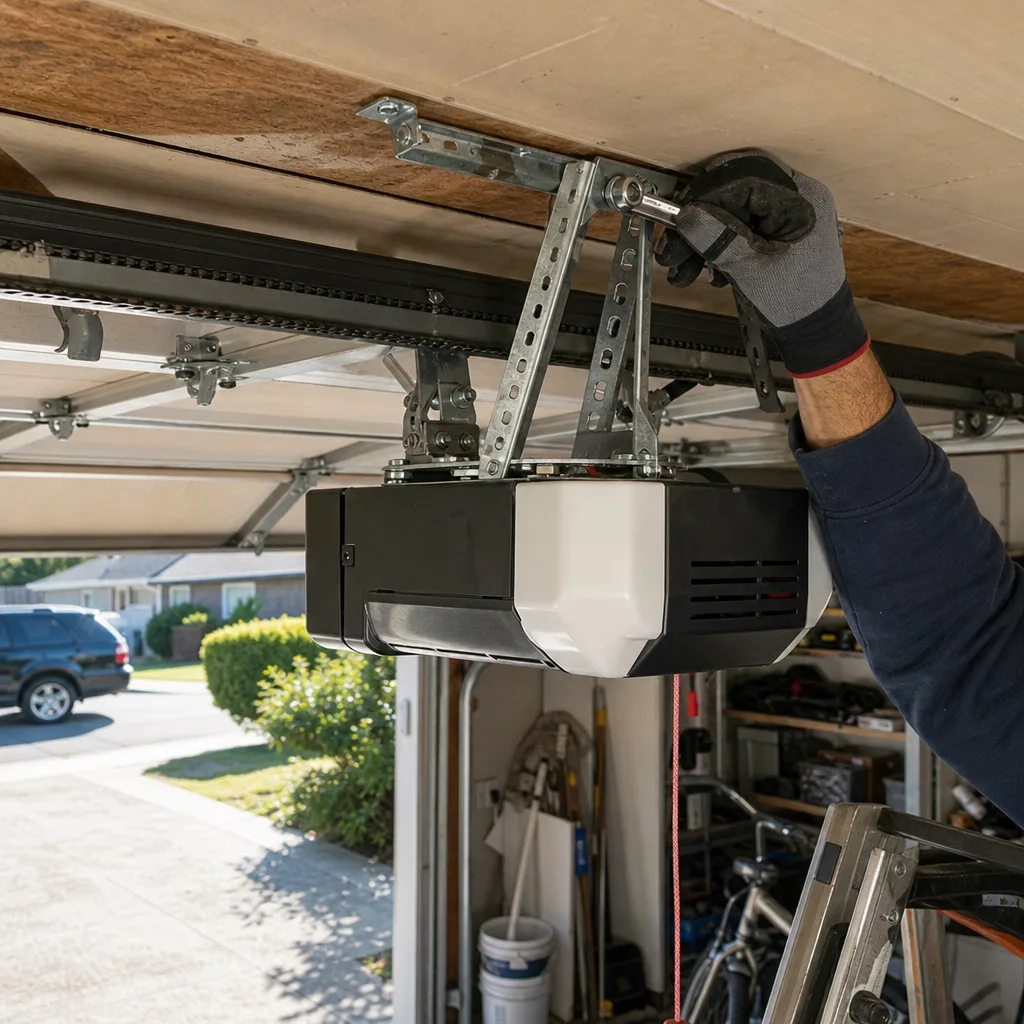
Last updated November 4, 2026
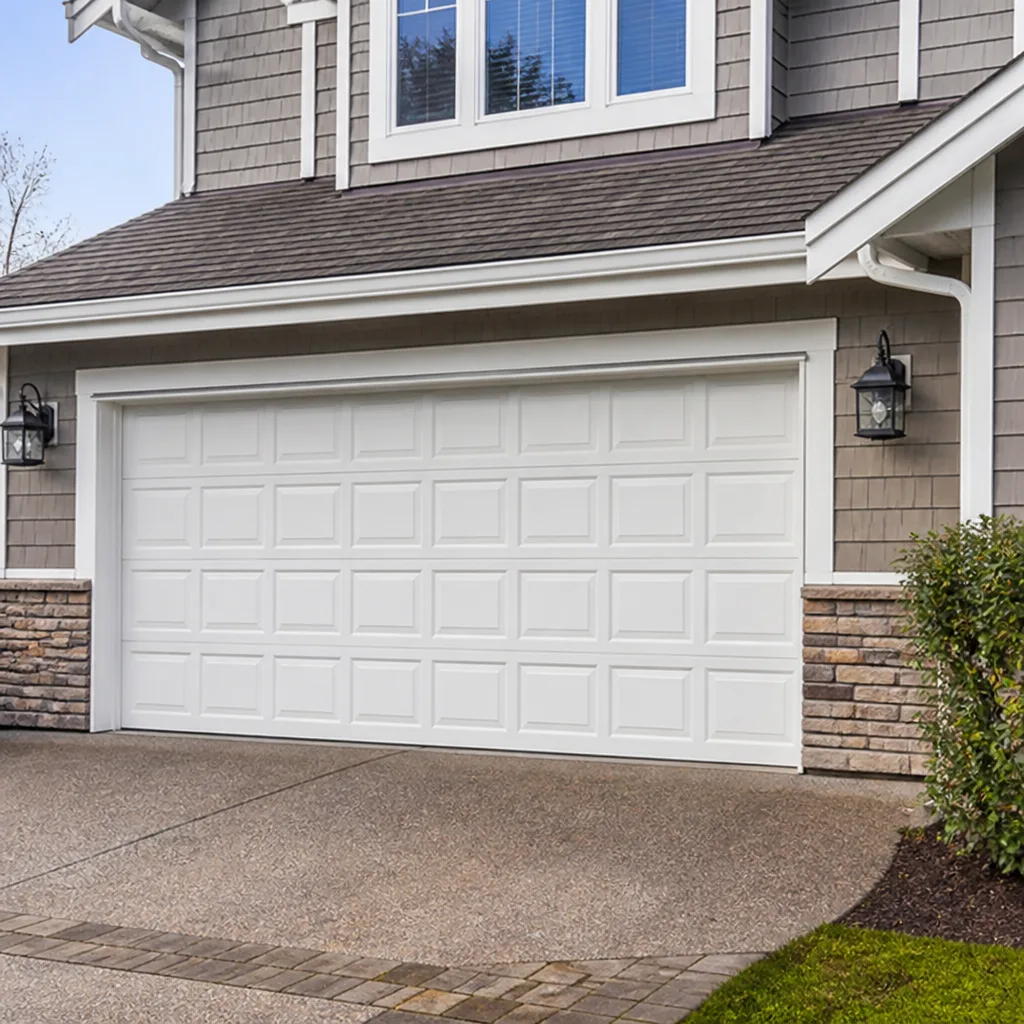 Raised-panel steel
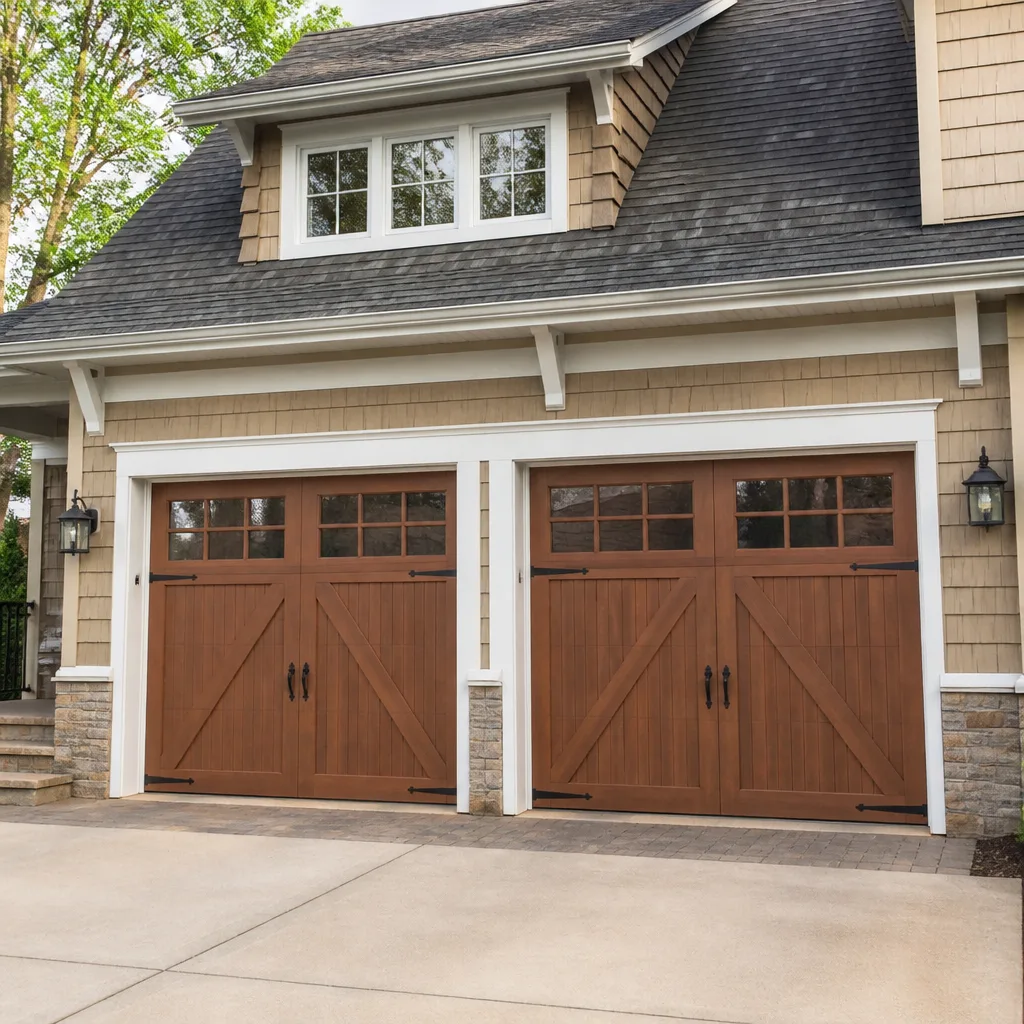 Carriage house
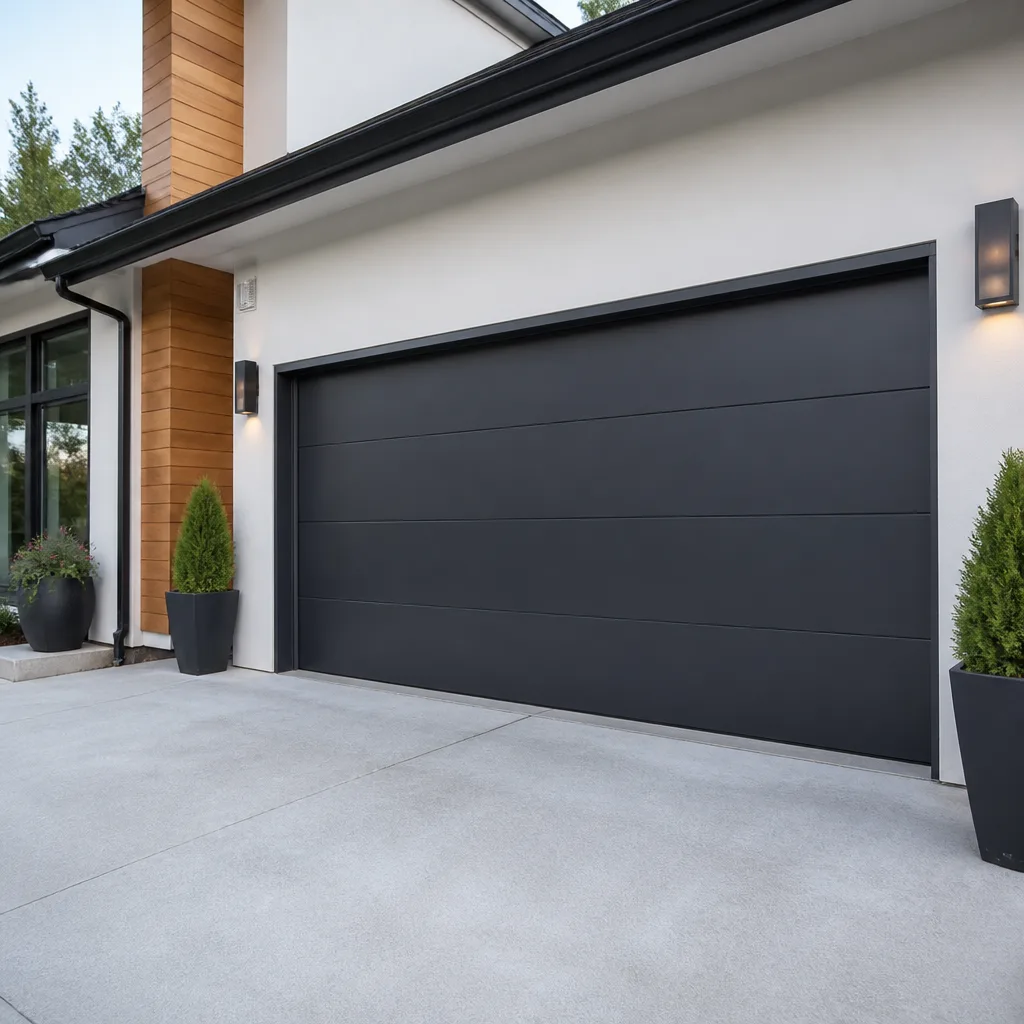 Modern flush
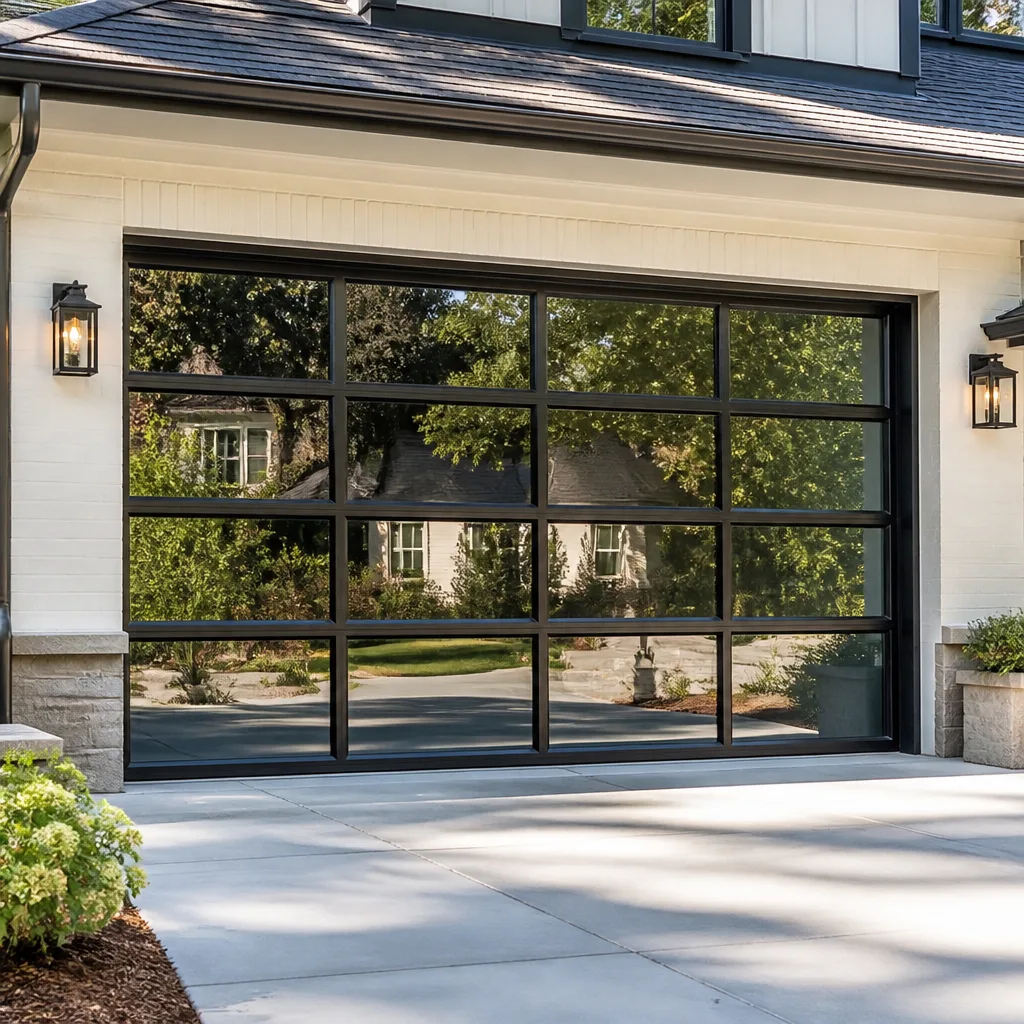 Full-view glass
 LiftMaster openers
 Chamberlain openers
Full 25-point door and opener safety check with every visit - springs, cables, rollers, tracks, and your LiftMaster or Chamberlain opener included
You get a price before we start. It does not change when the pro arrives.
Get your free estimateGarage Door Repair Maintenance Checklist for Garden Grove Homeowners
Lubricating hinges is item one on every maintenance checklist you’ll find. It’s also one of the last things that actually causes a service call. We know this because we’ve spent eight years pulling into driveways across Garden Grove, and the breakdowns that bring homeowners to the phone are almost never the tasks that top a generic blog list. This guide flips the sequence. We’re starting with the components that produce the most failure calls in this city’s housing stock, then working backward to the smaller upkeep that keeps everything moving smoothly. You’ll learn what to check monthly, what to do after a wind event or power surge, and what genuinely needs a technician’s eye before a minor issue turns into a door that won’t open on a Monday morning.
Quick Answer
A garage door maintenance checklist for Garden Grove homeowners should prioritize torsion spring inspection, sensor alignment verification, weatherstripping replacement, and opener force-limit testing. Most other tasks, like lubricating hinges or tightening bolts, are monthly upkeep that prevents minor wear. The critical work is identifying the specific failure points that match this city’s older concrete slabs, UV exposure, and mild but damp winter conditions. For doors that already show spring wear or sensor drift, garage door repair service keeps the system from failing completely.
Styles & brands we work with
- Raised-panel steel
- Carriage house
- Modern flush
- Full-view glass
- LiftMaster openers
- Chamberlain openers
Table of Contents
- Torsion Spring Inspection: What to Look for Before the Break
- Sensor Alignment Drift on Older Garden Grove Slabs
- Weatherstripping and UV Degradation Timelines
- Opener Force-Limit Testing and Motor Burnout Prevention
- The Frequency Logic: Monthly, Annual, and Event-Triggered Tasks
- How Garden Grove’s Climate Shapes Your Maintenance Calendar
- Working Across Openers and Door Brands Without the Runaround
Torsion Spring Inspection: What to Look for Before the Break
The torsion spring above your garage door carries the entire weight of the system every time it moves. When it fails, the door typically won’t lift, or it slams down with enough force to damage panels, tracks, or anything parked beneath it. Garden Grove’s mild winters might not strain springs with extreme cold, but the humid, damp air from November through March does something quieter: it promotes surface rust on older springs, especially in garages that lack ventilation or sit close to irrigated landscaping. That rust doesn’t cause immediate failure, but it creates friction points where coil stress concentrates.
Here’s what to check before a spring breaks, not after:
- Look at the gap between coils. A healthy torsion spring has consistent spacing between every coil. If you see a wider gap forming at one spot, or coils that pinch together, the spring is beginning to deform. That deformation is the precursor to fracture.
- Check for rust patterns. Surface rust that wipes away with a dry cloth is cosmetic. Rust that has pitted the metal or caused flaking is structural. In our experience across Garden Grove, springs that show pitting near the center bearing or the winding cone are the ones that fail first.
- Listen during operation. A spring that creaks, pops, or makes a grinding sound when the door cycles is binding internally. The sound is the metal telling you something isn’t distributing load evenly anymore.
- Note the door’s balance. Disconnect the opener and lift the door manually to waist height. If it holds position, the spring is doing its job. If it drops or climbs on its own, the spring has lost tension and is nearing the end of its service life.
Safety note: Torsion springs are under hundreds of pounds of tension. Never attempt to adjust, remove, or replace one yourself. The inspection above is visual and non-invasive. If you spot any of these warning signs, call a professional. A spring under load can release with enough force to cause serious injury. For Garden Grove homes with doors from Clopay or Amarr, spring specifications vary by door weight and track radius. The right replacement isn’t a guess; it’s a calculation.
Sensor Alignment Drift on Older Garden Grove Slabs
Most Garden Grove homes built before 1980 sit on concrete slabs that have settled. Not dramatically, but enough. That settlement shifts the garage floor, and with it, the mounting brackets for the photo-eye safety sensors near the bottom of each track. When a sensor drifts even a quarter inch, the infrared beam between the two units breaks, and the opener refuses to close the door. The most common call we get after “the door won’t close” is a sensor alignment problem caused by slab movement, not a failed sensor.
Here’s how to test and correct it yourself:
- Check the indicator lights. Most openers from LiftMaster, Chamberlain, and Genie have a small LED on each sensor. One sensor sends the beam, the other receives it. Both lights should be solid. A blinking or dim light on the receiving sensor means the beam isn’t aligned.
- Confirm the beam path. Nothing should block the space between the two sensors. A rake handle leaning against the wall, a stack of boxes, or even a thick spider web can interrupt the beam.
- Loosen the mounting bracket. Use a screwdriver or small wrench to loosen the bolt holding the sensor bracket to the track. You don’t need to remove it. Just loosen enough to move the sensor body.
- Adjust until the light goes solid. Nudge the sensor vertically and horizontally. When the receiving light turns solid, the beam is aligned.
- Tighten and test. Tighten the bracket and press the wall button to close the door. If the door reverses midway, the beam broke during movement and you need to check for a loose track or a bracket that flexes.
Alignment drift is a mechanical issue with an electronic symptom. If you live in an older Garden Grove neighborhood where the driveway has hairline cracks or the garage floor slopes toward the door, this will likely recur. Correcting it once a year is normal. Correcting it monthly signals a bigger problem with the track mounting or the slab itself.
Weatherstripping and UV Degradation Timelines
Southern California’s sun does more damage to rubber and vinyl than most homeowners realize. Garden Grove sees roughly 270 days of sunshine per year, and the bottom seal on your garage door sits in direct sunlight every afternoon if the door faces south or west. That UV exposure breaks down the polymer structure of the seal, causing it to crack, shrink, and lose flexibility. The result isn’t always obvious. Even when a seal looks intact, it may have hardened enough to let daylight, dust, or rainwater through the bottom corners.
Here’s a practical replacement timeline for this climate:
- South or west-facing doors: Inspect the bottom seal every 12 months. Replace at 24 to 36 months, sooner if you see visible cracking or the seal has flattened where it meets the concrete.
- North or east-facing doors: Inspect annually. Replacement typically falls between 36 and 48 months.
- Doors with direct afternoon sun and no shade structure: You may need a new seal every 18 to 24 months. This is the extreme end, but we’ve seen it in Garden Grove developments with little mature tree coverage.
Don’t re-seal doors from Wayne Dalton or Raynor with generic adhesive. If the seal is pulling away from the retainer channel, the rubber has shrunk. Once shrinkage happens, gluing it back only buys you a few weeks. The correct fix is a new seal, sized to the channel. That’s a quick job for a technician and one that pays for itself in reduced dust, fewer pests, and a barrier against the occasional winter rain that hits Garden Grove.
Opener Force-Limit Testing and Motor Burnout Prevention
Every garage door opener has two force settings: one for how hard it pushes the door down, and one for how hard it pulls the door up. These settings exist so the opener stops or reverses if something is in the path. But when the settings are wrong, one of two things happens. If the force is too low, the opener strains against normal resistance and the motor overheats. If the force is too high, the door closes on an obstruction and doesn’t reverse, which is a genuine safety hazard. Both scenarios lead to preventable opener replacements.
The force-limit test is the one calibration task homeowners skip because it’s buried in the opener’s manual. Here’s the simplified version:
- Close the door fully. Place a 2×4 block of scrap wood flat under the door’s path.
- Press the wall button to close. The door should hit the wood and reverse within one to two seconds. If it crushes the wood or stalls, the down force is set too high. If it reverses before touching the wood, the down force is too low.
- Adjust in small increments. Most opener units from Craftsman and LiftMaster have a small dial or digital setting on the back of the motor housing. Turn it slightly and retest.
- Repeat the test for upward force. With the door closed, press the open button. The door should lift steadily without strain. If it struggles, the spring may be losing tension, which forces the opener to work harder than it should.
This task takes five minutes and extends the life of the opener motor by years. It also catches spring fatigue early, because an opener working against a failing spring burns out far faster than one working against a balanced door. For Garden Grove homes with garage door opener repair history, checking force settings is the cheapest insurance against a second visit.
The Frequency Logic: Monthly, Annual, and Event-Triggered Tasks
Most checklists lump everything together. That’s the core problem. A monthly task requires about 10 minutes and needs no tools. An annual task benefits from a stepladder, a flashlight, and about 45 minutes. Event-triggered tasks don’t sit on a calendar at all; they happen after something specific. Breaking maintenance into these three buckets means you spend your time where the failure risk actually is, not where a generic blog author said it should be.
Monthly Tasks (10 minutes, no tools)
- Listen to the door cycle. A smooth door is nearly silent besides the opener hum. New grinding, popping, or scraping sounds are early warning signs.
- Check both sensor lights are solid and unblocked.
- Watch the door as it travels. It should not hesitate, bounce, or flex at any point in the track.
- Check the bottom seal by running your hand along it while the door is closed. Cracks or gaps are a problem.
Annual Tasks (45 minutes, basic tools)
- Perform the force-limit test described above.
- Inspect torsion springs for gap formation and pitting rust.
- Tighten every bolt on the track brackets, hinges, and opener rail that you can reach safely.
- Clean the sensor lenses with a dry cloth. Dust from Garden Grove’s dry months films over the infrared beam.
- Check the weatherstripping and replace if it’s cracked or hardened.
Event-Triggered Tasks (do these after specific events)
- Wind event: Santa Ana wind gusts can rattle a sectional door enough to loosen track bolts. Tighten and inspect after a strong wind day.
- Power surge: If the neighborhood browns out during summer heat waves, check that the opener’s remote programming still works. Surges can scramble receiver memory on older units.
- Impact: A bike handle, ladder, or car bumper clip to the bottom panel can throw off track alignment. Check for new scraping sounds or a door that hangs slightly off-center.
- Visible water entry: After a heavy winter rain in Garden Grove, check for water lines or damp spots along the garage interior wall. This means the seal failed and the weatherstripping needs replacement.
How Garden Grove’s Climate Shapes Your Maintenance Calendar
We don’t deal with snow or ice here. We deal with something subtler: a climate that doesn’t force homeowners into seasonal maintenance habits. In a place where the weather is mild year-round, the garage door is easy to forget until it fails. But Garden Grove has distinct conditions that affect different parts of the system.
The damp winter air from December through March is the biggest factor for steel components. Garages that share a wall with a water heater or sit at the base of a sloped driveway collect moisture that accelerates spring rust. That’s why the torsion spring inspection belongs in late fall, before the humid season starts, not in spring after six months of exposure.
UV exposure from April through September is the other force. Garden Grove’s sun breaks down rubber seals, plastic sensor housings, and the outer coating on vinyl trim. Doors with south or west exposure get the worst of it. If your garage door faces the afternoon sun, move weatherstripping inspection from an annual task to a twice-yearly task, once in March and once in September.
Santa Ana wind events in the fall are brief but potent. We see track bolts loosen after a sustained wind day, especially on lightweight doors that flex in gusts. A quick bolt check after a strong wind event prevents a door from jumping the track weeks later.
Garden Grove’s climate doesn’t demand a rigid seasonal overhaul. It demands attentiveness to the two forces that actually act on the equipment here: damp, mild winters and intense, prolonged sunlight.
Working Across Openers and Door Brands Without the Runaround
Garden Grove’s housing stock is remarkably consistent, but the garage door equipment installed in it is not. One house has a Chamberlain opener running a Clopay door. The neighbor has a Genie opener paired with a Wayne Dalton door. Across town, a Craftsman unit from a big-box store pulls an Amarr door. None of these systems work identically, and most single-brand specialists have a reason to tell you that your brand is the dealer’s specialty, even when the actual problem is a $4 sensor bracket.
Raven Garage Door Repair works across the full spread. We service LiftMaster, Chamberlain, Genie, Clopay, Amarr, Wayne Dalton, Craftsman, and Raynor equipment because we’ve spent eight years doing exactly that in this city. The opener in one house has a different force-limit adjustment than the unit two doors down. The torsion spring on a Clopay door is wound to different specifications than the one on a Raynor. A technician who only sees one brand doesn’t have the reference points to spot when something is genuinely off versus when it’s just how that model behaves.
That’s why this checklist includes tasks that apply mechanically across all systems: sensor alignment, seal replacement, force testing, spring observation. The tools are universal. The diagnostics aren’t. If a task turns up something that doesn’t match this guide’s description, a sharp set of eyes beats another YouTube video. For Garden Grove homeowners, that means calling a company that diagnoses first and replaces parts second, not one that swaps a motor because it’s the easiest invoice to write.
Common Mistakes to Avoid
- Lubricating the torsion spring. A thin coating on the spring coils actually does help prevent rust binding, but the spring derives its force from tension, not movement. Greasing the spring does nothing to extend its life. Homeowners who focus here miss the real warning signs.
- Ignoring a slow-closing door. A door that drops noticeably faster than it used to is a spring problem. Waiting until it stops opening entirely means the spring has already failed, and the repair is more involved than a tension adjustment.
- Re-sealing hardened weatherstripping. Once the rubber has UV-brittled, adhesive won’t restore flexibility. You’re buying a month or two at best. Replace the seal.
- Testing the safety reverse with a cardboard box. The correct test uses a solid object like a 2×4. Cardboard compresses, giving a false pass on the force setting.
- Adjusting sensor alignment by hand alone. If the bracket has moved because the slab settled, hand-tightening the bolt isn’t enough. The bracket needs to be reset and re-torqued, or it’ll drift again in weeks.
- Skipping the balance test because the opener works. An opener can mask a failing spring by working harder. The manual balance test, where you disconnect the opener and lift the door yourself, is the only way to know what the spring can actually do on its own.
See the difference
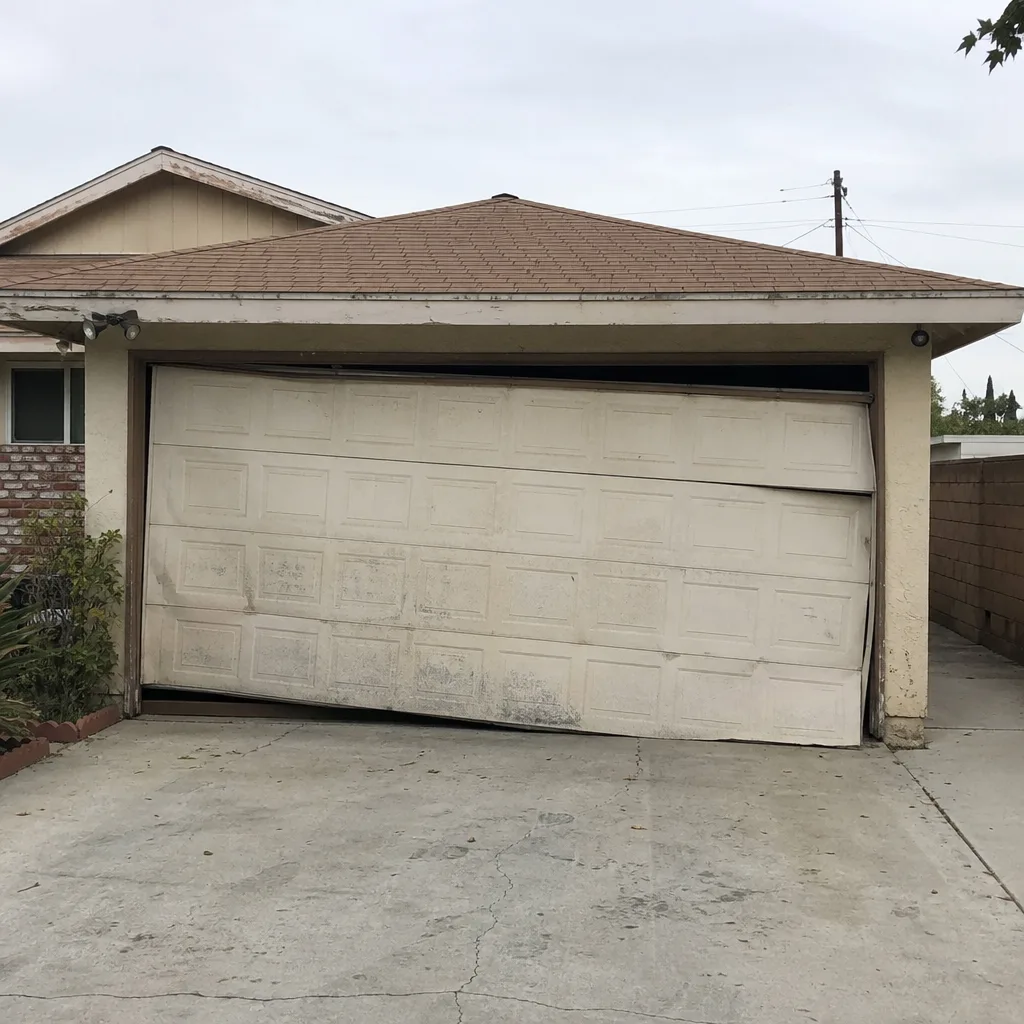 Before
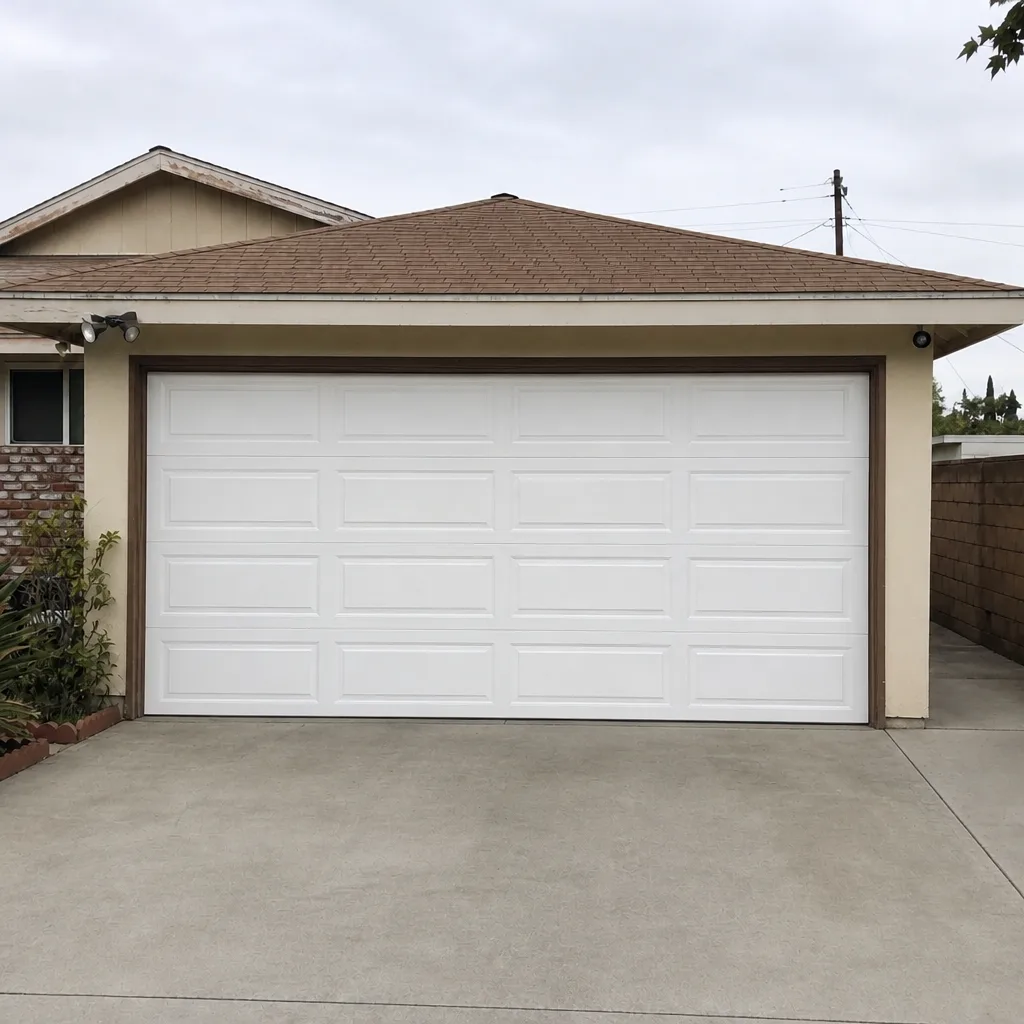 After
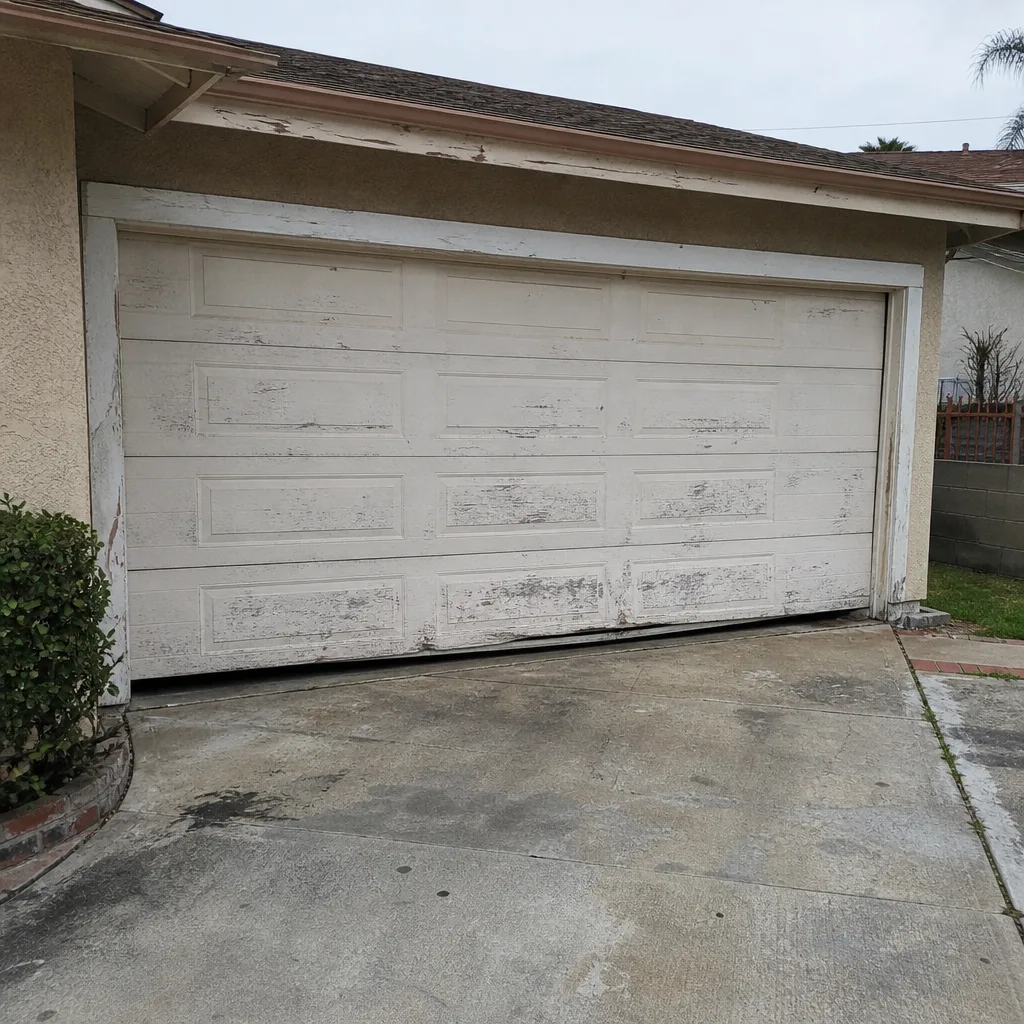 Before
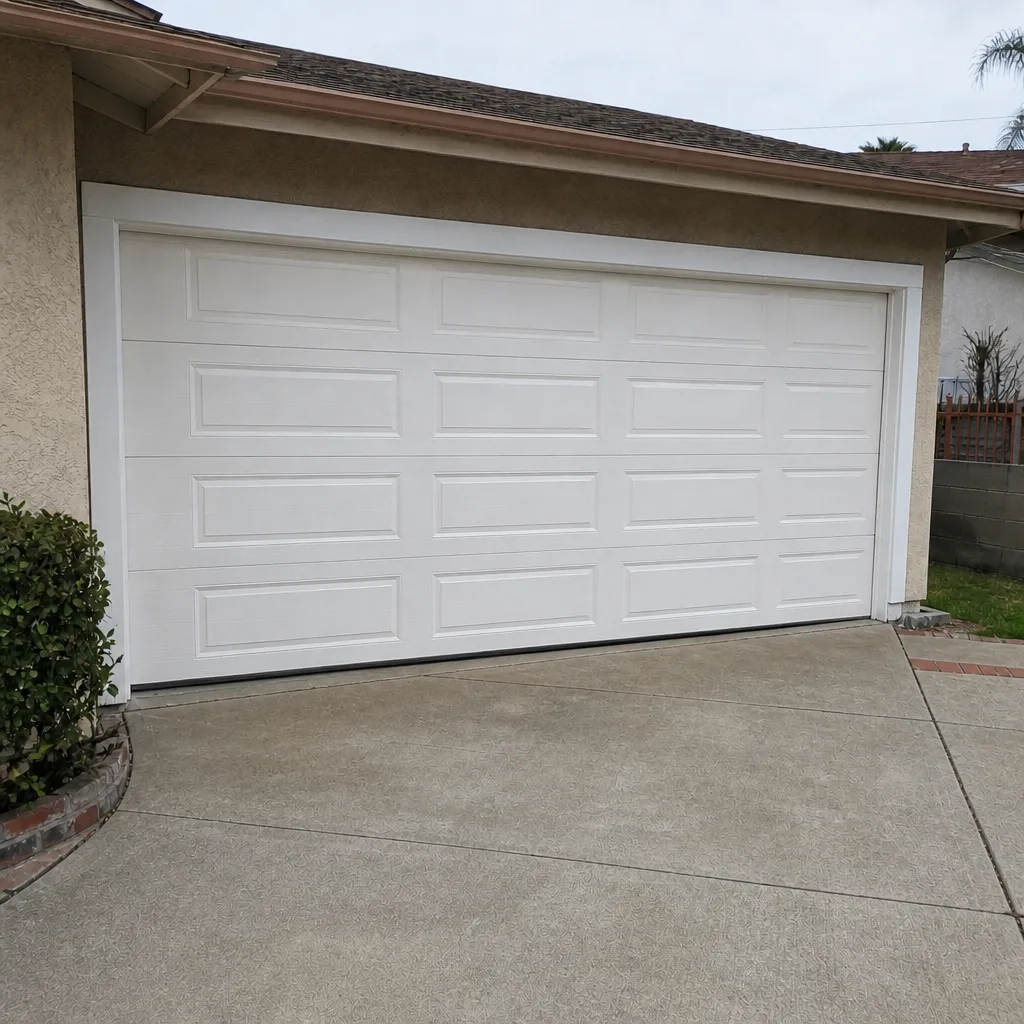 After
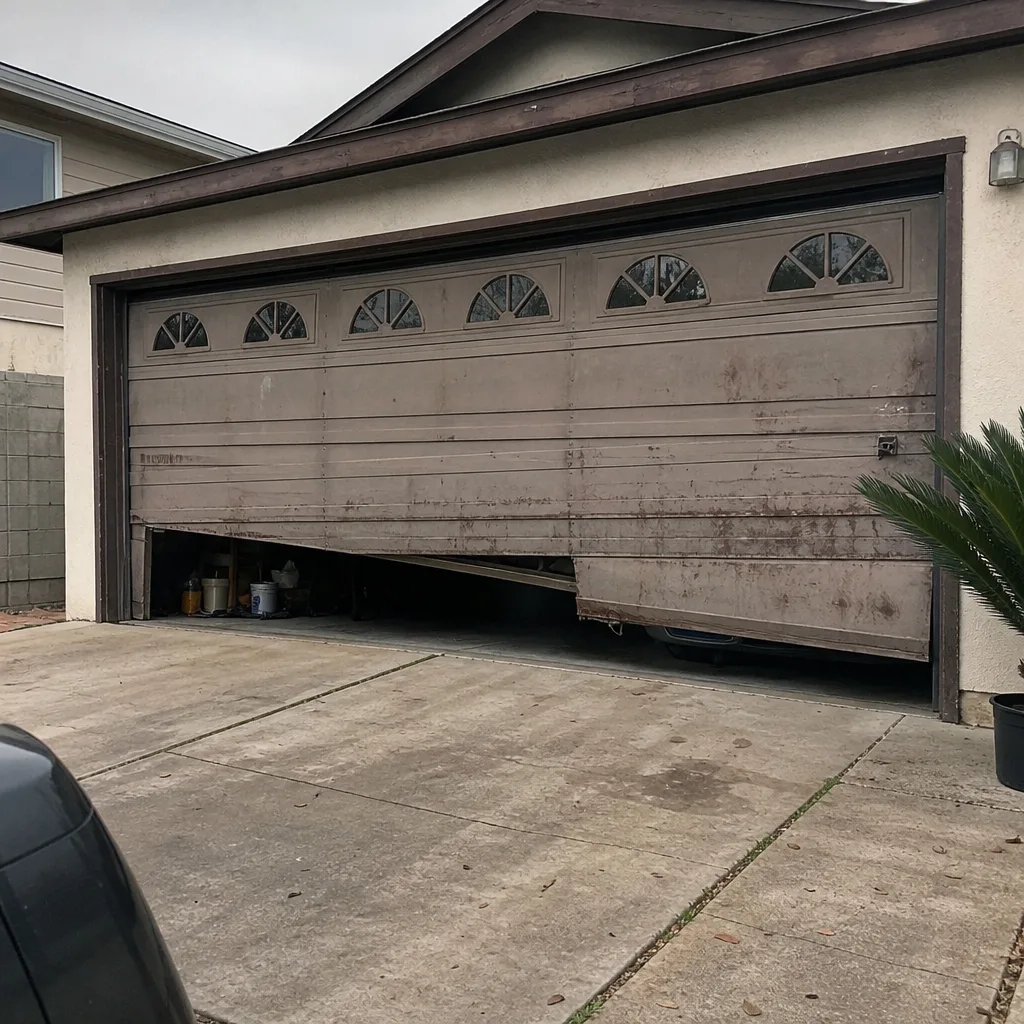 Before
 After
When to Call a Professional
If the torsion spring shows coil gaps, pitting rust, or flaking, stop using the door and call a technician. That’s the one component on this list where continued use risks a sudden, complete failure that can damage the door, the track, and anything in the door’s path. The same applies if the door has jumped its track, if the opener motor hums without moving the door, or if you’ve corrected sensor drift twice in a month and it keeps returning. Some problems are maintenance issues. Some are structural. Knowing which is which is the difference between a $200 fix and a $1,500 replacement. Raven Garage Door Repair offers free estimates in Garden Grove. Call (866) 616-5011 and we’ll tell you exactly what you’re dealing with, not what’s easiest to sell.
Frequently Asked Questions
Do the 10-minute monthly check every time you change your air filter. Do the full annual inspection in October, before the damp winter season starts. Doors with south or west sun exposure should get a second weatherstripping check in March, after the heat of summer passes and the seals have had a year of UV load.
Yes, in most cases. Loosen the mounting bracket, align the beam until the receiving light goes solid, and tighten. If the sensor light stays solid but the door still won’t close, the problem is likely the opener’s logic board or a broken wire, which needs a technician. Call (866) 616-5011 for a diagnosis. We answer 24/7. Fast dispatch from 7am to 7pm, Sunday through Friday.
Sensor alignment drift, hands down. Garden Grove’s older concrete slabs settle slightly over decades, and that movement shifts the sensor brackets. The result is a door that reverses, won’t close, or flashes a sensor error. We correct this problem more than any other single issue.
Most homeowners spend nothing on maintenance when the system is healthy. The tasks here require basic tools and time. When something needs replacement, like a seal or a sensor bracket, the cost depends on the brand and configuration, but these are modest repairs. The expensive fixes are the ones that follow neglected springs and forced motors. Call (866) 616-5011 for a free estimate. The written quote sets the final price, and the estimate is always free.
It matters for calibration. A LiftMaster has different force settings than a Craftsman. A Genie has a different sensor alignment indicator. This guide’s procedures work across all major residential opener brands, but if a setting doesn’t match the description here, check the manual or call us. We work on Chamberlain, Genie, LiftMaster, Craftsman, Clopay, Amarr, Wayne Dalton, and Raynor equipment across Garden Grove.
No. The tracks don’t need lubrication. The rollers do, but a small amount of lithium grease on the roller bearings is enough. Lubricating the tracks attracts dust and dirt, which turns into a grinding paste in Garden Grove’s dry months. If your track is dirty, wipe it down with a dry cloth and leave it alone.
The Bottom Line
A garage door maintenance checklist for Garden Grove should be built around failure probability, not generic advice. Torsion springs give you visual warning before they fail, if you know what to look for. Sensor drift follows slab settlement and is often self-correctable. Weatherstripping dies from UV exposure on a predictable timeline. Force-limit testing protects the opener motor and the people in the garage. Do the monthly checks, do the annual inspection, and address event-triggered issues after wind, power, or impact. When something doesn’t match the description in this guide, get a second set of eyes from someone who works on your brand, diagnoses before selling, and handles the full fix under one roof.
Call (866) 616-5011 for a free estimate. We answer 24/7. Fast dispatch from 7am to 7pm, Sunday through Friday.
Written by the team at Raven Garage Door Repair, serving Garden Grove.