
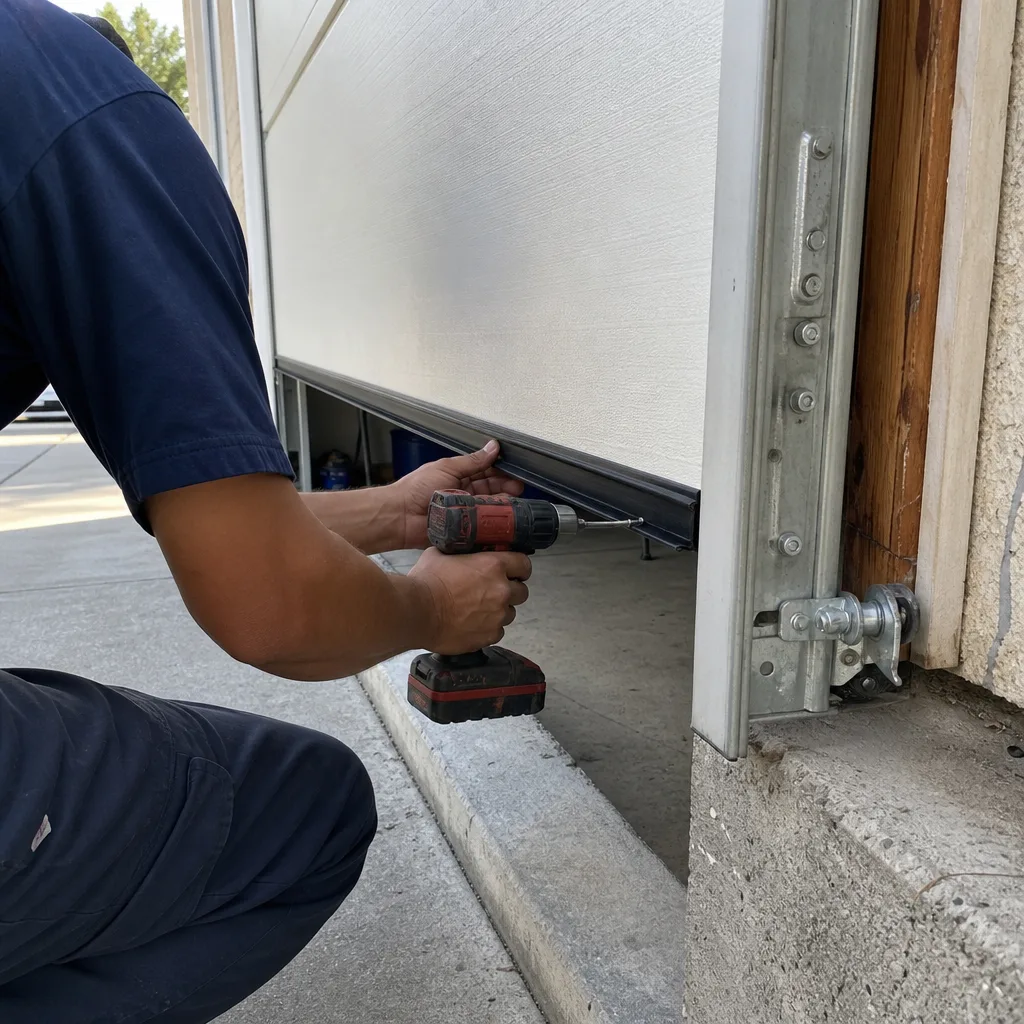
Last updated November 4, 2026
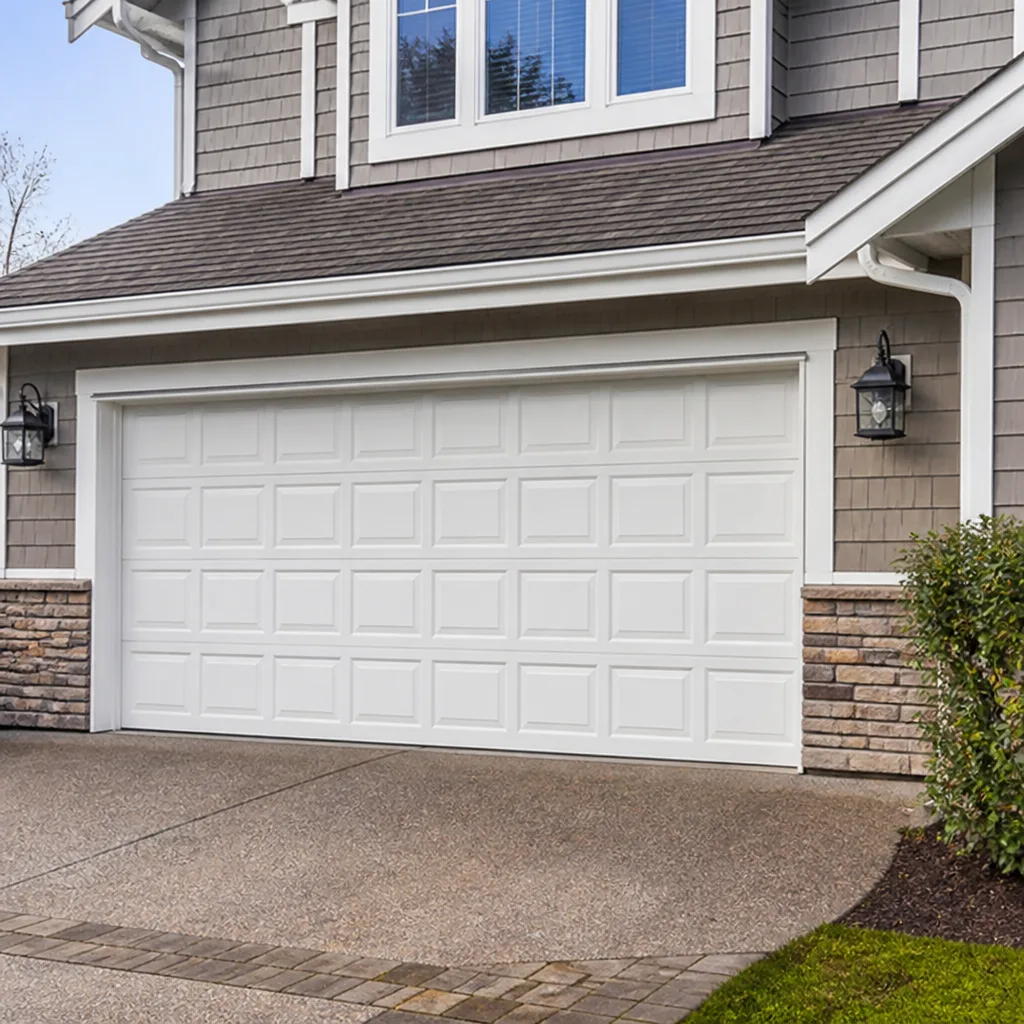 Raised-panel steel
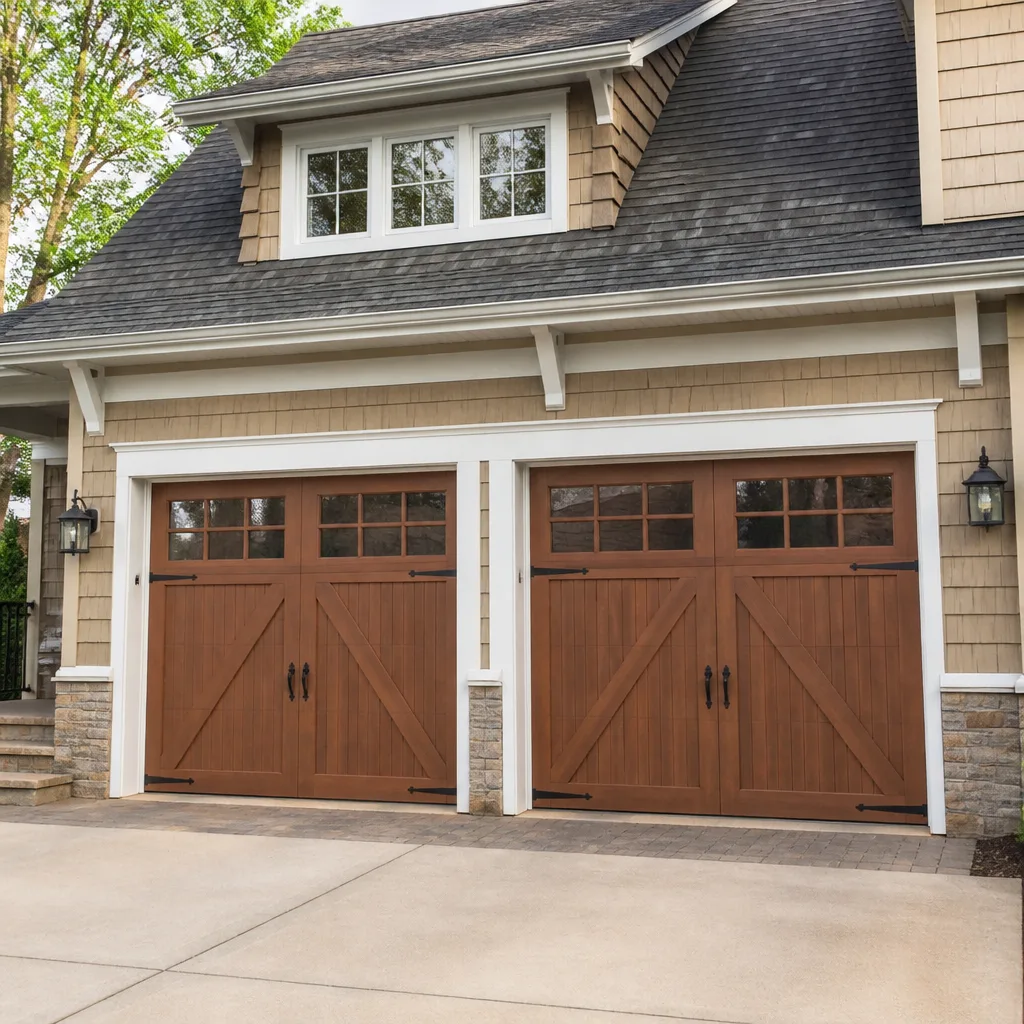 Carriage house
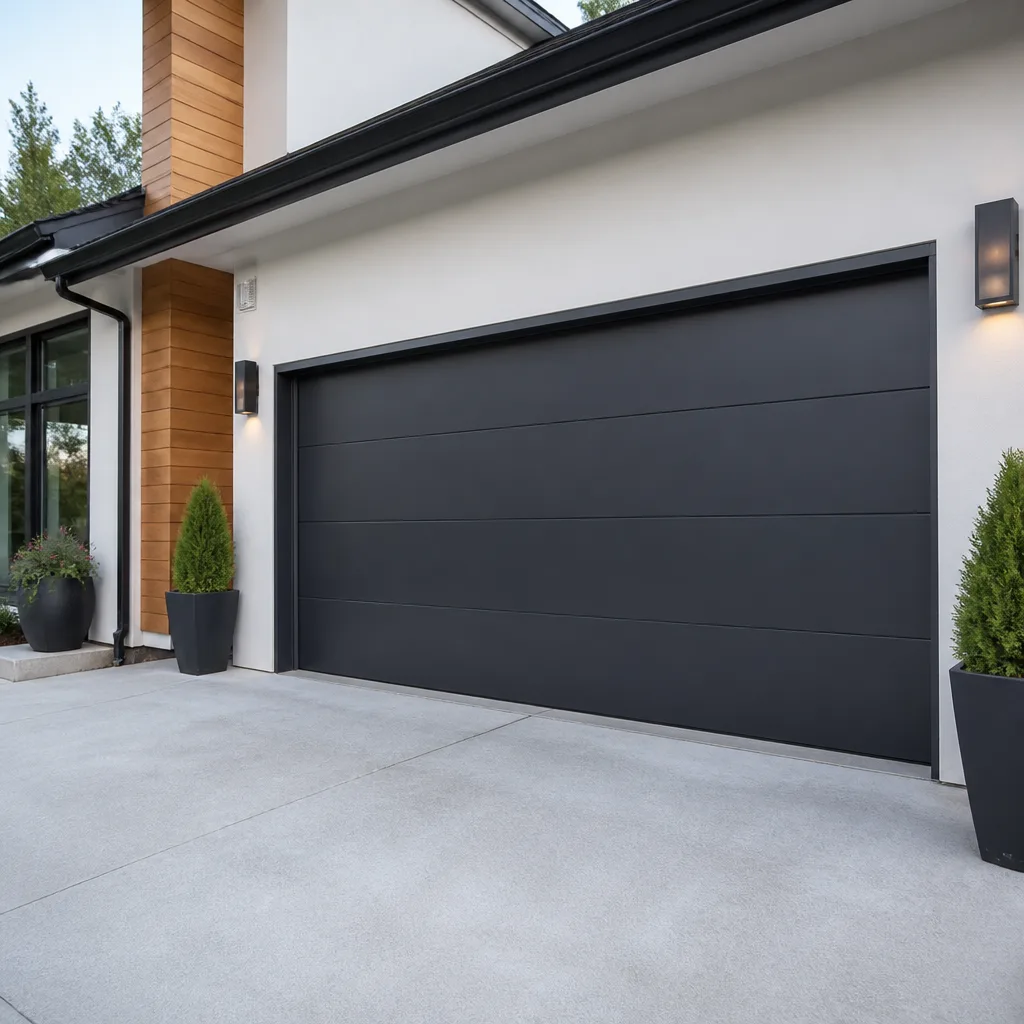 Modern flush
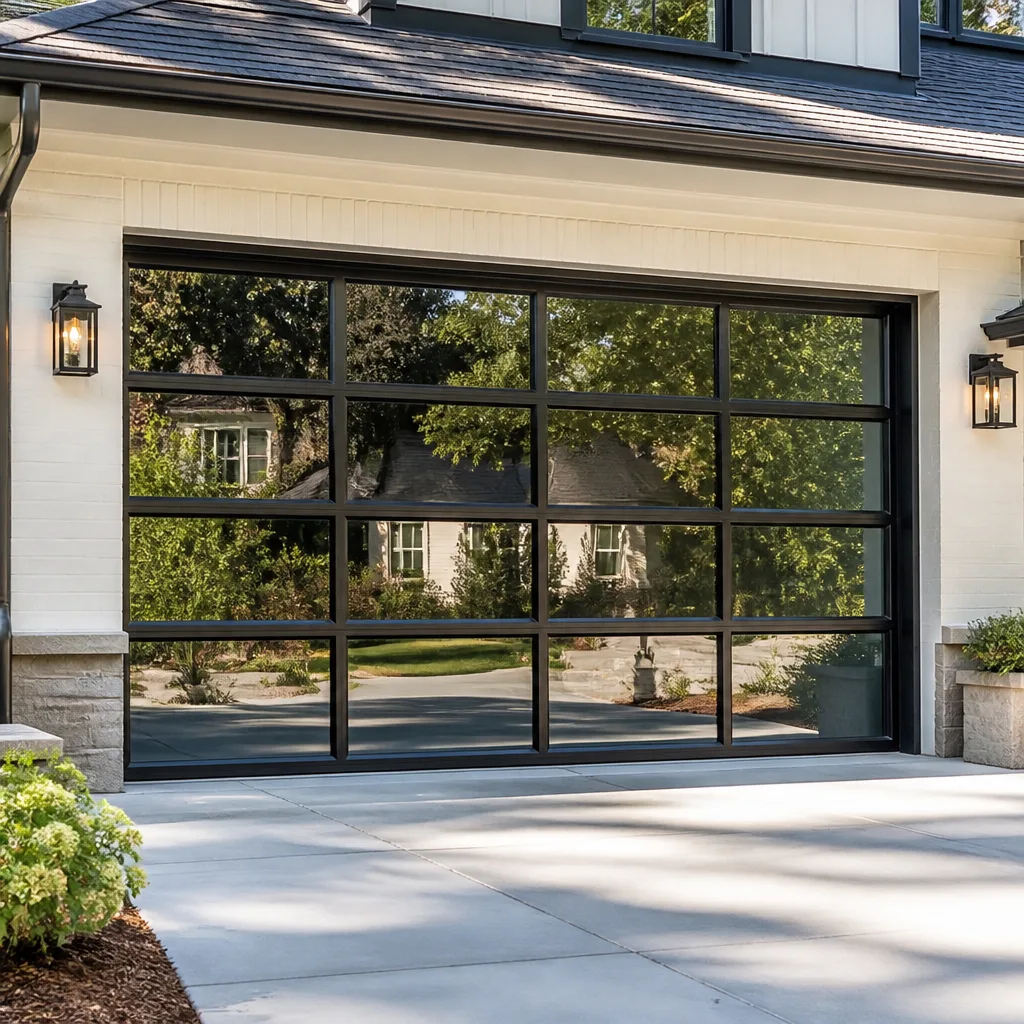 Full-view glass
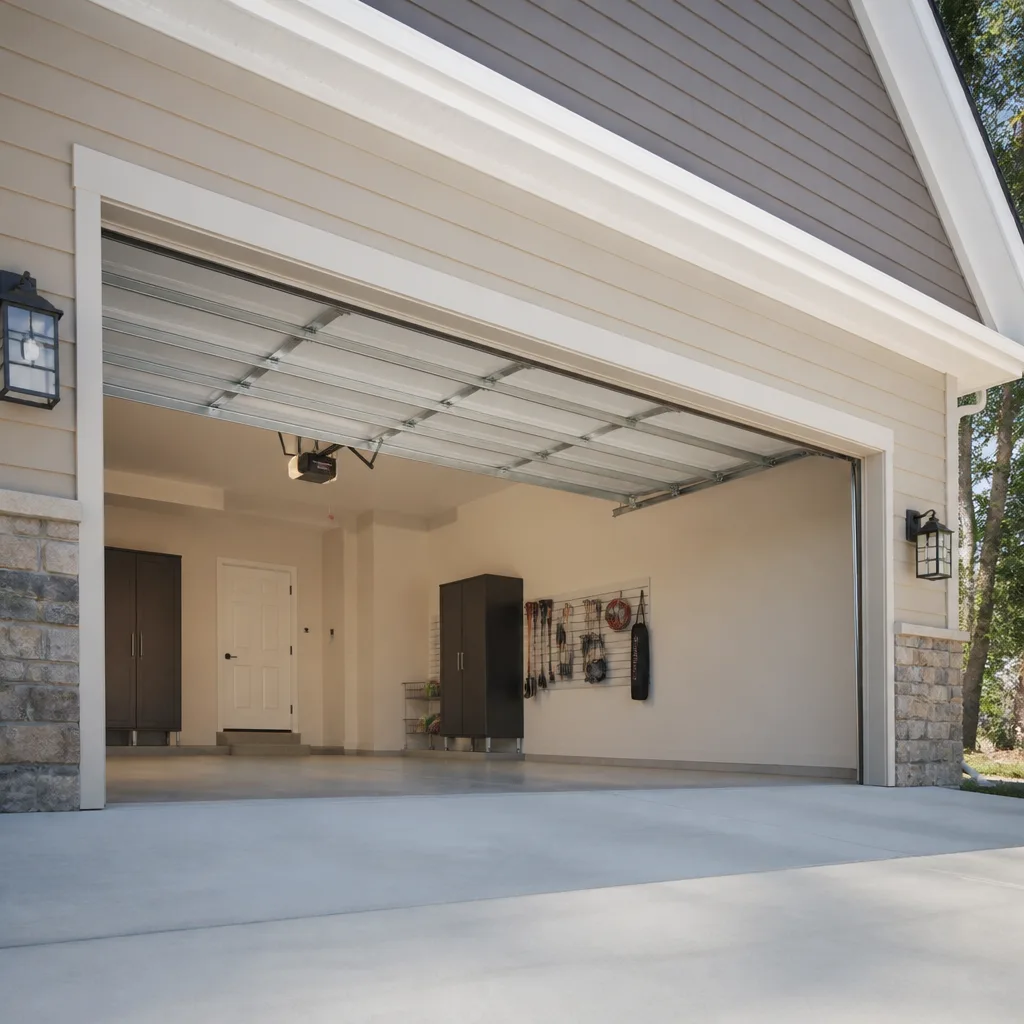 LiftMaster openers
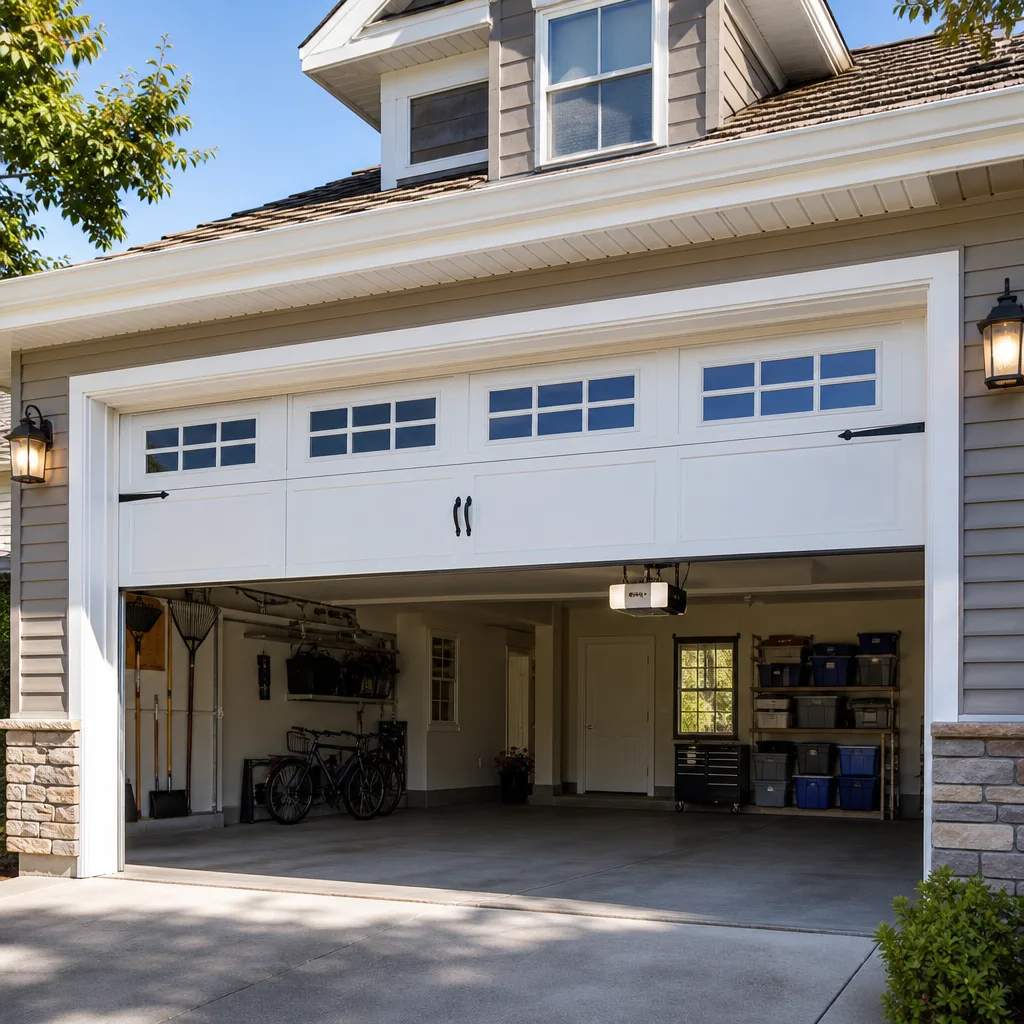 Chamberlain openers
Full 25-point door and opener safety check with every visit - springs, cables, rollers, tracks, and your LiftMaster or Chamberlain opener included
You get a price before we start. It does not change when the pro arrives.
Get your free estimateGarage Door Warning Signs: A Garden Grove Homeowner’s Reference Guide
Most Garden Grove homeowners wait until a garage door fails completely before calling anyone. That’s understandable, since a door that still opens and closes feels like a door that’s working. But your garage door is the largest moving object in your home, and it almost always announces problems weeks or months before they become emergencies. The catch is that those announcements sound vague: a grind, a hesitation, a cable that looks slightly off. This guide teaches you to read those signals the way a technician does, so you’ll know what’s urgent, what can wait, and what a repair should actually cost when you call someone in Garden Grove.
Quick Answer
The most common garage door warning signs in Garden Grove are grinding or squealing sounds during operation, a door that hesitates or reverses mid-cycle, visible cable slack or spring gaps, and an opener that responds slowly to the wall button or remote. Grinding usually means worn rollers or bearings; popping often signals a spring under stress; a reversing door typically points to force settings or track misalignment rather than the safety sensors. If you hear metal-on-metal grinding or see a visible spring gap, stop using the door and call a professional immediately.
Styles & brands we work with
- Raised-panel steel
- Carriage house
- Modern flush
- Full-view glass
- LiftMaster openers
- Chamberlain openers
Table of Contents
- Sound-Based Diagnosis: What Your Door Is Actually Saying
- Visual Gap Analysis: Reading Springs and Cables Without Touching Them
- Movement Pattern Warnings: Why Your Door Reverses Unexpectedly
- Opener Response Lag: Motor, Logic Board, or Radio Interference
- Urgency Tiers: Same-Day Failures vs. 30-Day Windows
- Garden Grove-Specific Factors That Accelerate Wear
- Common Mistakes to Avoid
- When to Call a Professional
Sound-Based Diagnosis: What Your Door Is Actually Saying
Every garage door makes some noise. A well-maintained door produces a steady, low rumble as it travels the tracks. When that baseline changes, the change itself is diagnostic. Different components fail with different acoustic signatures, and knowing which sound maps to which part saves you from paying for a spring replacement when your actual problem is a ten-dollar roller. Here’s the breakdown.
Grinding: Metal on Metal
Grinding is the sound of two metal surfaces moving against each other without proper lubrication or spacing. In garage door systems, this almost always points to one of three things: worn ball bearings inside the rollers, a dry bearing plate on the torsion spring tube, or a chain-drive opener whose chain has loosened over time. In Garden Grove’s dry climate, lubricant breaks down faster than it does in humid coastal air, which means doors here are slightly more prone to dry-bearing grinding than doors in other Southern California microclimates.
You can narrow it down by listening to where the sound comes from. Grinding that follows the door panel as it moves is typically a roller. Grinding that stays in one spot near the header, even as the door moves past, is usually the bearing plate. Grinding only when the opener runs points to the chain or gear assembly. None of these are emergencies, but rollers and bearing plates that grind for months will eventually seize or score the track, turning a $60 fix into a track replacement.
Popping: Spring Energy Releasing
Popping is the sound of a torsion spring binding and releasing as it coils and uncoils. A healthy spring rotates smoothly on its shaft; a tired or improperly lubricated spring catches on itself and releases in small jumps. You’ll hear a series of pops as the door travels, often from directly above the closed door. In most cases, popping is an early warning that the spring is nearing the end of its cycle life, not an immediate failure. But it’s not a sound to ignore, because a spring working with jerky, uneven release puts irregular stress on the cables, drums, and the spring itself. If popping becomes a single loud bang, that’s a spring breaking, and it’s time to stop using the door entirely.
Squealing: Lubrication Loss
Squealing is a high-pitched friction sound, usually from rollers rotating against their stems or hinges flexing without lubricant. It’s annoying but rarely dangerous. In our experience, squealing doors respond quickly to lubrication, though we recommend having a technician do it during a tune-up rather than spraying generic WD-40 into the tracks, which attracts dust and creates a grinding problem later. Garden Grove’s warm summers bake off lightweight lubricants quickly; a heavier garage-door-rated lubricant lasts longer here than a hardware-store spray.
Rattling: Loose Hardware
Rattling is the sound of something that should be tight vibrating instead. It’s most common in older doors or doors that have been through a few opener replacements where mounting bolts were reused or over-torqued. Rattle sources include loose track brackets, hinge screws that have backed out, opener rail bolts, and even the decorative hardware on carriage-style doors. Walk the track line while the door is closed and shake each bracket gently. Any movement you can feel by hand will rattle audibly in operation. Tightening takes minutes; ignoring it for a year can throw the track out of alignment, which cascades into roller and cable wear.
Visual Gap Analysis: Reading Springs and Cables Without Touching Them
You don’t need to touch anything to assess a good portion of your garage door’s health. In fact, you shouldn’t touch the springs or cables under any circumstances. Those components are under hundreds of pounds of tension, and a cable that snaps or a spring that releases can cause serious injury. But your eyes can tell you a lot from a safe distance.
Start with the torsion spring, the long coil mounted horizontally above the closed door. Look at the gaps between the coils. On a healthy spring, the coils are evenly spaced along the full length. If you see a section where the coils have separated, creating a wider gap that stays visible when the door is closed, that spring is fatigued. That gap is where the metal has begun to deform from years of twisting and untwisting. A spring with visible gaps is a spring that will break, and it typically breaks without additional warning. If you see this, budget for replacement and avoid using the door until a technician confirms it’s safe.
Next, look at the two lift cables that run from the bottom brackets up to the drums on each side. When the door is closed, both cables should have a slight but equal slack. When the door is open, both cables should be taut. The key warning sign is asymmetry: one cable with more slack than the other, or one cable that appears loose when the other is taut. That asymmetry means the door isn’t lifting evenly, usually because one spring has lost tension, one drum has slipped, or the door itself has shifted in its tracks. Over time, uneven lifting wears the bearings, bends the panels, and eventually snaps a cable, which is a violent failure that can send the cable whipping and drop the door unexpectedly.
Finally, stand back and look at the door as a whole when it’s closed. The panel line where the door meets the ground should be even from left to right and consistent across the full width. If one corner sits higher or lower, or if you can see daylight under one side and not the other, the door is out of balance. This is often the first visible sign of a failing spring, because the spring can no longer hold the door’s weight evenly. It also means your opener is working harder than it should, which accelerates wear on the motor and gears.
Movement Pattern Warnings: Why Your Door Reverses Unexpectedly
The most common homeowner assumption about a reversing garage door is that the safety sensors are misaligned or blocked. That’s sometimes true, but it’s not the leading cause. In our experience across Garden Grove homes, an unexpected reversal mid-cycle is more often a force-setting issue, a track obstruction, or an aging spring that no longer lifts the door cleanly.
Modern openers, including LiftMaster and Chamberlain models, are equipped with force-sensing logic that monitors how much resistance the motor encounters. If the opener senses more resistance than expected, it reverses to prevent damage, the same way an elevator refuses to close on an obstruction. When a spring loses tension, the door becomes effectively heavier, the motor strains harder, and the force sensor trips. The result looks like a sensor problem but is actually mechanical. Replacing the sensors does nothing because the sensors were never the fault.
Here’s a step-by-step way to isolate what’s actually happening.
- Pull the manual release cord and operate the door by hand. If it’s heavy, hard to lift, or won’t stay open on its own, you have a spring tension problem, not an opener problem.
- Check the force adjustment on the opener. These dials or digital settings drift over time, especially on openers in unconditioned Garden Grove garages that see wide temperature swings between daytime heat and overnight cool.
- Inspect the tracks for debris or deformation. A track that’s even slightly pinched creates consistent reversal at the same point in travel, which is a strong clue if the door always reverses at the same spot.
- Watch the door for wobble. A door that shudders side to side while moving is binding somewhere, and the binding is what triggers the reversal.
If the door operates smoothly by hand and only reverses under opener power, the problem is in the opener’s logic or force settings, not the door. If it’s heavy or jerky by hand, the problem is mechanical and the opener is just the messenger. Knowing which category you’re in will save you from approving an opener replacement when you actually need a spring.
Opener Response Lag: Motor, Logic Board, or Radio Interference
A garage door opener that thinks for a second or two before responding can mean a dying motor capacitor, a failing logic board, or interference on the radio frequency your remote uses. Garden Grove’s mix of residential streets and commercial corridors, particularly around the denser retail areas, means there’s more competing radio traffic in the air than a quiet suburban cul-de-sac sees. That can matter more than most homeowners realize.
Motor Capacitor Lag
When the capacitor in the opener motor weakens, the motor doesn’t start instantly when it gets power. It hesitates, then lurches into motion. You’ll notice this as a delay after the relay clicks, followed by a slower-than-normal start. Capacitors degrade on a predictable curve, and the symptom worsens over weeks. This is a replaceable part on most LiftMaster, Genie, and Craftsman units, and it’s a common repair performed rather than recommending a full opener swap.
Logic Board Lag
A failing logic board typically shows lag that’s intermittent. Sometimes the opener responds instantly; sometimes it pauses for three or four seconds; occasionally it ignores the first press entirely and requires a second. Logic board failures often follow power surges, which Garden Grove homes see during Santa Ana wind events that stress the electrical grid. If your wall button is also lagging, not just the remote, that points to the board rather than the radio.
RF Interference
If the wall button works instantly but the remote lags, the problem is almost always radio frequency interference or a tired remote battery. Newer vehicles with built-in garage door transmitters sometimes hold the signal slightly longer, which reads as a delay at the opener. Aftermarket LED bulbs in the garage or nearby can also emit noise on frequencies that interfere with opener signals, especially on older openers without frequency-hopping technology. In a multi-brand household where a Chamberlain opener sits alongside an older Genie unit, interference patterns can vary by remote, which is a useful diagnostic clue.
Urgency Tiers: Same-Day Failures vs. 30-Day Windows
Not every warning sign deserves the same response. Here’s how a technician triages what we see on service calls in Garden Grove.
Tier One: Stop Using the Door Today
- Visible spring gap or a broken spring. The door can drop without warning if a cable fails next.
- Frayed or kinked lift cable. A frayed cable is a cable that will snap under load.
- Door falling out of the tracks. Continued operation will bend panels and may pull the entire track assembly off the wall.
- Door drops several inches when closing before catching itself. This indicates a serious balance failure.
These are same-day situations. Unplug the opener, leave the door closed if possible, and call a professional who can dispatch quickly.
Tier Two: Schedule Within 30 Days
- Grinding rollers or dry bearings. These wear progressively but rarely fail catastrophically in a short window.
- Intermittent opener lag. Often a capacitor or board in early decline; it’ll get worse, but you have time.
- Popping spring sounds. Worth a spring inspection, but a spring that’s popping evenly is still functioning.
- Rattling hardware. Loose bolts should be tightened soon to avoid track misalignment, but they aren’t an immediate hazard.
- Uneven door balance. This means a spring is losing tension, but if the door still opens and closes reliably, you have a window.
The key principle: anything that involves a spring or cable is an immediate call. Anything that involves rollers, hinges, or opener electronics can usually be scheduled without panic, though the sooner you address it, the cheaper the fix tends to be.
Garden Grove-Specific Factors That Accelerate Wear
Garden Grove’s inland Orange County location creates a specific set of conditions for garage doors. We don’t get the coastal fog that keeps nearby beach cities cooler and more humid, and we don’t get the extreme heat of the Inland Empire. What we do get is a wide daily temperature swing, especially in summer, and a dry atmosphere that draws the moisture out of lubricants and rubber seals faster than you’d expect.
Here’s what that means in practical terms.
- Lubricant breakdown happens faster here. Dry, warm air evaporates the lighter carrier oils in spray lubricants, leaving behind a sticky residue that attracts dust. Metal parts that aren’t re-lubricated on a schedule will start grinding earlier in their life than identical parts in a coastal garage.
- Rubber seals and weatherstripping crack sooner. The bottom seal on a Garden Grove garage door takes direct afternoon sun. Over a few summers, it hardens and splits, which lets dust and pests in and makes the door close less smoothly. This is a cheap replacement, but a cracked seal is also a warning sign that the door’s overall maintenance has been neglected.
- Steel panels hold afternoon heat. A west-facing door in Garden Grove can get hot enough to be uncomfortable to touch in July. That heat transfers into the panel’s structure and the hardware mounted to it, accelerating paint fade and making older panels more brittle. It’s a good argument for lighter door colors on west-facing exposures, though the structural risk is minor compared to the cosmetic fade.
- Dust from the 22 and surrounding surface streets gets into tracks and rollers. Garden Grove’s grid of arterial roads sees steady traffic, which kicks up fine particulate. That dust settles in the track channels and mixes with lubricant to form a paste that accelerates roller wear. Homes near busier corridors like Garden Grove Boulevard or Brookhurst Street tend to show dirtier tracks than homes in quieter interior neighborhoods.
None of these factors mean your door is doomed, but they do mean the maintenance cadence here is shorter than the generic online advice suggests. A door in Garden Grove benefits from a visual inspection and lubrication more often than a door in a mild coastal city.
If you want a professional eye on your door, Raven Garage Door Repair works on the full range of residential systems, from Clopay and Amarr doors to LiftMaster and Genie openers. We don’t hand off repair work to a sub and installation to another crew. One company, one diagnosis, one fix.
Common Mistakes to Avoid
- Lubricating the track instead of the rollers and hinges. The track is a guide rail, not a bearing surface. Oil in the track collects dust and creates the grinding you were trying to prevent. Lubricate the rollers, the hinges, and the spring, and wipe the track clean.
- Adjusting the sensors every time the door reverses. Reversing doors are usually a force or spring issue. By the time a homeowner has nudged the sensor eyes back and forth three times, a mechanical problem has been left to worsen. Isolate first, adjust second.
- Ignoring a squeal because the door still works. A door that squeals is a door that’s running dry. The noise itself isn’t dangerous, but the underlying dryness is wearing components that will eventually fail more expensively.
- Trying to “help” a heavy door up by hand. If you disengage the opener and the door is heavy, that’s a spring problem. Lifting it anyway puts you directly under a door that can fall. Don’t do it.
- Assuming a new opener will fix a struggling door. If the door itself is out of balance, a new opener will wear out fighting the same load that killed the old one. Fix the door first; replace the opener second, if it’s even needed.
- Waiting until a small problem is a big one. Garden Grove’s dry air and dusty streets turn a $40 roller replacement into a $300 track and cable job faster than you’d think. Early intervention is the cheapest maintenance there is.
- Calling a handyman for spring work. Torsion springs carry enough stored energy to cause severe injury if mishandled. This is a job for someone who works on these specific systems professionally, not a general fix-it visit.
When to Call a Professional
You can lubricate hinges, tighten visible bolts, and replace a remote battery without help. But any of these situations warrants a professional call: a visible spring gap, a frayed cable, a door that’s out of balance or heavy by hand, an opener that reverses consistently at the same spot, or any grinding that hasn’t resolved with proper lubrication. Springs and cables are under tension; they’re not DIY components. If you’re in Garden Grove and you’ve spotted any Tier One sign from this guide, stop using the door and get someone out. Garage door repair doesn’t have to be a guessing game. Raven Garage Door Repair offers free estimates in Garden Grove. Call (866) 616-5011. We answer 24/7. Fast dispatch from 7am to 7pm, Sunday through Friday.
See the difference
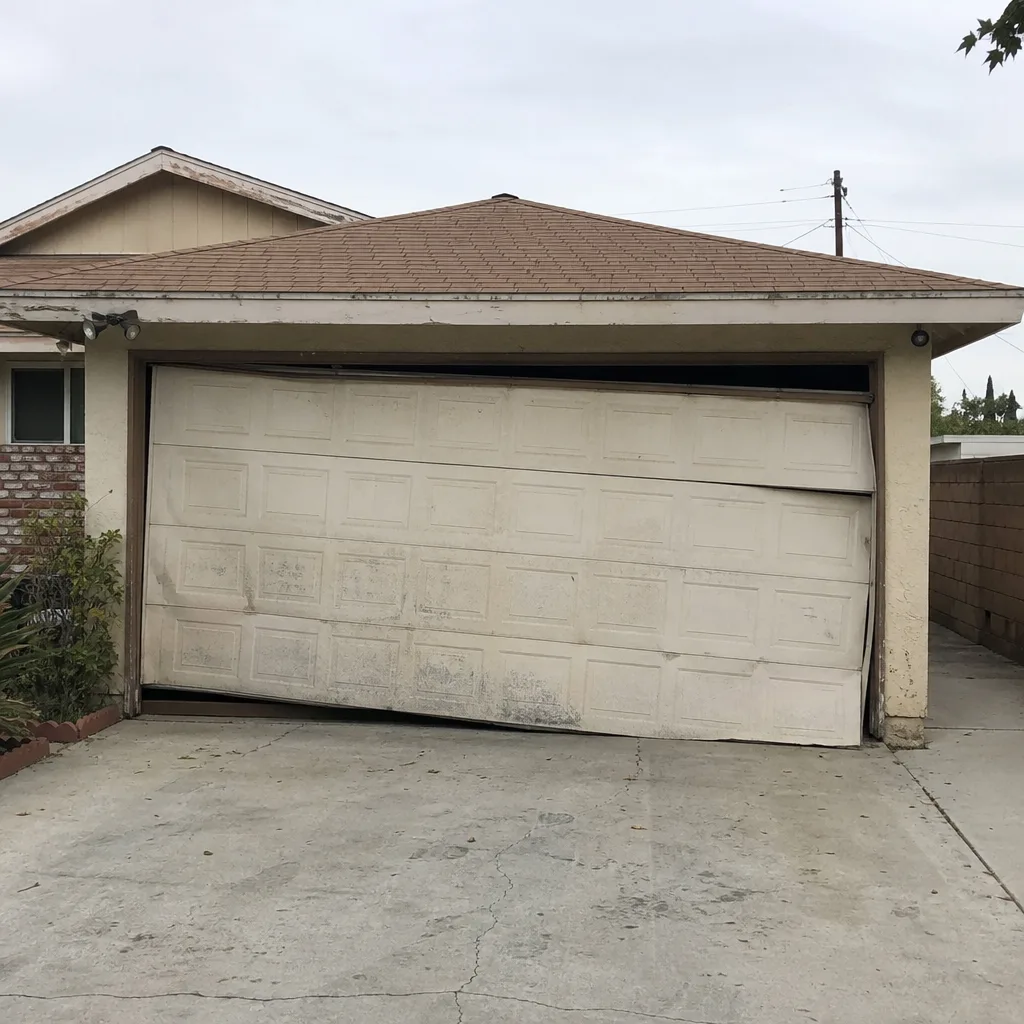 Before
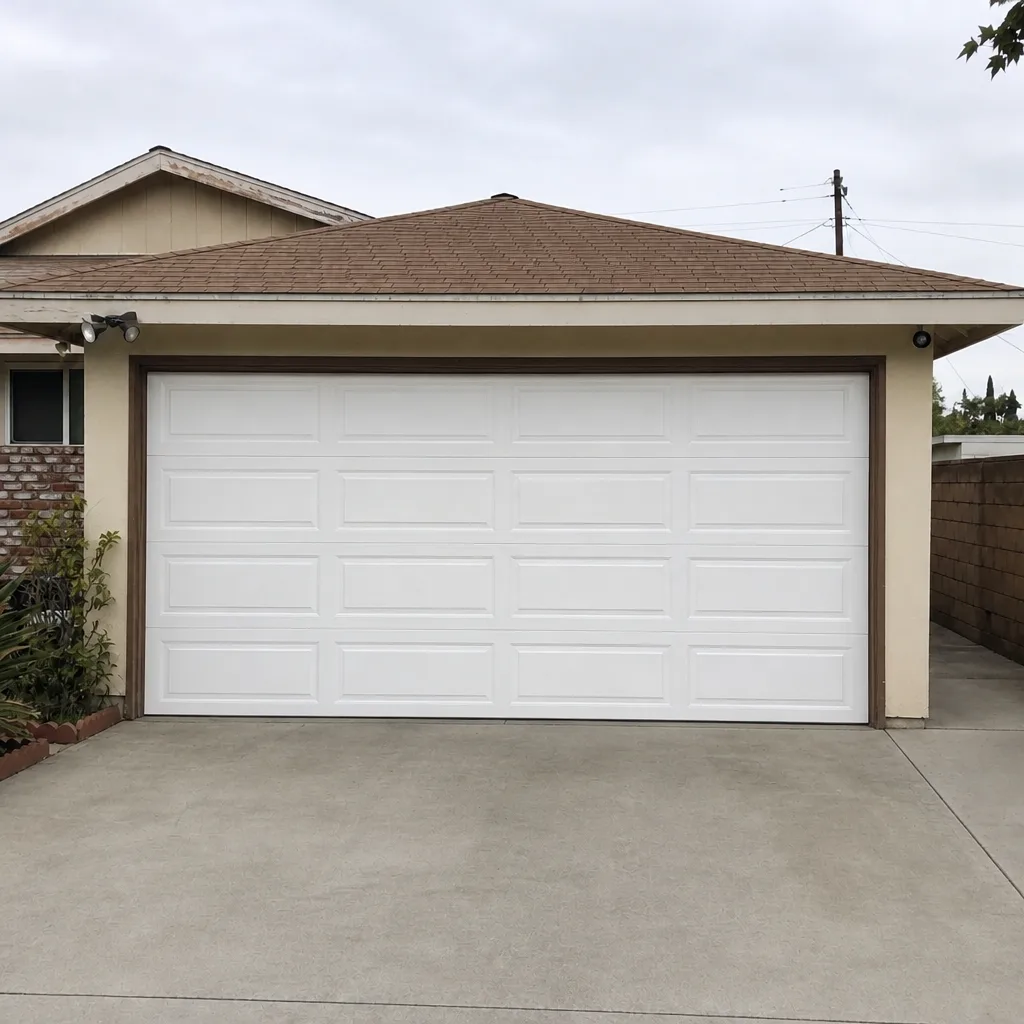 After
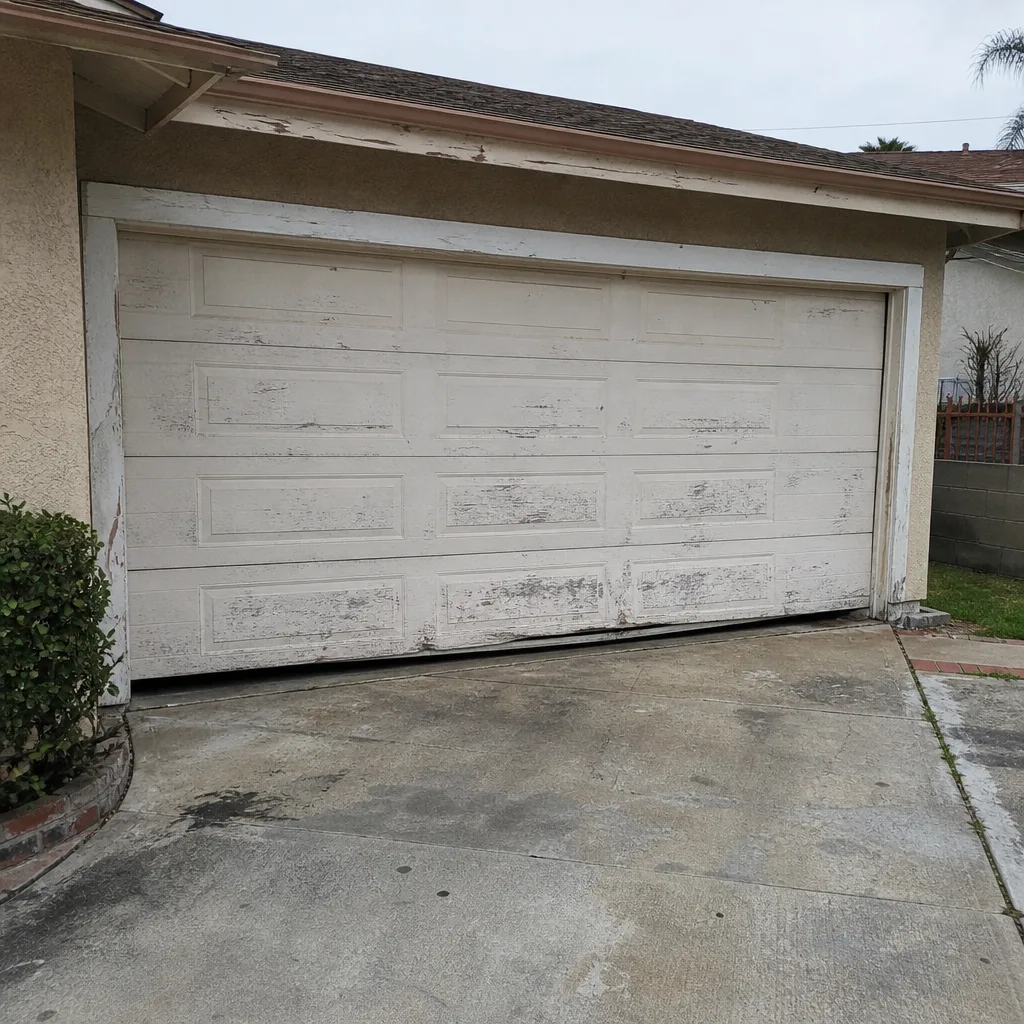 Before
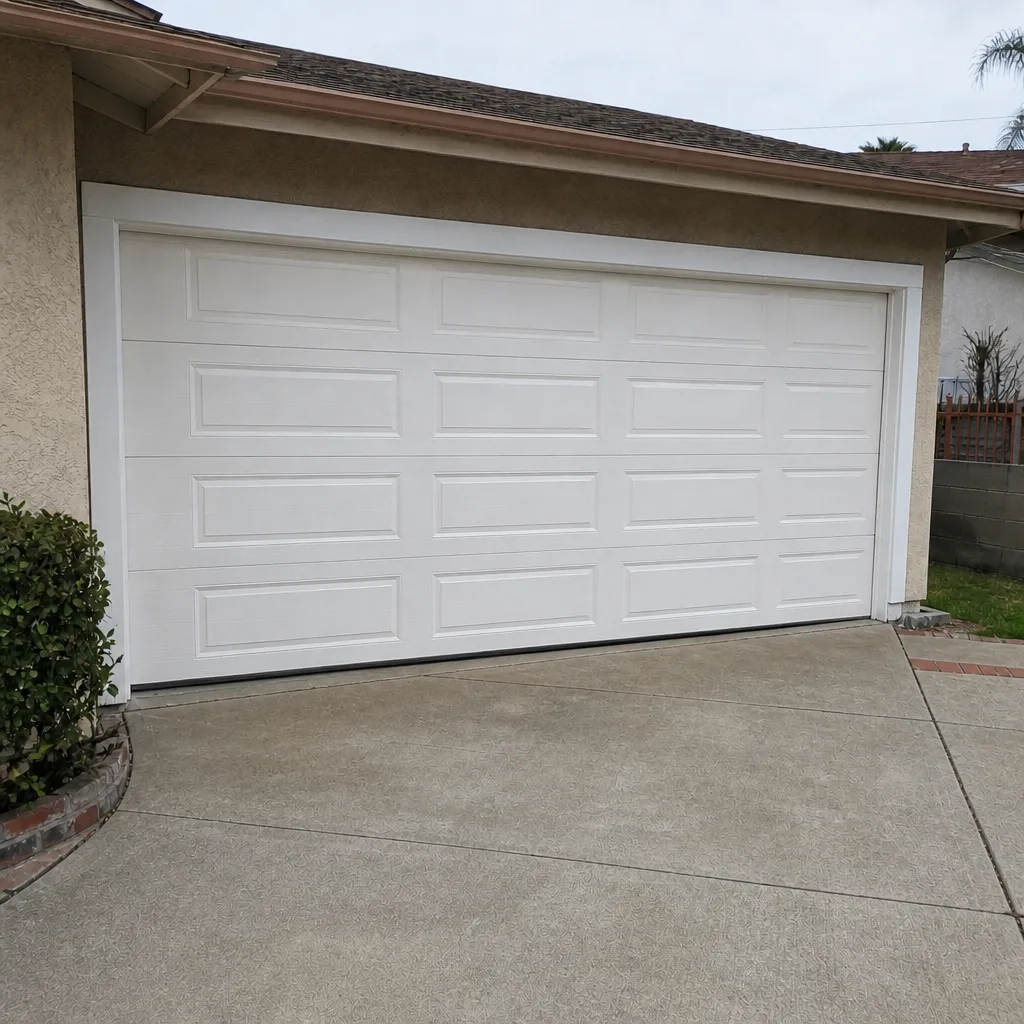 After
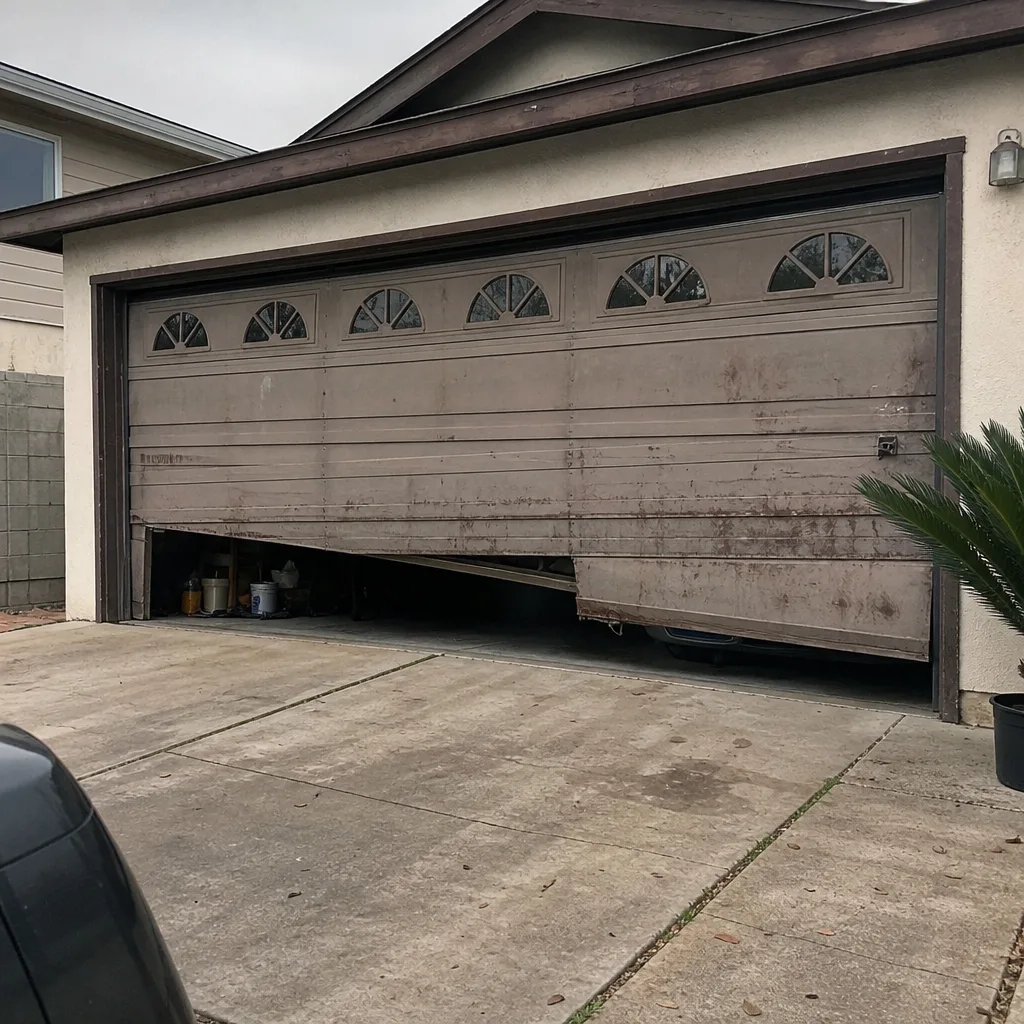 Before
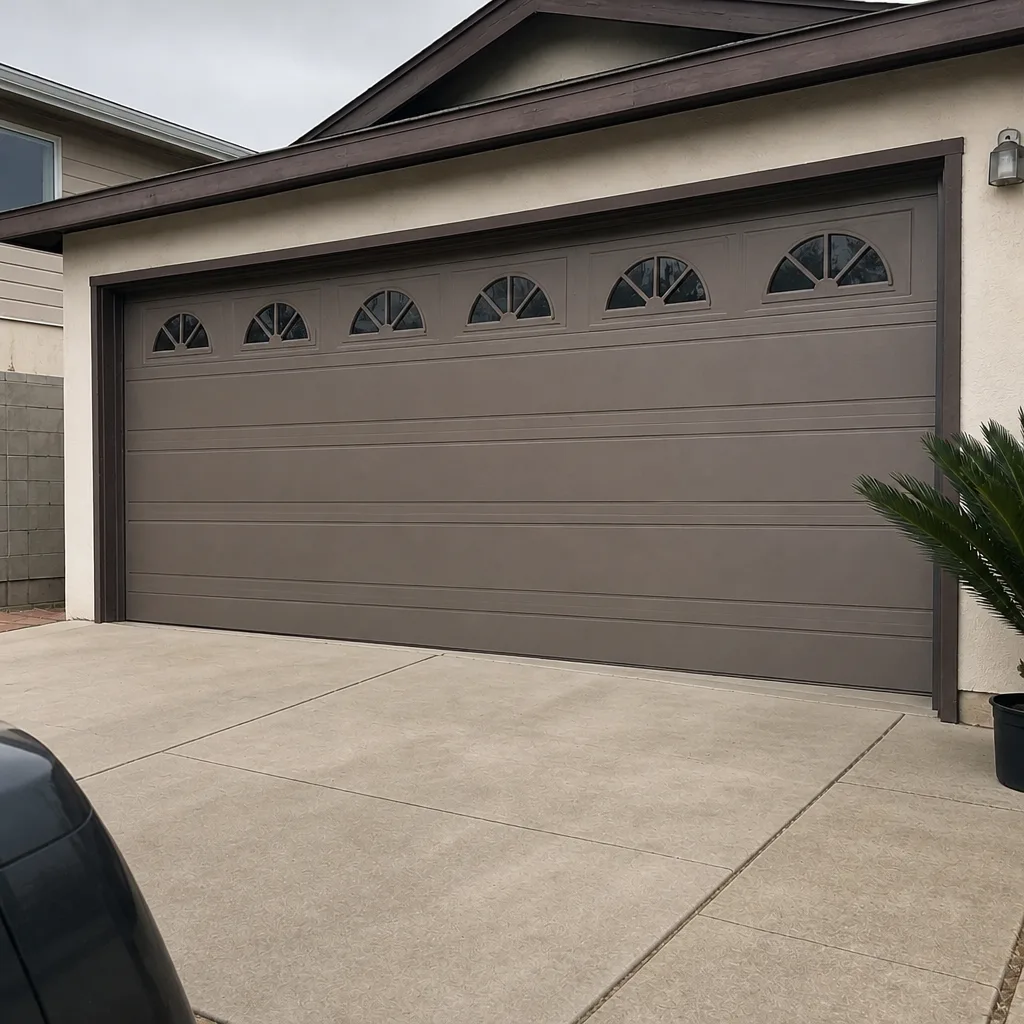 After
Frequently Asked Questions
Garage door spring repair in Garden Grove is typically quoted per spring, with most torsion springs running in the low to mid hundreds installed, and a matched pair replaced together roughly doubling that figure. The final price depends on the spring’s wire size, length, and whether the door is standard or heavy. Your written estimate sets the price before any work starts. Call (866) 616-5011 for an exact quote, estimates are free.
Yes, for most Tier One failures like broken springs, frayed cables, and doors off track, same-day repair is usually possible in Garden Grove. We answer 24/7 and dispatch crews from 7am to 7pm, Sunday through Friday. When you call, we’ll ask about the symptoms you’re seeing so the technician arrives with the right parts for your specific door, not a generic truck stock.
Grinding typically means metal-on-metal contact from worn roller bearings, dry bearing plates, or a loose opener chain. The location of the sound tells you which one: a moving grind is a roller, a stationary grind near the header is the bearing plate, and a grind only during opener operation is the chain or gears. Left unaddressed, grinding parts will eventually score the track or seize.
Yes, in almost every case. Torsion springs are matched to the door’s weight and installed as a pair. If one breaks, the other is typically at the same point in its cycle life, and installing only one new spring leaves an unbalanced, unsafe door. A matched pair ensures even lifting and prevents the uneven cable wear that leads to sudden failures.
No. Reversing is more often caused by excess resistance that trips the opener’s force-sensing system, which usually means a weakening spring, a misaligned track, or a door that’s binding. If the door is heavy or jerky when operated by hand, the problem is mechanical, and adjusting the sensors won’t help. Once the mechanical issue is fixed, the reversal typically stops on its own.
We service equipment from eight major residential brands, including LiftMaster, Chamberlain, Genie, Clopay, Amarr, and Raynor. That matters because most Garden Grove homes have mixed systems, like a Chamberlain opener running a Clopay door, and you shouldn’t need two different companies to diagnose a problem that spans both. Garage door opener repair and door repair happen under one roof, with one diagnosis.
The Bottom Line
Your garage door talks before it fails. Grinding, popping, squealing, and rattling each point to a different component, and knowing the difference prevents both false alarms and ignored emergencies. Visual signs like spring gaps, uneven cables, and a door that sits off-balance are equally readable from a safe distance. In Garden Grove, the dry air and street dust shorten maintenance intervals, so a door that looks “fine” needs a closer look more often than most homeowners assume. Treat warning signs as information, not noise. When you need a professional, Garden Grove homeowners can call (866) 616-5011 for a free estimate on garage door repair, opener repair, or full replacement. We answer 24/7. Fast dispatch from 7am to 7pm, Sunday through Friday.
Written by the team at Raven Garage Door Repair, serving Garden Grove.